Seven Days Out With the HS 640 and 800 Flatbed
August 1, 2026
Two very different Alaskan Campers took on deep sand along the Washington coast, tight forest trails, and rutted mountain roads over seven unpredictable days.

After introducing the HS 640 at Overland Expo PNW, we wanted to see how the new model and the 800 Flatbed handled real conditions beyond the show floor. Christina Luppi was our first call — an experienced overland traveler, the voice behind Huntress Offroad, and someone we’d already gotten to know through the overland community.
Christina first got into off-roading as a teenager, when her father took her out in his Jeep Wrangler. Eventually, she sold her house and spent a few years traveling full time, beginning in a Jeep and rooftop tent. She has since experienced motorhomes, travel trailers, and fifth wheels, giving her a broad frame of reference for her first extended trip in a truck camper.
For this trip, Christina drove the 800 Flatbed on its Bowen Customs-equipped truck and planned a seven-day route through five distinct Pacific Northwest settings. Photographer and filmmaker Colten Stephens drove the HS 640, with his girlfriend, Keely, joining him. Together, they documented how both campers traveled, handled rough roads, and worked as living spaces over a full week on the move.
From the Show Floor to the Coast
Both rigs left Redmond, Oregon and pointed west on a route planned around a tight fuel budget for both trucks — tight enough that every stop had to earn its place before the trip even started. The first proof of what the campers could actually handle came fast.
Deep Sand First
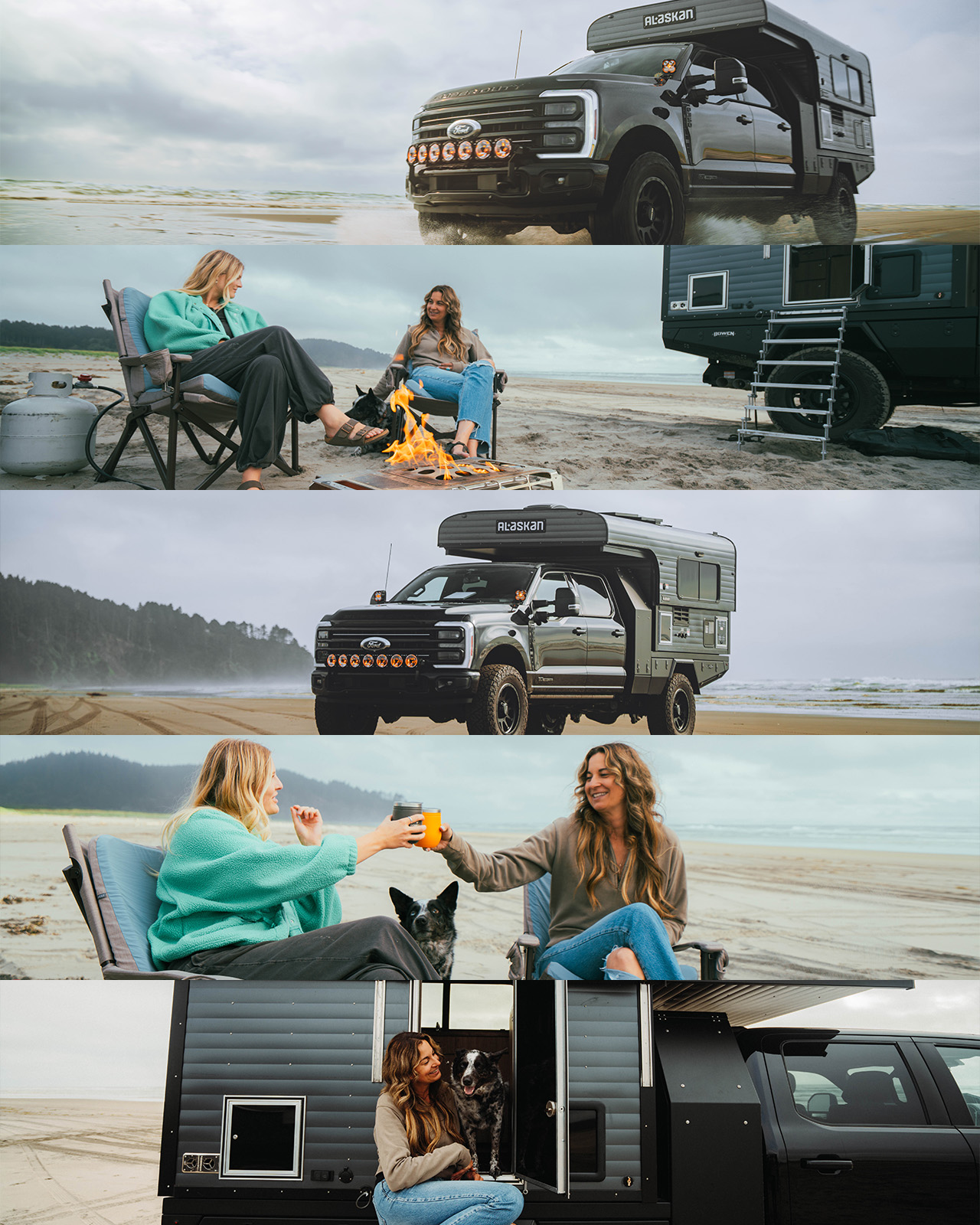
From the expo, the group headed to Long Beach, Washington — one of the few beaches on the West Coast open to vehicles. Neither driver had run these specific truck-and-camper pairings through sand before, and the HS 640 and 800 Flatbed were built with different priorities in mind — one for weight and accessibility, the other for capacity. Both found their line.
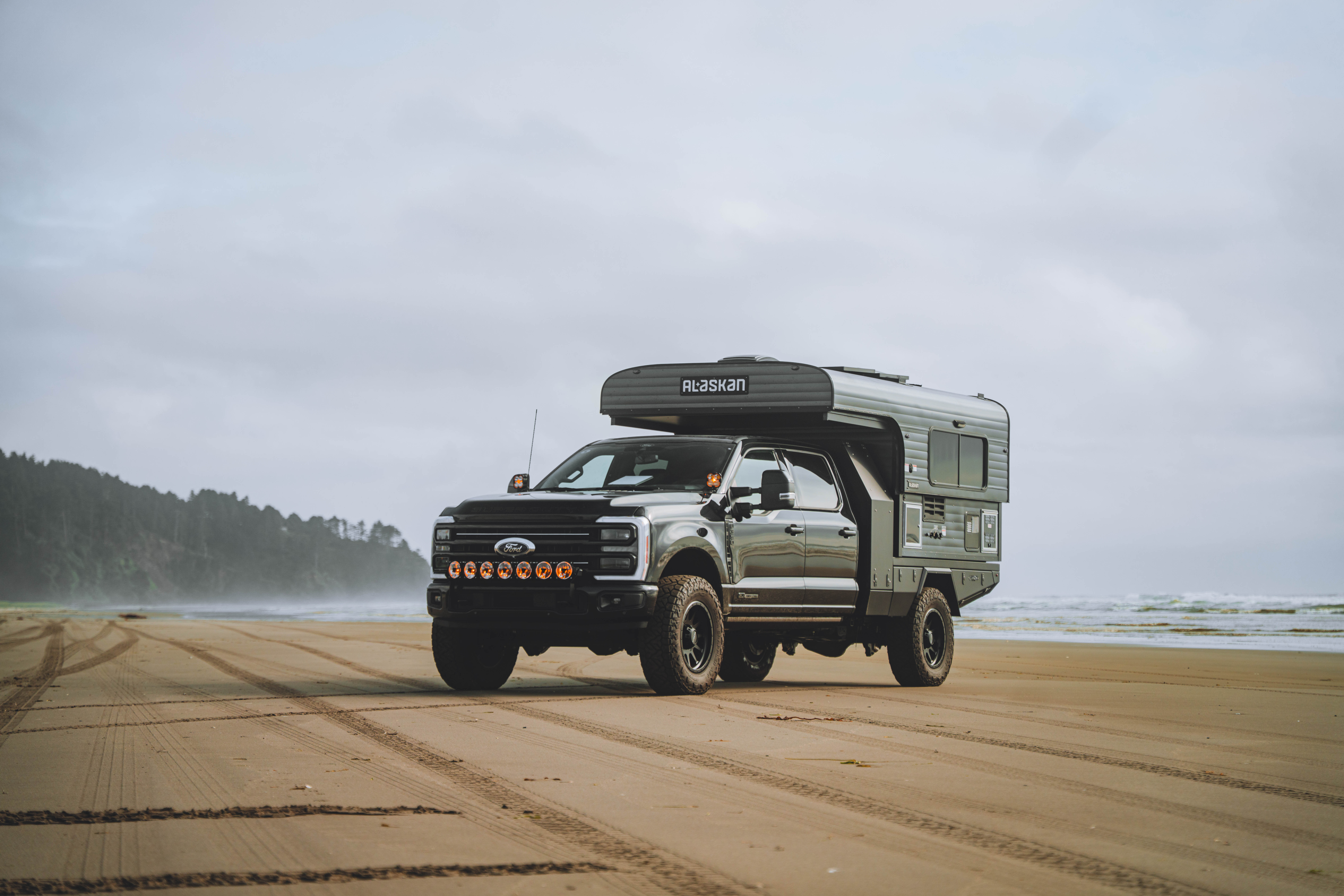
Ocean mist, cold wind, salt spray, eagles overhead, dogs collecting enough sand to redistribute through both campers by the end of the day. When the cold got old, everyone climbed into warm, dry campers and made dinner — the flatbed’s shower pan doing double duty rinsing off a very sandy dog.
A Trail That Looked Narrow From the Start
From the coast, the route turned toward the Hoh River area and down a trail Christina might have hesitated to take even in her Jeep. Branches pressed in from both sides and hung low over mud, deep ruts, and two water crossings.
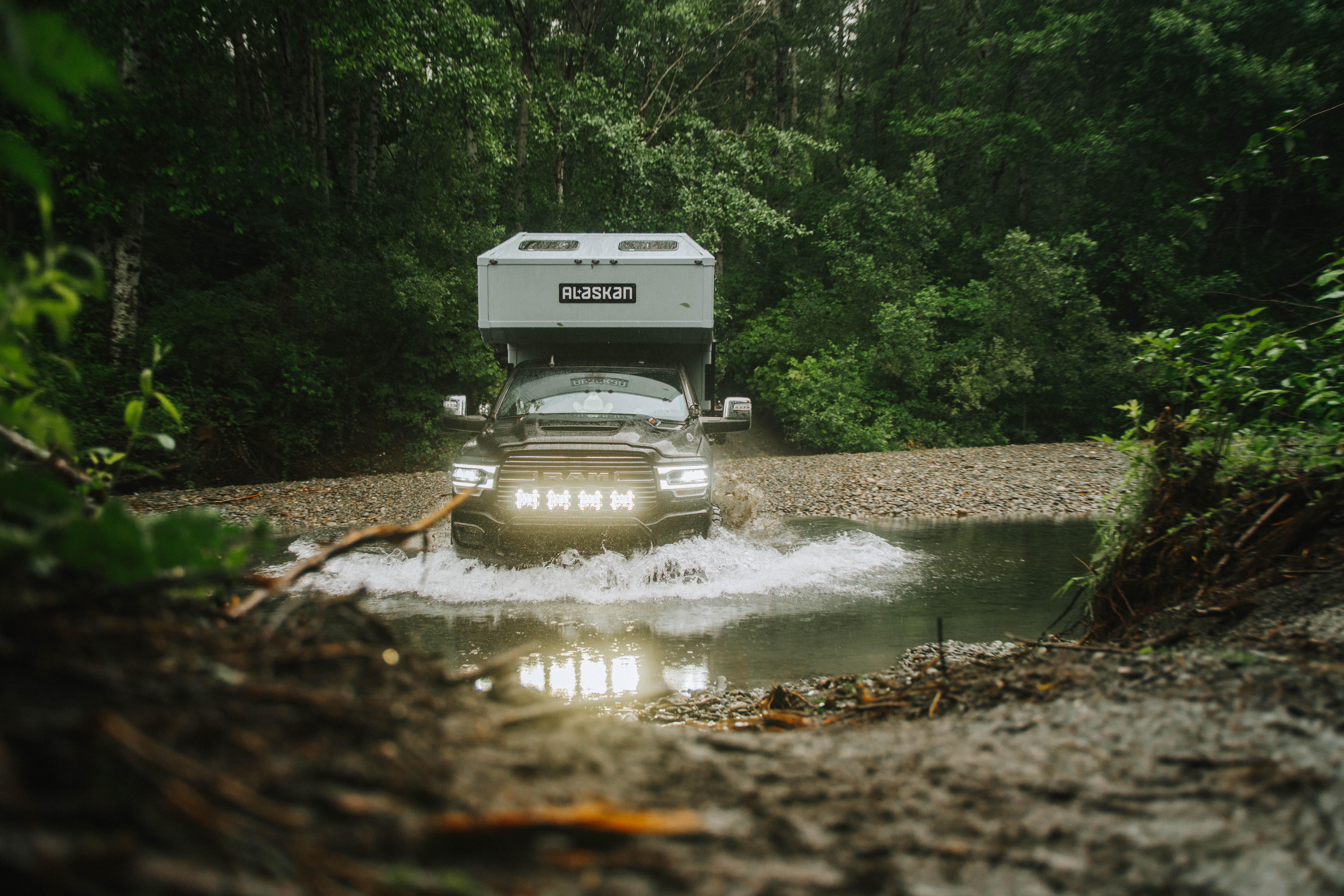
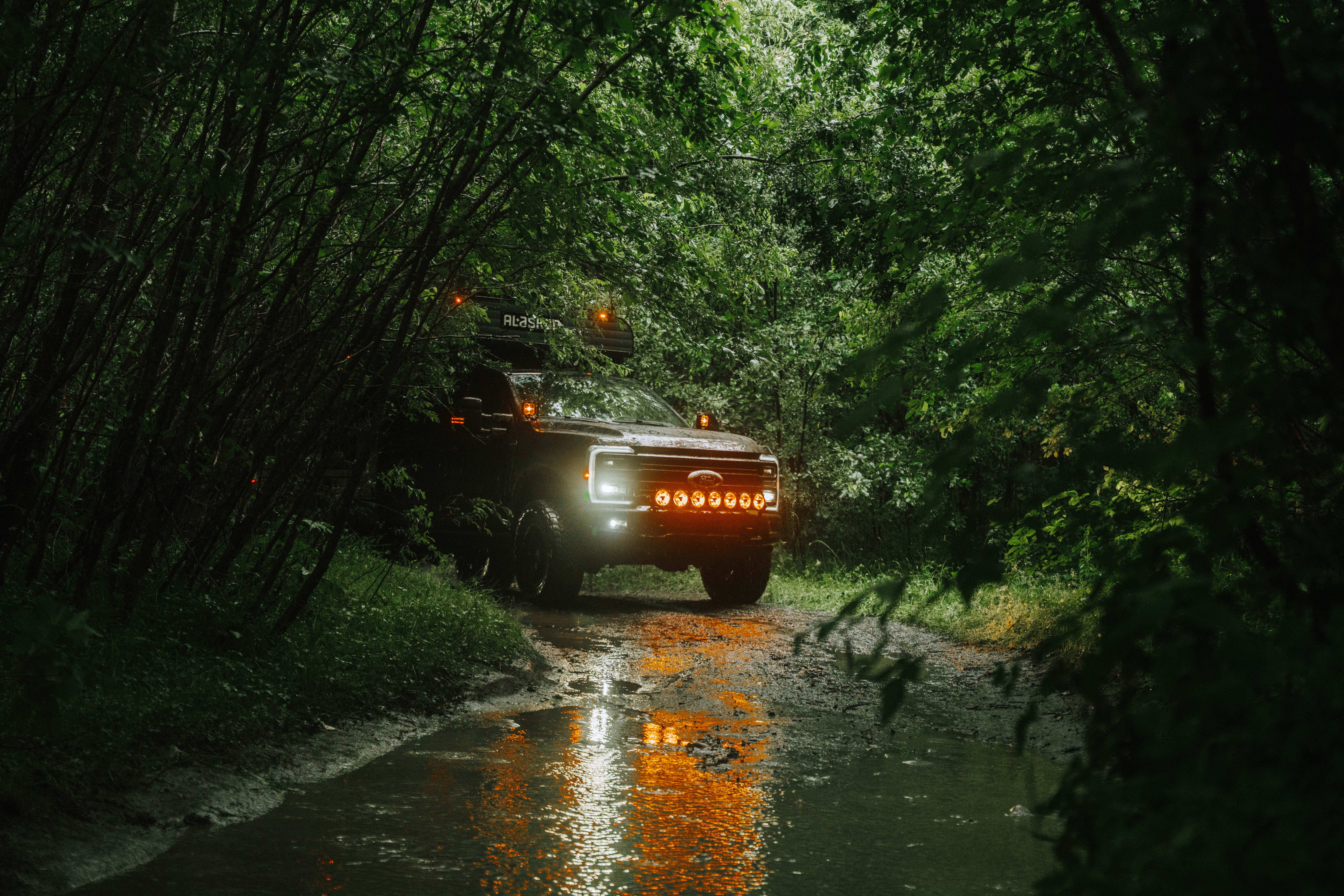 The differences between the campers quickly became clear. With its roof lowered for travel, the 800 Flatbed slipped beneath more of the canopy. The fixed-height HS 640 took the heavier branch contact, yet its painted exterior came through intact.
There was plenty of second-guessing as the loaded three-quarter-ton and one-ton trucks worked deeper into the trail. Both campers handled the ruts, crossings, and scraping without meaningful damage. Cabinets stayed closed, systems kept working, and when the trucks finally stopped, everyone still had a warm, dry place to cook, change, and regroup.
The Campsite They Drove Six Hours to Miss
After leaving the Hoh River area, the group headed southeast toward Mount Rainier. Christina had chosen a campsite with a clear view of the mountain and enough room to photograph both campers together.
Six hours of driving brought them to the final approach, a badly rutted climb worn down by Fourth of July traffic. Both trucks crawled through in four-low and reached the top.
Someone else was already camped there.
They backed down the same rough road and found an open spot beside the river instead. Flags came out. So did the s’mores. The dogs chased sticks along the water while trout rose and neighboring campers wandered over for impromptu tours of the rigs. It was not the Rainier scene Christina had planned, but it gave them a good Fourth of July camp and one unfinished piece of the shot list.
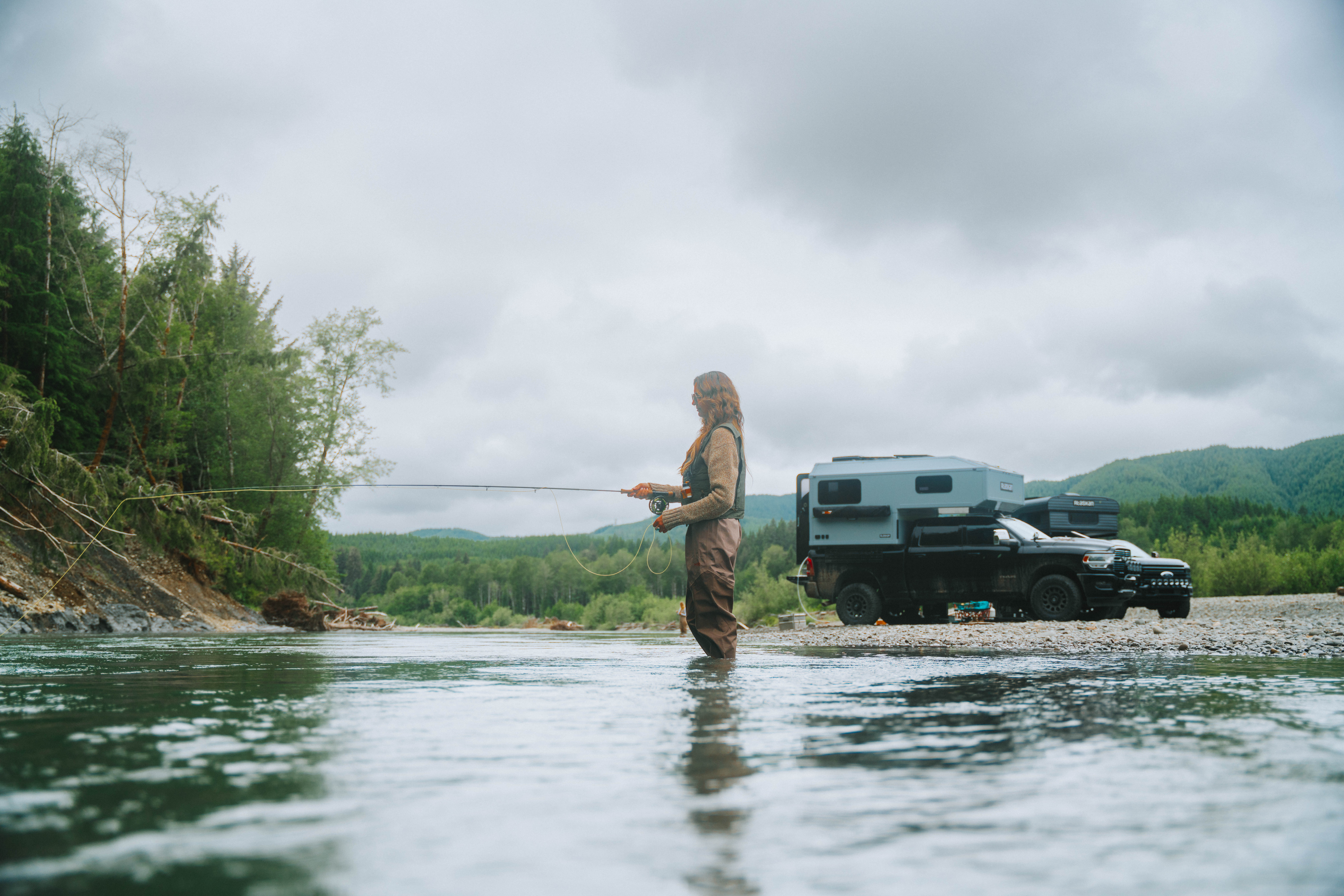
Forest to High Desert
The next leg carried them east on Highway 12, across the Cascades and into the drier country beyond. After days of rain and dense forest, the landscape opened quickly.
From there, they continued south into Oregon and the Lower Deschutes River canyon, where the road followed the water between steep canyon walls and miles of BLM land. Over the radio, Colten summed it up: “It just keeps getting better.”
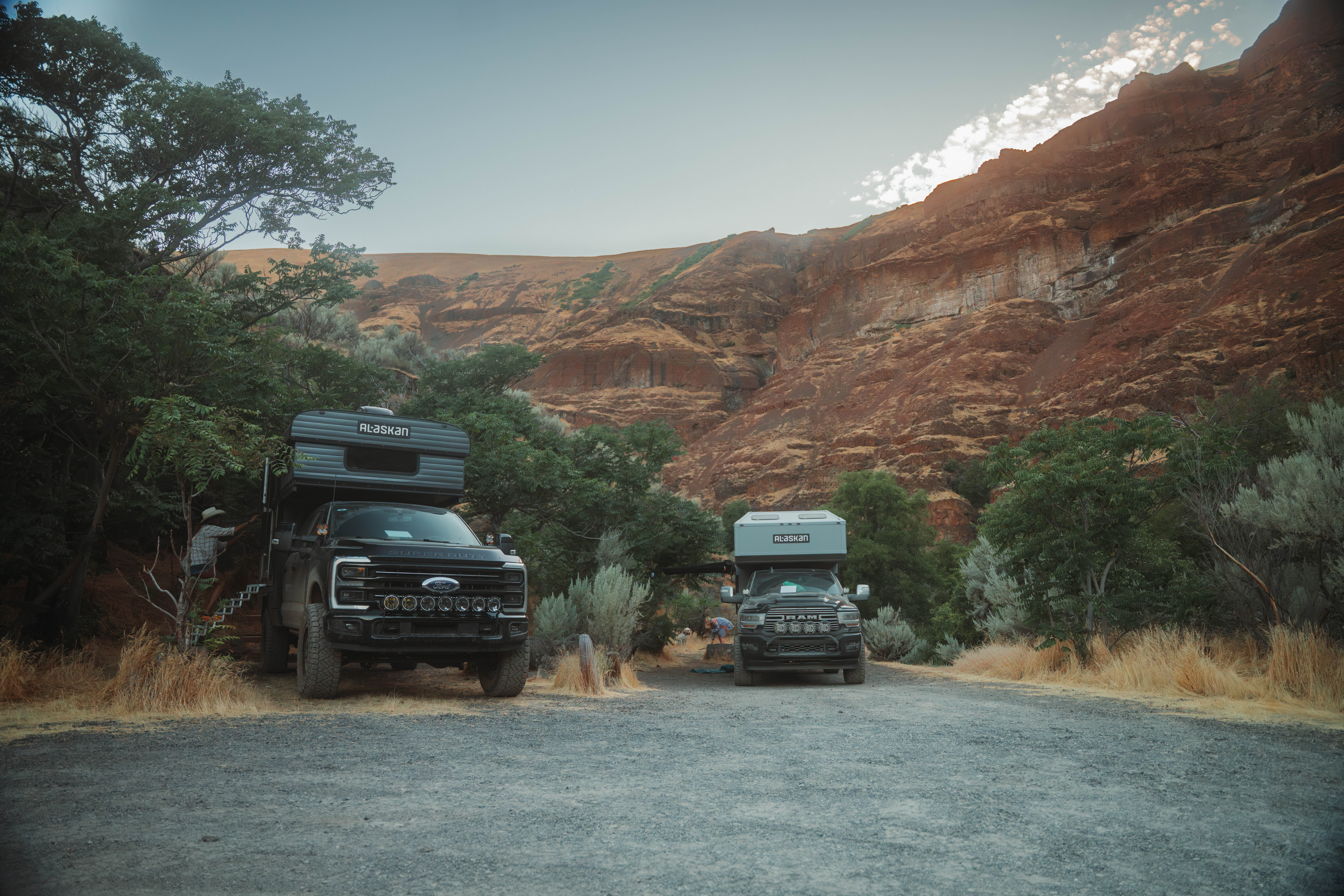
The canyon brought heat, open sky, and far less shade than the forest. The Bowen Customs exterior compartments on the flatbed kept wet and dirty gear outside the living space and proved secure enough to discourage the raccoons from investigating camp overnight. But Rainier was still waiting.
One More Run at Rainier
For the final night of the trip, Christina and Colten turned north and made one more attempt at the missing mountain shot. They returned to the same approach, climbed the same rutted road, and reached the campsite that had turned them away days earlier.
This time, it was open.
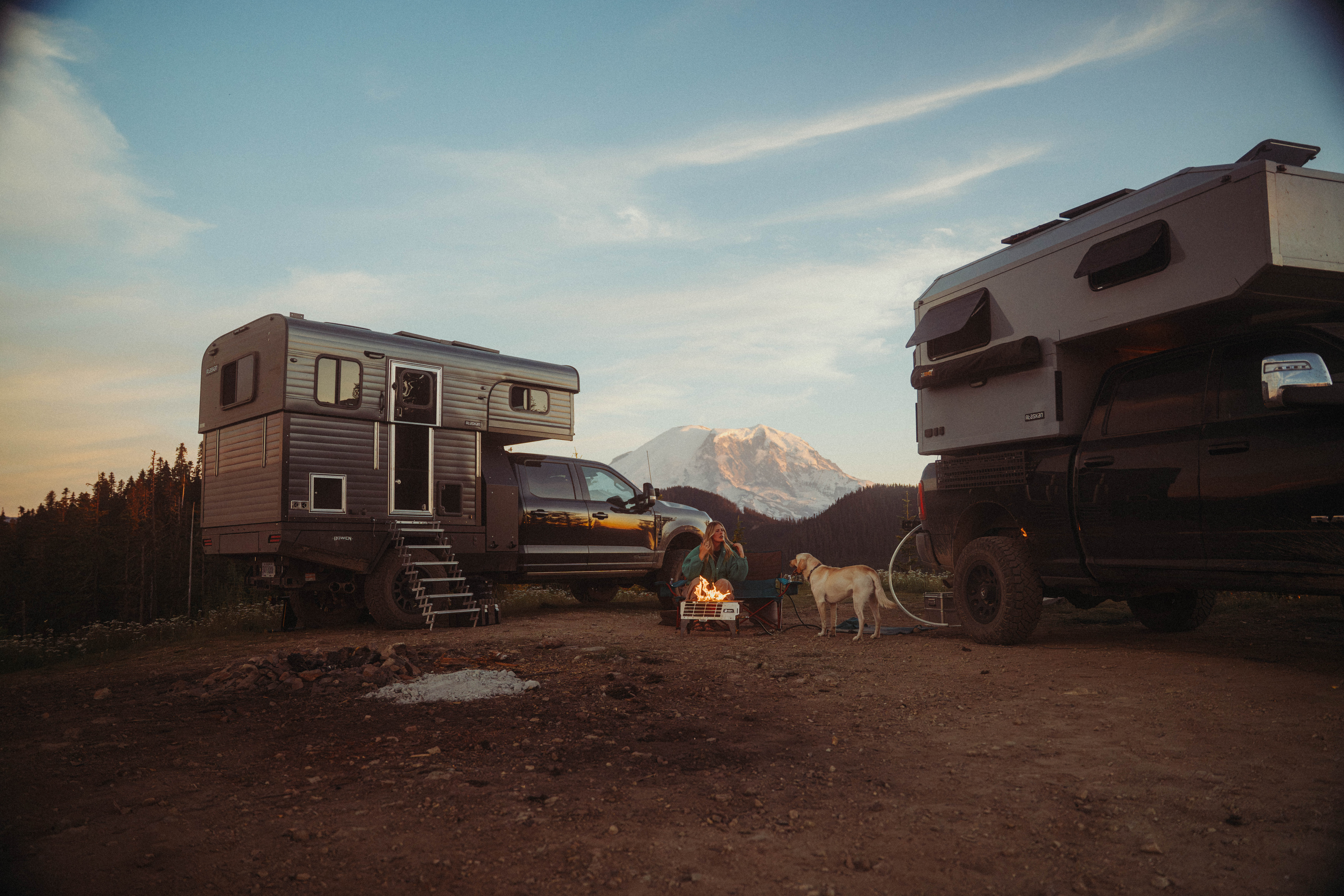
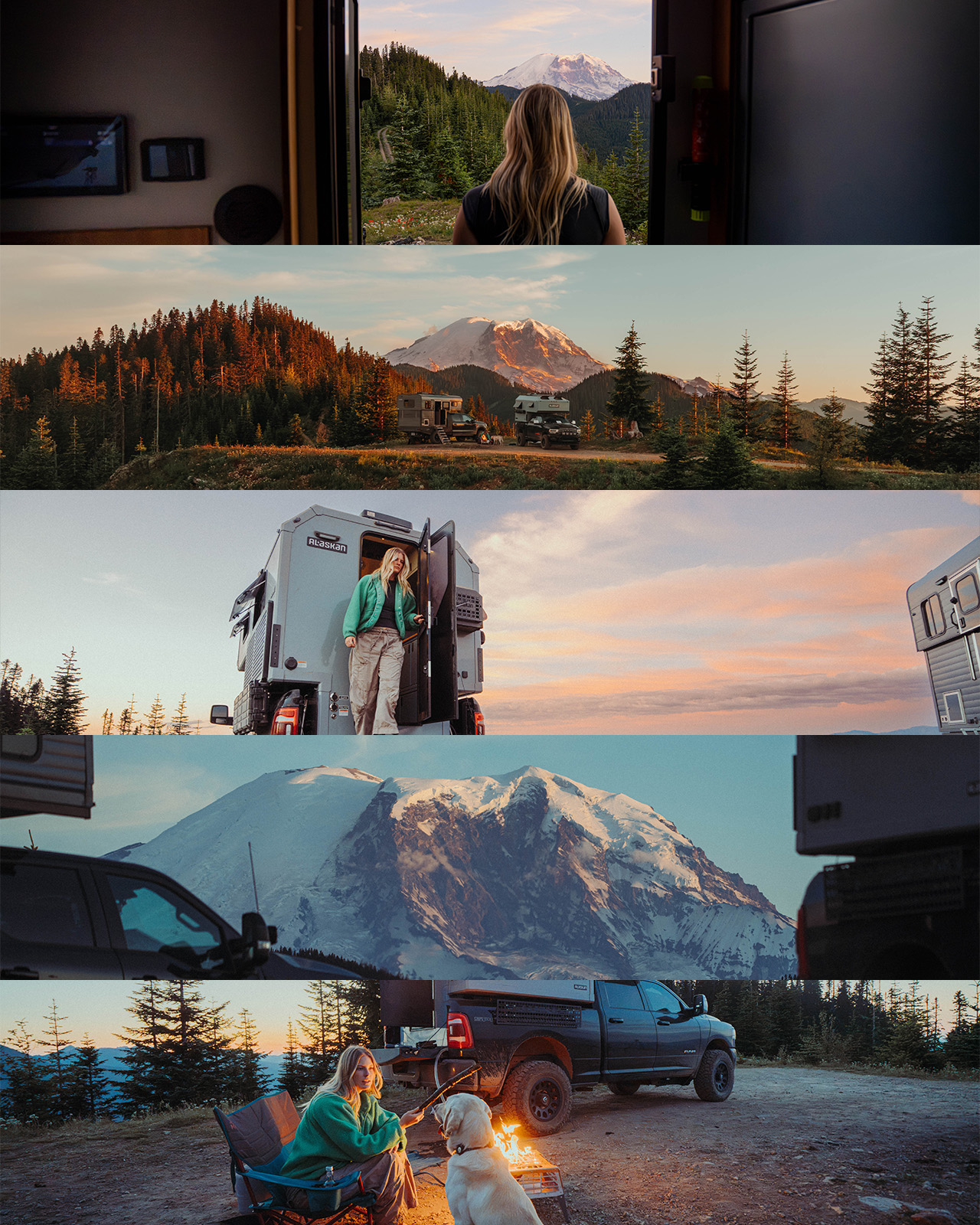 They positioned the trucks against Rainier, the lowered 800 Flatbed beside the taller fixed hard-side HS 640, and captured the image Christina had planned before the highway closure, the tight forest trail, and the occupied campsite forced the week in other directions.
Two different Alaskan designs had followed the same route through seven days of changing terrain and changing plans. Both were still ready for another night.
What Seven Days Revealed
Seven days of sand, salt spray, tight branches, mud, water crossings, and two climbs up the rough Rainier approach left their mark on the trucks, but neither camper suffered meaningful damage. Cabinets stayed latched and onboard systems kept working. The only casualty was a portable induction cooktop left unsecured on a closet floor. Its glass surface cracked, but nothing built into either Alaskan failed.
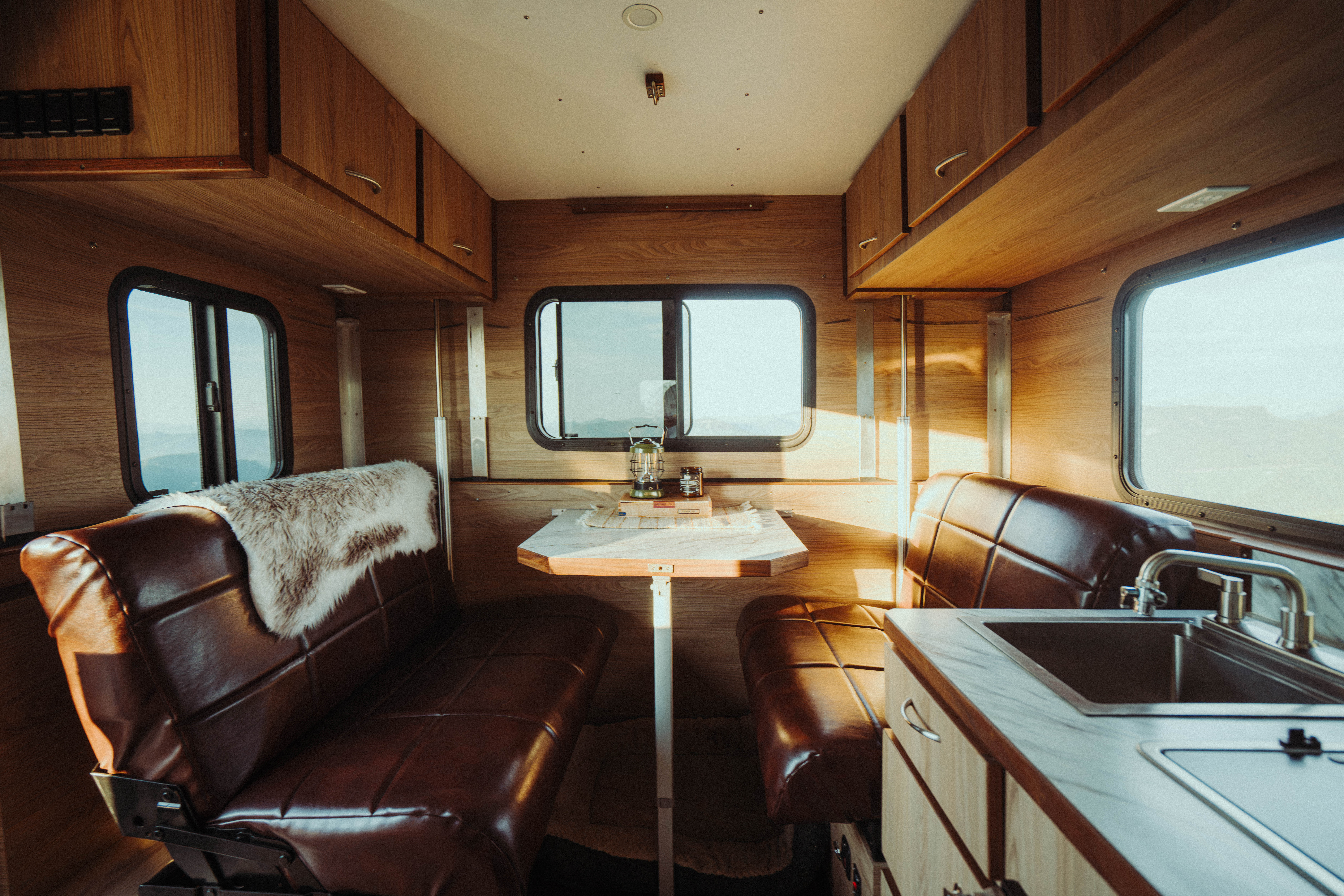
For Christina, the lasting impression went beyond durability. After traveling in everything from a Jeep and rooftop tent to motorhomes, travel trailers, and fifth wheels, she found the Alaskans noticeably warmer and more inviting than the plastic-heavy interiors she had experienced elsewhere. The wood cabinetry, leather upholstery, and material choices felt more like a small cabin than a conventional camper.
“It felt like walking into a little house instead of walking into a camper,” she said.
Photography and video: Colten Stephens, @realityfilm.co · Trip planning, content strategy, and supplemental photography/video: Christina Luppi, @huntressoffroad