The Guzzle H2O water filtration setup rounded out the conversation. It’s a point-of-use purification system — carbon block filtration with UV-C purification — that treats water at the faucet from the onboard tank. For visitors planning multi-day dispersed camping where water sourcing is part of the logistics, that’s a meaningful capability to have built in.
Alaskan Campers at Overland Expo PNW: A First Look at the HS 640
July 3, 2026
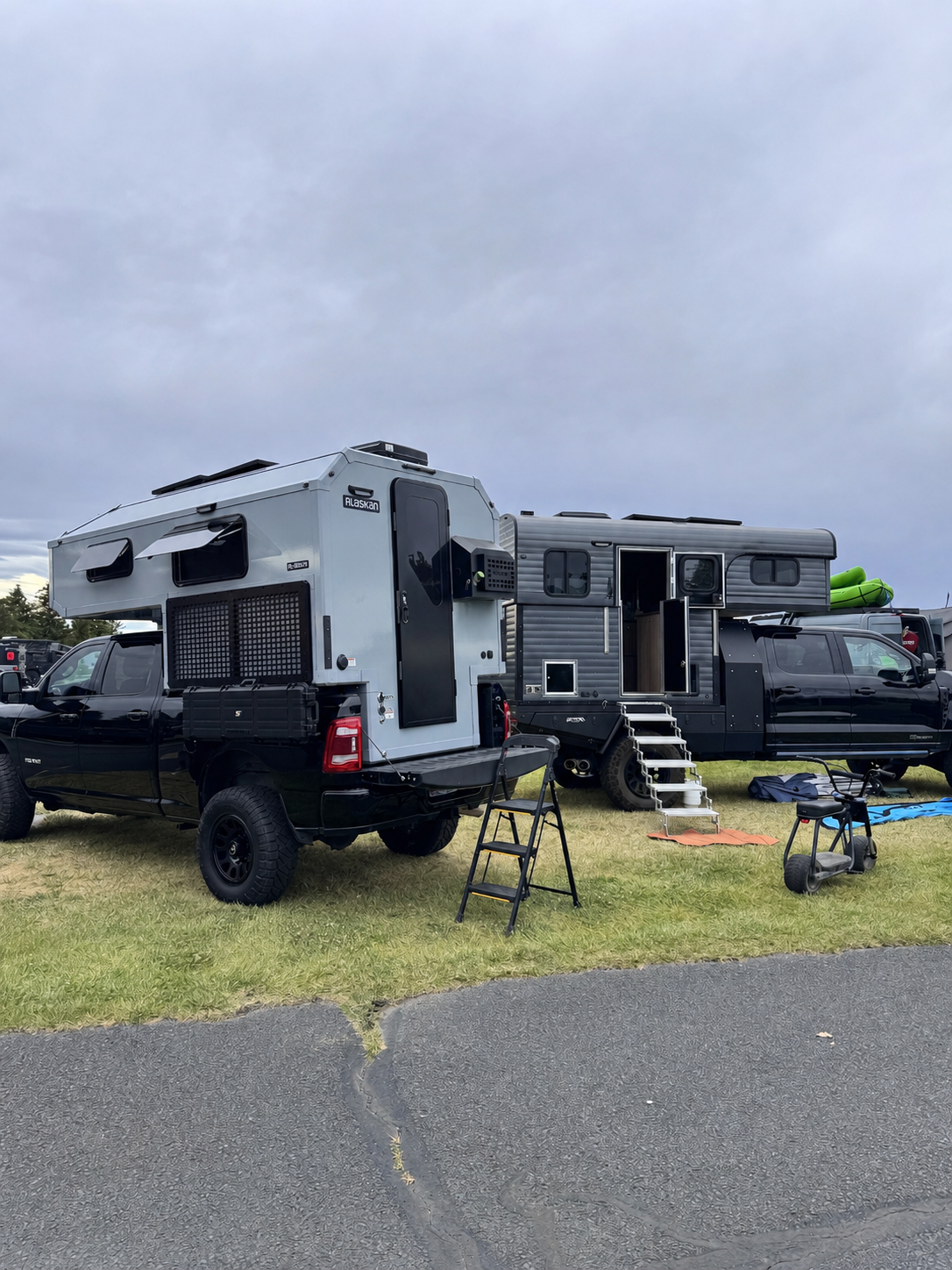
We just got back from Overland Expo Pacific Northwest in Redmond, Oregon — and what a weekend.
A Big Weekend in Redmond
Overland Expo Pacific Northwest drew 16,000 attendees to Redmond this year — traveling from 41 states and five countries, with Oregon leading at 46%, Washington at 23%, and California at 13%. These are people who show up with payload numbers, bed lengths, and build timelines already worked out.
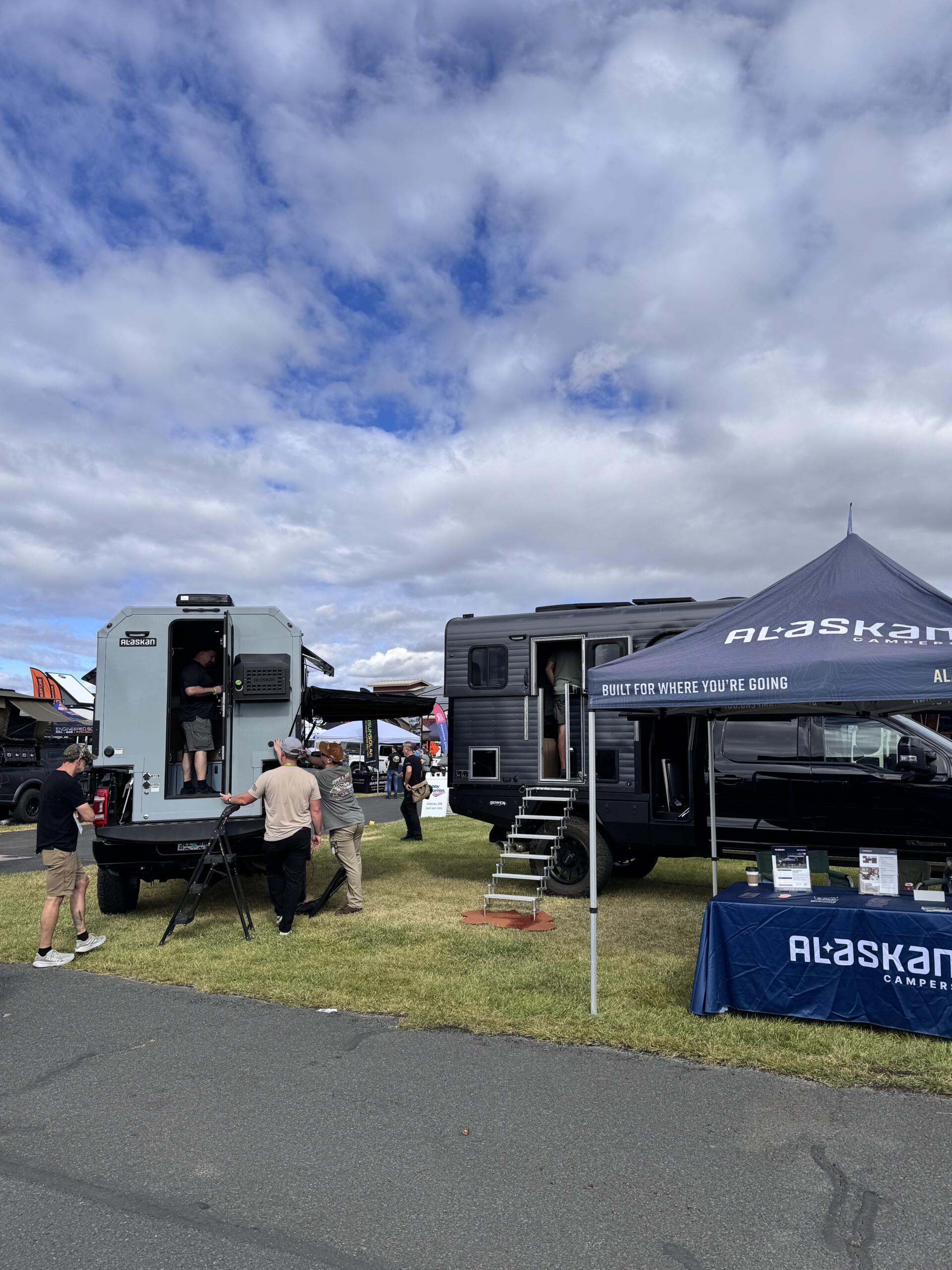
The conversations at booth F505 reflected that. Visitors weren’t asking abstract questions — they wanted to know whether the HS 640 could stay light enough for more trucks, carry enough power and water for serious off-grid travel, and still deliver the storage and comfort that makes longer trips worth taking. That’s exactly what the HS 640 was built to answer, and Overland Expo PNW put it in front of exactly the right crowd to find out.
The Alaskan HS 640: Specs, Construction, and What Makes It Different
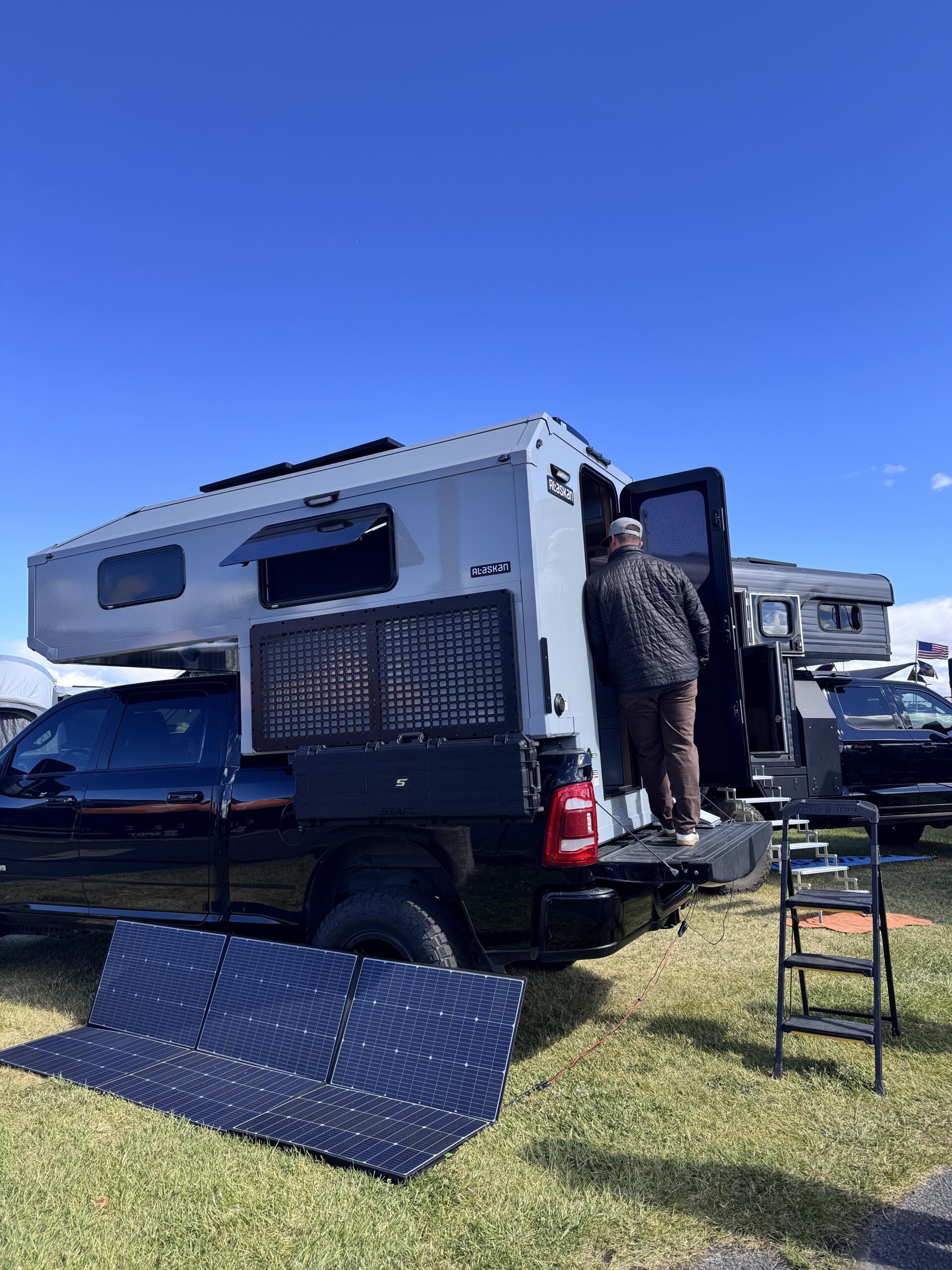
The HS 640 is a hard-sided, fixed-roof truck camper that starts at 1,200 pounds dry, measures 6.4 feet long, and travels at 86.5 inches tall. It was built to fit a wider range of trucks than previous Alaskan hard-sided models, including many standard 6.5-foot beds from Toyota, Ford, Ram, and Chevy, with the tailgate closed on many configurations. Overland Expo PNW gave folks the first chance to see it in person.
The HS 640 is a ground-up platform, not a revision of an existing model. The wall system uses 1.5-inch structural insulated panels — high-density PIR foam with fiberglass skins — delivering R-11 thermal performance in a rot-resistant, sealed shell. The frame uses Alaskan’s patent-pending aluminum and PVC thermal break hybrid, which interrupts heat transfer at the structural points where traditional aluminum conducts cold directly into the interior: corners, joints, and seams where temperature differential drives condensation.
Standard equipment includes a 15-gallon fresh water tank, dual Expion 360 GC2 batteries totaling 324Ah, a Victron SmartSolar MPPT controller, a 200W roof-mounted solar panel, 30-amp shore power, an external Starlink port, and an external solar port for portable panel hookup. Optional upgrades include additional battery capacity, expanded solar, a diesel heater, and the Nomadic X2 air conditioner.
What Visitors Noticed
Storage was the first thing that caught people off guard. Under-floor compartments, powder-coated aluminum cabinetry, bamboo countertops, a Lagun table, dual-pane tinted awning windows with integrated blinds and screens — the kind of interior you’d expect in a camper twice the size.
The power system drew equal attention. Visitors weren’t only asking what came standard — they were working through configurations on the spot. The show unit ran a fully loaded electrical setup: six Expion 360 GC2 batteries totaling 972Ah, a Victron SmartSolar MPPT controller, roof solar, and an external solar port for portable panel hookup. People could see exactly how the system scales — and the ceiling is high.
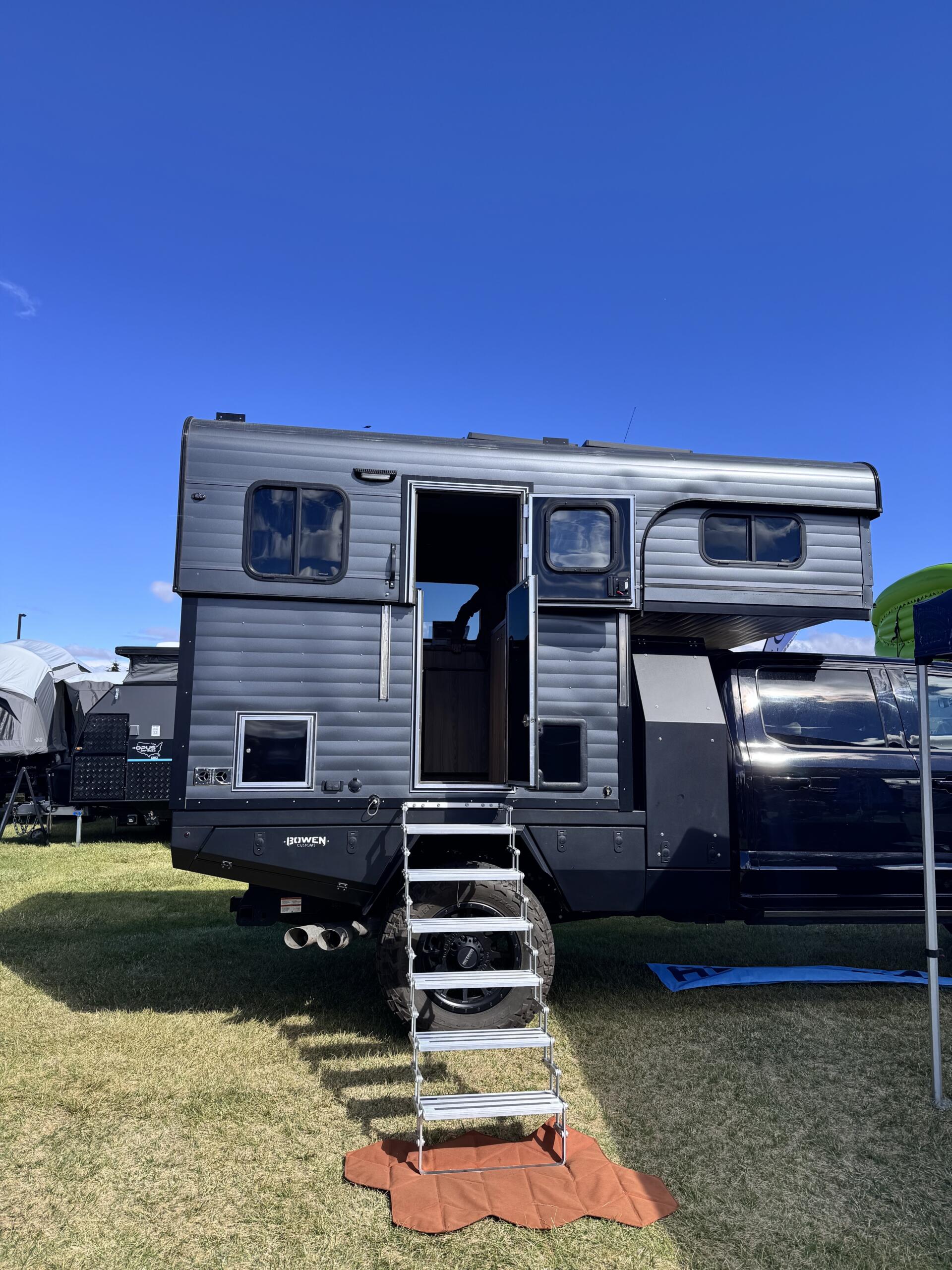
The Bowen Customs 800 Flatbed
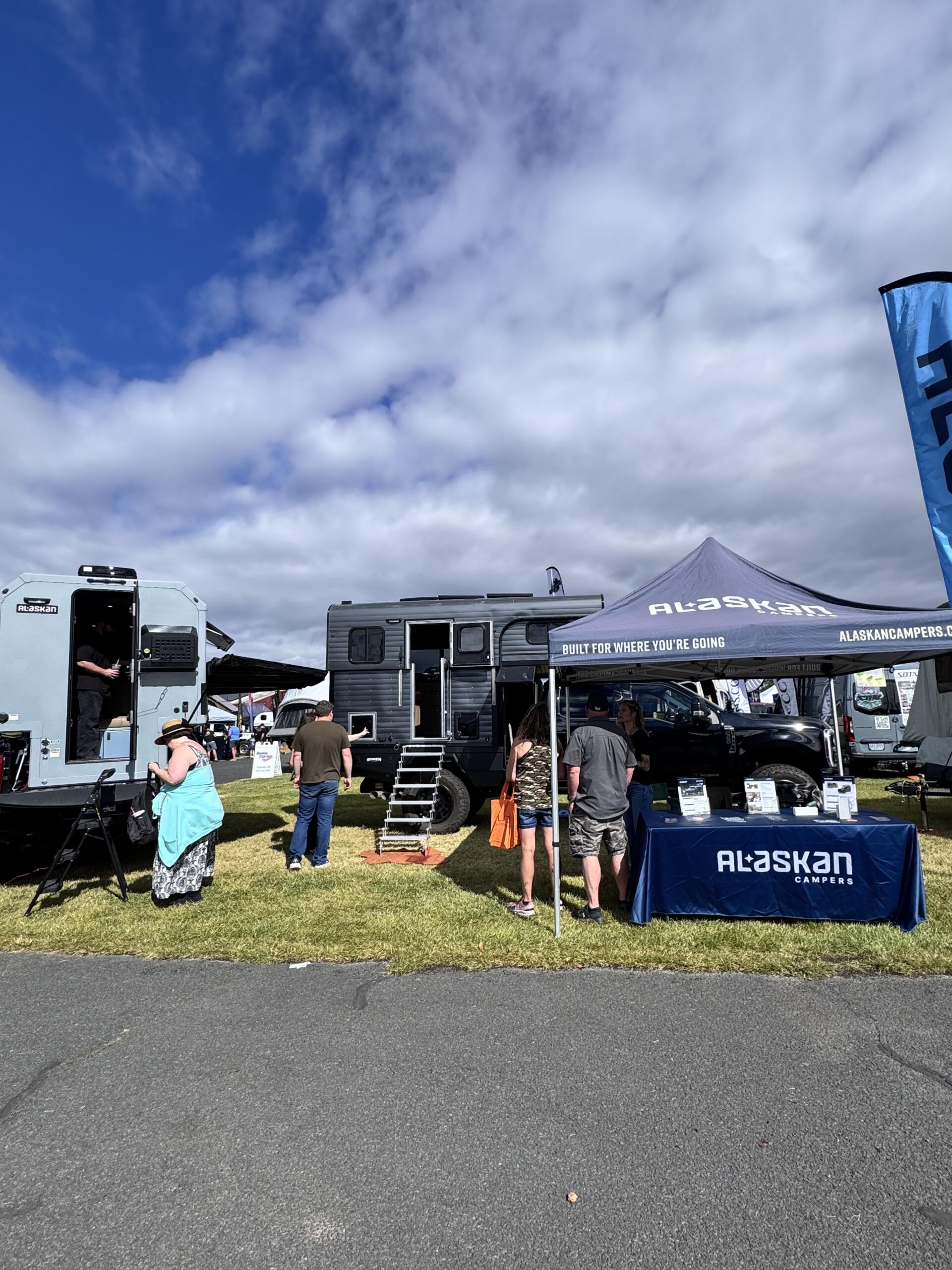
The second rig at booth F505 was the Alaskan 800 flatbed mounted on a Bowen Customs bed — a purpose-built, all-aluminum flatbed system made in Arvada, Colorado, with a lifetime warranty on craftsmanship and a design that holds the factory bed floor height to keep the center of gravity where it belongs.
Where the HS 640 is built around weight and accessibility, the 800 flatbed setup is built around capacity — more gear, more storage, a platform designed for the kind of trip where you don’t leave anything behind. Side by side, the two rigs gave visitors a concrete look at two directions within the Alaskan lineup, with the team on hand to help work through which setup matched their truck, their payload, and how they actually travel.
From the Booth to the Road
After three days in Redmond, both campers left the show for the Pacific Northwest — and we couldn’t be more excited about who’s taking them out there.
Christina Luppi of Huntress Offroad and Colten Stephens of Reality Film Co. took both the HS 640 and the Bowen Customs 800 flatbed on a 7-day road trip straight from the event — the HS 640‘s first real miles, in the hands of people who know how to use them. Colten is shooting. Christina is putting both rigs through their paces. They’re wrapping up as we publish this. Follow along on Instagram — Huntress Offroad, Reality Film Co., and Alaskan Campers.
View this post on Instagram
View this post on Instagram
What’s Next
The HS 640 made its debut in Redmond. Now it’s earning its miles in the Pacific Northwest. Next stop for the Alaskan team: Overland Expo Mountain West, August 21–23 in Loveland, Colorado.
If you’re going to be there, come find us.