Short Bed vs Long Bed: What You Gain, What You Give Up
Choosing between a short bed and a long bed isn’t a spec-sheet argument. It’s more like deciding between a short-wheelbase Jeep and a long-wheelbase Land Cruiser. Both will take you deep into the woods without complaint. The difference is in how they feel getting there. One is tight and responsive on narrow, technical trails. The other is composed and steady when the road opens up and the miles start stacking.
That’s the real difference here: nimble versus planted, compact versus steady. Bed length changes the proportions of the truck, and proportions are what you feel when a crosswind hits on the highway, when you’re backing into a Forest Service site, or when a trail narrows and the trees stop being polite. So instead of declaring a winner, let’s look at what each platform gives you — and what it quietly asks in return.
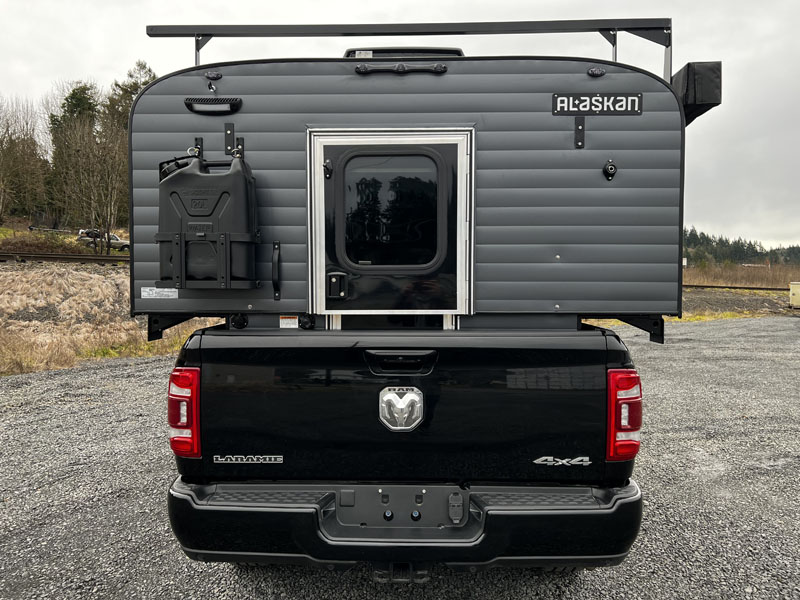
Start With the Real Question: What Platform Are You Building On?
Most buyers assume they’re just choosing a bed length. In reality, they’re choosing the platform that will determine how the entire truck behaves once it’s carrying weight.
- Payload reality — what your truck can legally and safely carry, printed on the certification label
- Wheelbase behavior — how stable the truck feels under sustained weight
- Turning radius and livability — how manageable it is in town and at trailheads
- Center of gravity and handling — how the whole rig reacts to wind and weight shifts
The underlying logic comes from basic vehicle-dynamics principles—the same ones applied in towing and load-rating standards, where axle loads and weight distribution are central to stability. Shifting weight rearward alters steering response and front-axle traction. Raising mass increases leverage and roll forces. These are mechanical relationships, not matters of brand preference.
Install the same camper on two different truck platforms and the driving experience can change noticeably. One configuration may feel stable and settled, while another feels more reactive, even if both fall within published specifications.
Much of that difference begins with bed length and the geometry that accompanies it.
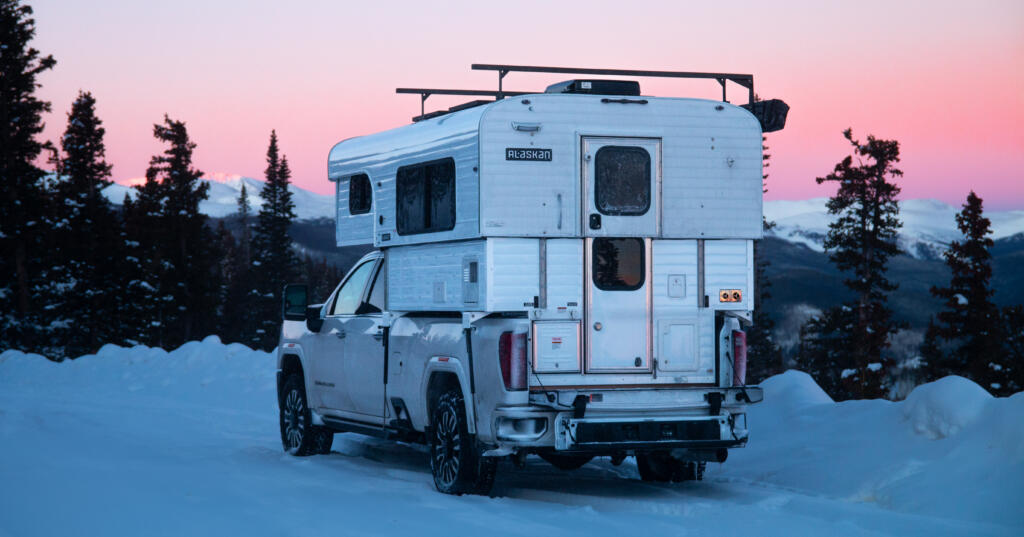
Define the Dimensions (Without Overthinking It)
Across today’s full-size truck market — Ford, Ram, General Motors (Chevy and GMC share platforms), and Toyota— bed lengths generally fall into three categories:
- Short bed: about 5.5–5.8 feet
- Standard bed: about 6.4–6.6 feet
- Long bed: about 8 feet
Those extra feet usually come with:
- A longer wheelbase
- A longer overall vehicle length
- Often different payload ratings, depending on configuration
Directionally, here’s how it plays out:
| Platform | What Changes | What It Feels Like |
| Half-ton short bed | Shorter wheelbase, shorter footprint | Easy daily livability, tighter payload margin |
| Heavy-duty short bed | Manageable length, strong payload | Balanced option for many pop-up builds |
| Heavy-duty long bed | Longer wheelbase, longer footprint | More stable under load, larger turning arc |
| One-ton long bed | Maximum payload headroom | Most flexibility and long-term margin |
Two grounding realities:
- The payload and axle ratings on your door sticker are specific to your truck. That number matters more than brochure claims.
- Stability is influenced by center of gravity height relative to track width. That “top-heavy” feeling has real engineering behind it.
In other words, bed length reshapes how the truck behaves once weight is added.

What You Gain With a Short Bed
Short beds prioritize maneuverability and everyday usability.
Daily drivability
A shorter truck simply asks less of you in normal life. You’re working with a shorter overall vehicle and usually a shorter wheelbase, which means tighter turning arcs and less tail swing. That translates to:
- Easier parking in town
- Fewer three-point turns in tight neighborhoods
- Less stress in crowded trailhead lots
Owners of long-bed crew cabs will say you adapt. And you do. But with a short bed, you adapt less often.
If a long bed feels like steering a full-length pickup through a grocery lot with intention, a short bed feels just a bit more forgiving.
Maneuverability off pavement
Shorter wheelbase can help in tighter terrain:
- Cleaner turns on narrow forest roads
- Fewer back-and-fill corrections
- Less rear-end swing around tight bends
You still have width. You still have weight. But you’re not managing as much length, which matters when the road isn’t generous.
Many experienced drivers will tell you long beds are capable off-road. They are. They just require more patience and more repositioning. A short bed reduces the choreography.
Tailgate functionality
For some owners, the ability to close the tailgate with the camper installed matters more than it sounds on paper. A properly designed short-bed camper—such as the Alaskan 630—allows the tailgate to shut on compatible short-bed trucks. That can mean:
- A cleaner, more finished look
- Additional security for gear stored at the rear
- Protection from road spray and debris
- Preserving factory camera and latch systems in some configurations
It’s not a universal requirement, but for buyers who value keeping the truck’s rear profile intact, it’s a meaningful detail.
Garage and storage fit
This is one of those details that feels small until it quietly dictates your entire ownership experience. A crew cab long bed can stretch past 260 inches in overall length. Many standard residential garages in the U.S. are 20 to 22 feet deep. That means a long-bed heavy-duty truck can physically exceed the space before you even account for bumpers, hitch receivers, or clearance for the garage door to close.
A short bed often brings the total length down by roughly 12–18 inches, depending on configuration. That difference can be the margin between:
- Parking inside versus leaving it outside year-round
- Closing the garage door versus leaving it partially open
- Storing at home versus paying for off-site storage
Driveway depth matters too. In tighter suburban lots, that extra foot can push the truck into the sidewalk or street. HOAs may not care how capable your setup is; they care whether it fits within property lines.
There’s also winter storage, security, and maintenance access to consider. Being able to park indoors:
- Protects seals, paint, and components from UV and weather exposure
- Reduces condensation and corrosion over time
- Makes loading and unloading gear more comfortable
- Adds security for both truck and camper
None of this is glamorous. But it’s practical. If your truck must live in a specific physical space, measure that space before you commit. Bed length doesn’t just change how the truck drives. It changes where it can live. For some owners, that’s not a lifestyle preference. It’s the deciding constraint.
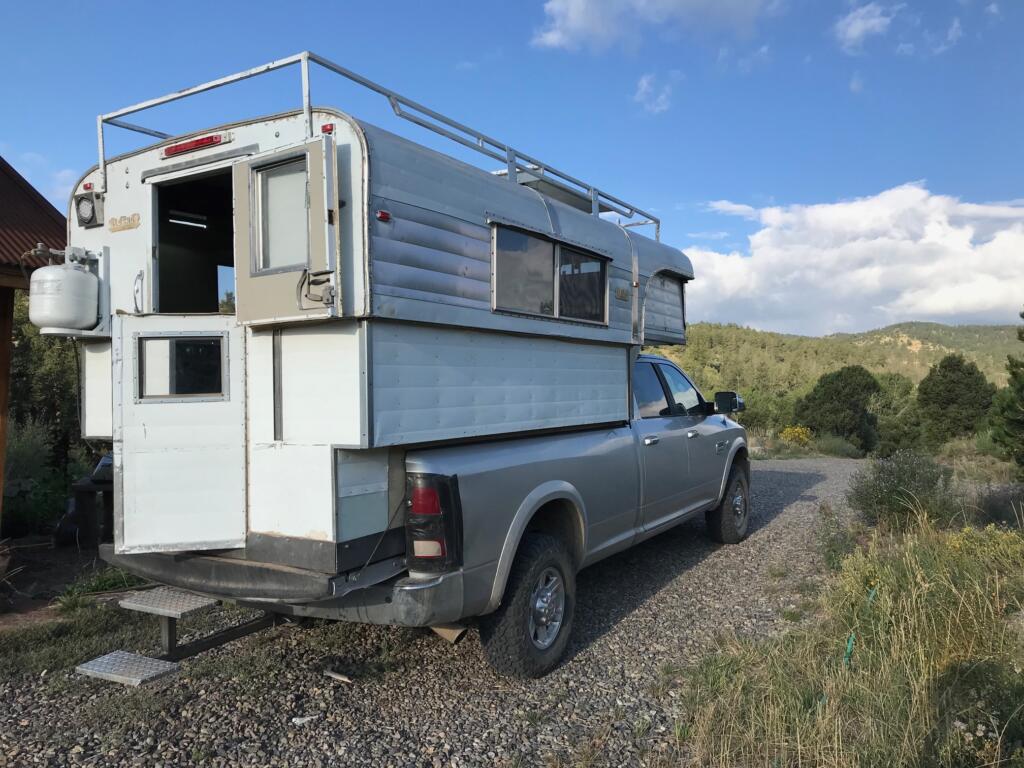
What You Gain With a Long Bed
Long beds prioritize stability, capacity margin, and long-term flexibility. They are less about convenience and more about mechanical breathing room.
Stability under load
Wheelbase matters. A longer wheelbase increases the distance between the front and rear axles, which changes how weight transfers through the chassis. Under sustained load, that added length tends to smooth out pitch and reduce the “busy” feeling some drivers notice with shorter platforms.
On the highway, that can translate to:
- More planted tracking at speed
- Reduced sensitivity to crosswinds
- Less fore-aft motion over expansion joints and dips
- A calmer steering feel when the camper is fully loaded
In towing standards such as SAE J2807, front axle load restoration is treated as critical because shifting weight rearward directly affects steering authority and stability. While a camper is not a trailer, the physics overlap: weight placement relative to axle position changes how the truck behaves.
A longer bed gives you more physical space to position mass forward of the rear axle, which can help maintain more balanced axle loading. The result is often a truck that feels less reactive and more settled when the miles stack up.
This matters most for:
- Long highway days
- Frequent crosswind exposure
- Heavier builds with water, batteries, and gear
Payload headroom
In many heavy-duty configurations, long-bed models carry higher payload ratings than their short-bed counterparts, depending on cab style, drivetrain, and trim. That additional headroom provides:
- Greater safety margin within rated limits
- More flexibility for water, gear, and passengers
- Room for future upgrades such as larger battery systems or auxiliary storage
The only number that counts is the payload rating printed on your truck’s certification label. That is the legally assigned capacity for your specific configuration. Where long beds often help is not just the number itself, but the margin. More margin means less operating near the edge of capacity, which generally translates to a more relaxed, predictable driving experience.
Practical flexibility
Longer beds often expand compatibility. The additional bed length can allow:
- Fitment of larger or different camper floorplans
- Reduced rear overhang relative to axle position
- Cleaner integration of toolboxes or auxiliary systems
- More room to manage tie-down geometry
This flexibility can matter for owners who:
- Plan to upgrade campers in the future
- Carry heavier gear
- Tow behind the camper
- Travel extended periods with more supplies
The tradeoff is direct: you are operating a longer vehicle.Parking requires more space. Turning arcs widen. Tight fuel stations, trailheads, and older campgrounds demand more planning.
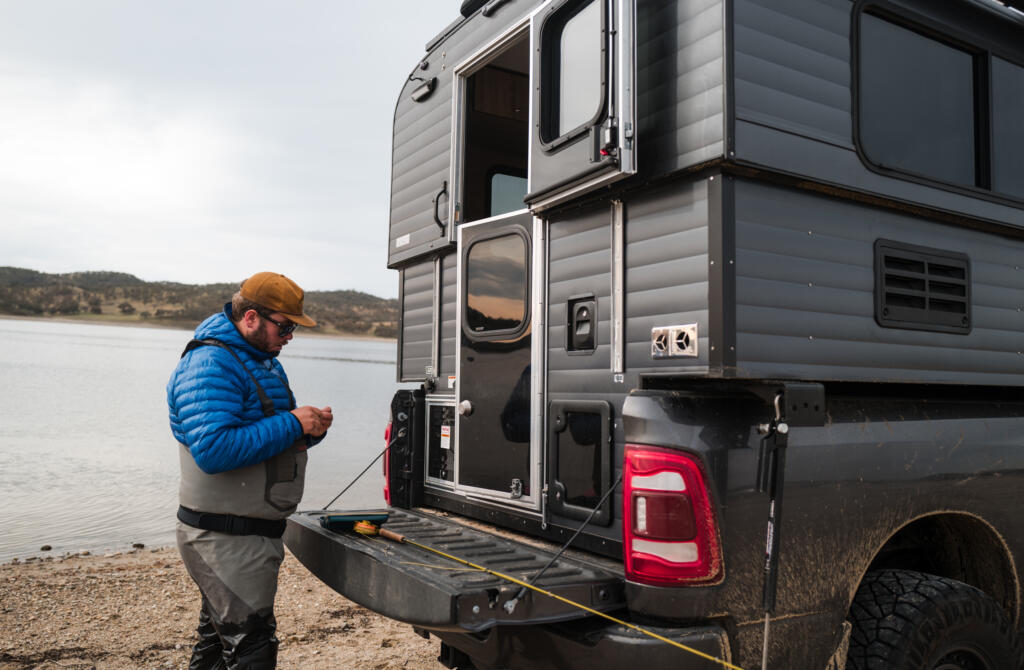
How This Applies to Alaskan Campers
Alaskan campers are designed around real truck dimensions, not theoretical ones. That matters because bed length doesn’t just influence driving feel. It influences fitment, tailgate interaction, center of gravity placement, and how weight sits relative to the rear axle. For short-bed owners, models like the Alaskan 630 are engineered specifically to:
- Fit within tight short-bed measurements
- Allow tailgate closure on compatible trucks
- Keep center of gravity positioned appropriately
- Avoid unnecessary rear overhang
That tailgate detail is more than cosmetic. For some owners, being able to shut the tailgate means improved security, a cleaner rear profile, protection from road spray, and in some cases preserving factory camera and latch systems. It’s a small design decision with real-world implications. For long-bed trucks, Alaskan’s larger floorplans take advantage of the added length to:
- Maintain balanced weight placement
- Provide more interior flexibility
- Reduce rear overhang relative to axle position
- Preserve stability margin on heavier builds
The common thread is restraint. Alaskan doesn’t chase square footage at the expense of balance. The camper is built to respect the platform it sits on.
That’s the real takeaway. Short bed or long bed can both work well. The key is choosing the truck that matches how you drive, then choosing the camper that was engineered for that specific geometry. When platform and camper are aligned, the whole rig feels calm. When they’re mismatched, you feel it immediately.