Rules & Permits for Alaskan Owners
The stuff nobody wants to read, delivered fast and with minimal pain.
Rules. Permits. Regulations. The holy trinity of things that can ruin a perfectly good trip if you ignore them long enough. But here’s the upside: your Alaskan’s hard-sided, low-profile design already skips a lot of the nonsense that slows other campers down. Think of this as your shortcut to staying legal, staying smart, and staying far away from county offices run by folks who’ve probably never camped a day in their lives.
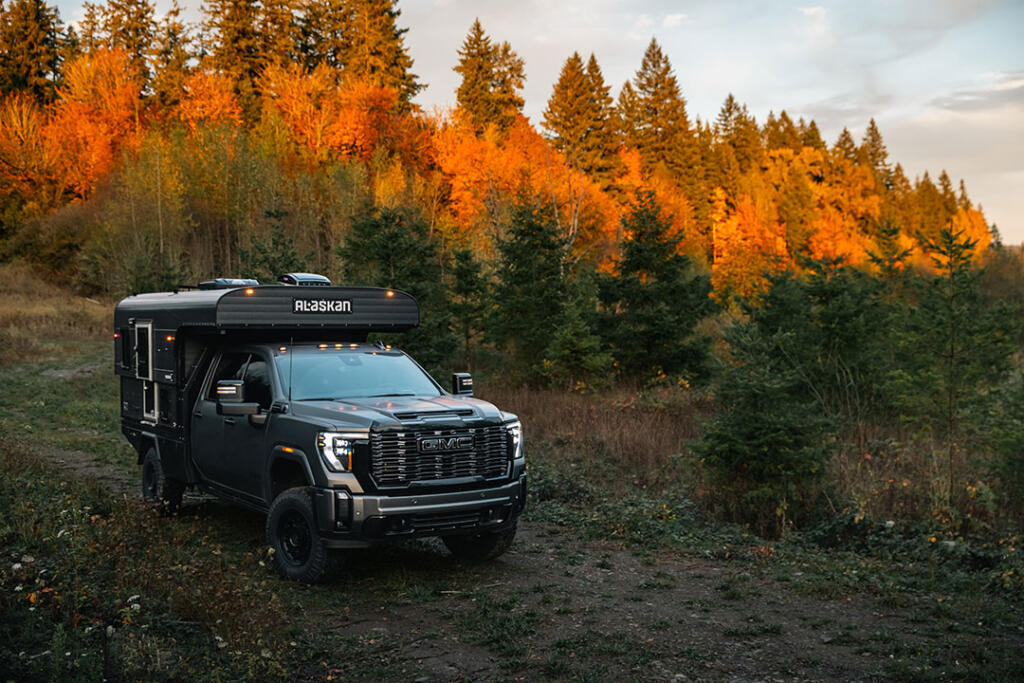
Registration: Do You Need It? Maybe. Depends.
Truck camper laws are gloriously inconsistent. Some states treat slide-ins like cargo. Others see them as small RVs. A few? Still operating like it’s 1975.
The good news:
- An Alaskan is a slide-in.
- It’s not permanently attached.
- Most states classify it as cargo, not a separate vehicle.
Translation: fewer DMV headaches.
If you’re in a state that does require registration (hi Idaho, hi Pennsylvania), gather:
- Your manufacturer’s certificate of origin
- Purchase paperwork
- Weight specs
- And the patience to explain what a hard-sided pop-up is to someone who’s only seen fifth-wheels
Keep your documents tidy and accessible — bureaucracy moves faster when you don’t look confused.
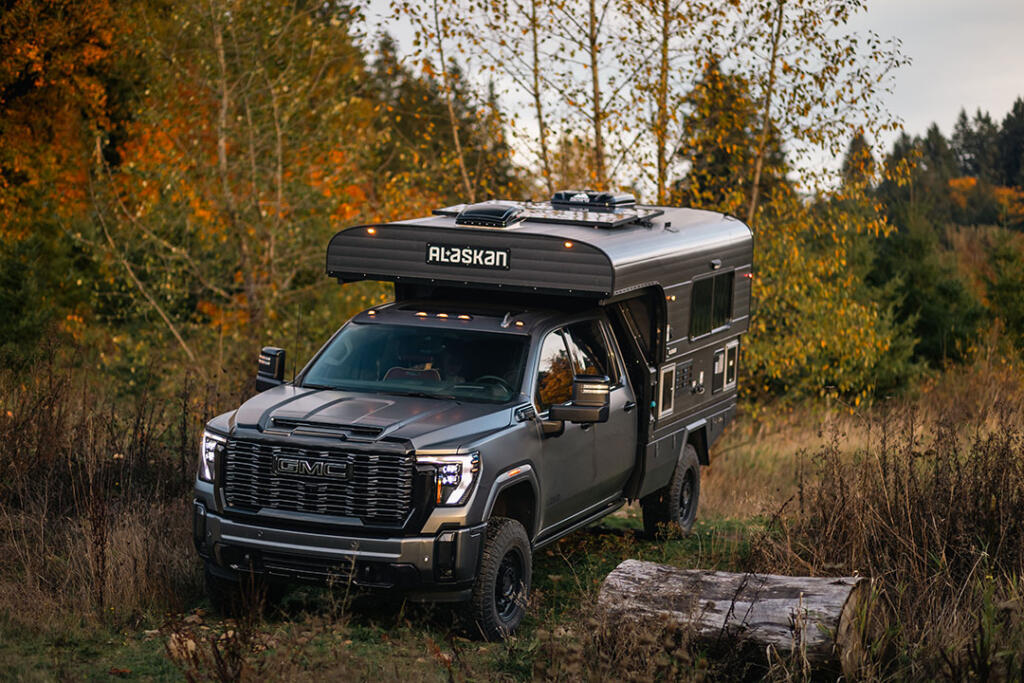
On the Road: Height, Weight, Propane & Traveling
Your Alaskan’s low profile really earns its keep here — but even if you’ve got another setup, these points still matter.
Height? You’re probably slipping under most overpasses without a second thought, but it’s still worth knowing your loaded height — racks, solar, bikes, all of it. Overhead clearance surprises are never fun.
Windy stretches? Hard sides and a low roof help cut down the sway, but no camper’s immune to gusts. If it’s howling, slow down. Hands on the wheel. It’s not a race.
Weight checks? You’ve got better odds of staying legal — assuming you didn’t pack that entire cast-iron collection “just in case.” Always know your payload and axle limits.
Propane stuff:
Tunnels and ferries usually want tanks off. Some ferries do visual checks. Know how many tanks you’re carrying, where they’re stored, and follow posted signs. It’s easier than trying to argue with ferry staff who have zero chill for flammable stuff.
Winter traction? These rules hit your truck — not your camper — but still matter. Snow-rated tires, chains, AWD… whatever the sign says, follow it. Being compact helps in slick terrain, but it’s not a magic solution. You’re not immune just because your rig looks smaller.
Bottom line: stability, visibility, and weight discipline pay off — no matter what kind of camper you’re hauling.
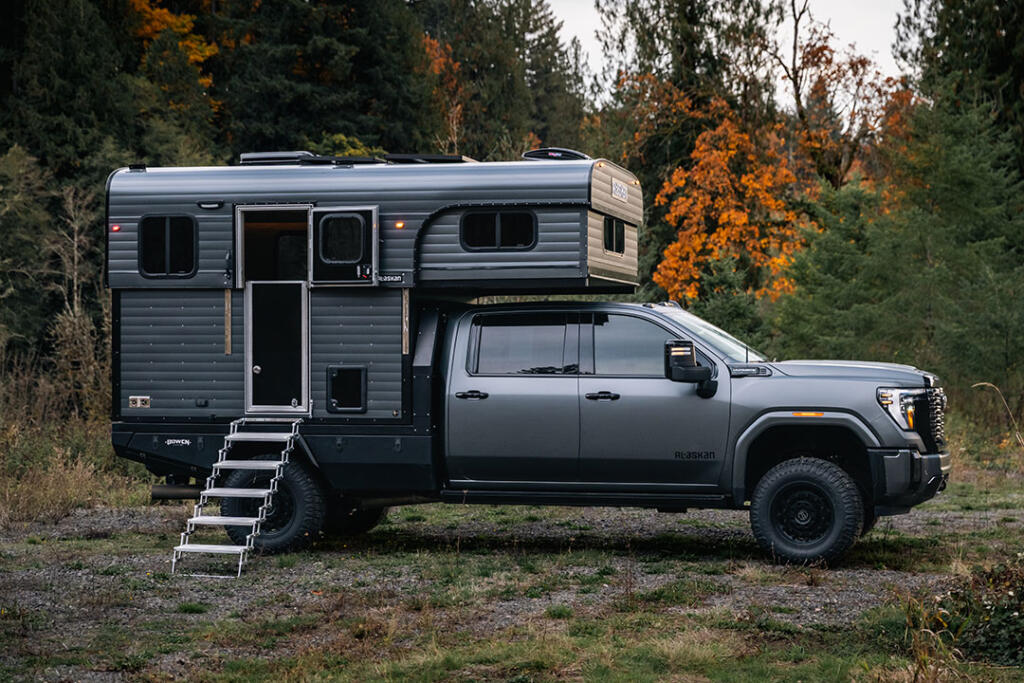
Dispersed Camping: Where You Can Stay (And Where You Definitely Can’t)
Dispersed camping is where your Alaskan really earns its keep. Hard walls, a low stance, and a heater that doesn’t require a generator make you a cleaner, quieter neighbor in the backcountry. But “pull over anywhere” is not how the Forest Service defines dispersed camping.
Finding Spots That Are Actually Legal
Stick to National Forests and BLM land. They allow camping outside developed campgrounds, just with expectations. Helpful tools:
- Local USFS ranger district maps
- BLM recreation maps
- Satellite imagery to confirm land ownership
- Apps (great for ideas, terrible for accuracy — always double-check)
Your Alaskan’s footprint lets you squeeze into rougher, narrower, more remote pockets without turning back a quarter-mile in. For deeper scouting help:
Rule Refreshers
Most public-land districts follow the same core expectations:
- Stay limits (usually 14 days)
- Camp 100–200 feet from water
- Check fire restrictions before lighting anything
- Pack out trash and dump gray water properly
- Don’t build structures or improvements
Simple rules, but they keep dispersed areas open. And your Alaskan’s design naturally keeps you in compliance — hard walls in bear zones, no generator roar, no awnings sprawling into traffic.
Parking Lots, Pullouts & Trailheads: The Gray Areas
These are the gray areas.
Parking lots (Walmart, Cabela’s, Cracker Barrel):
Overnighting is often allowed, camping is not. Ask permission, stay low-profile, and don’t deploy furniture.
Highway pullouts:
These belong to the state, not the forest. Parking may be allowed. Sleeping often isn’t.
Trailheads:
Parking is fine. Staying the night often isn’t. Drive just a bit farther down the forest road and you’ll usually land in legal dispersed territory.
Your Alaskan helps you blend in, but it’s not a cloaking device. When in doubt, move.
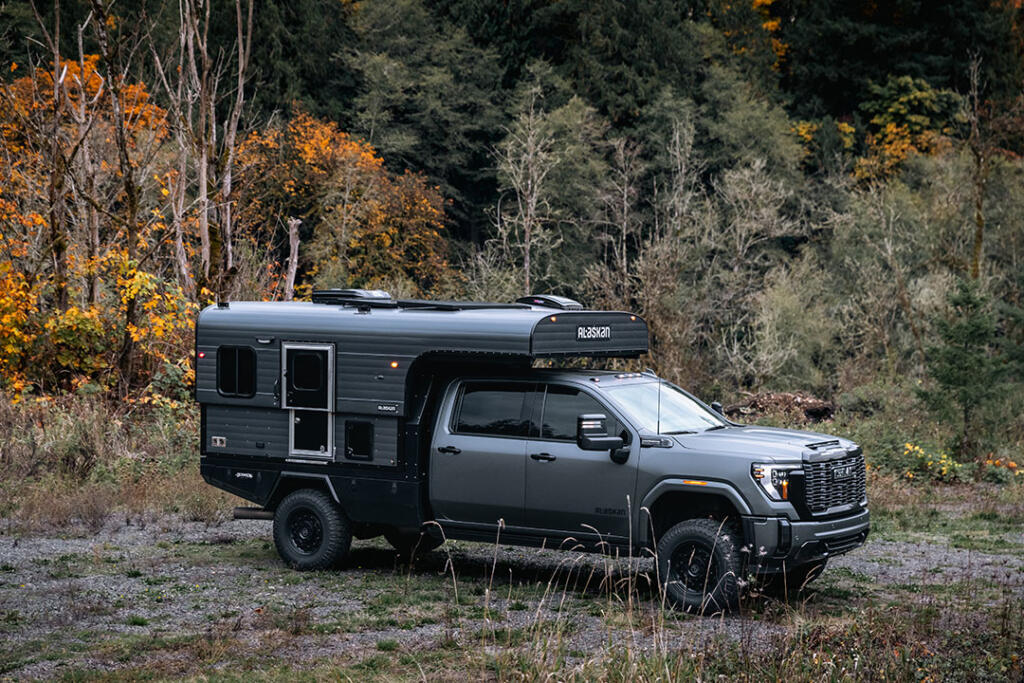
Waste, Water, Fuel & Fire Rules
This is the unglamorous part of camping — and one your Alaskan makes easier.
Cassette Toilets
Cassette toilets are widely accepted and avoid the septic rules tied to permanent black tanks. They’re portable, self-contained, and welcome at most dump stations. No need for hookups. No need for full-service campgrounds.
Gray Water
Gray water creates more trouble than black water because people underestimate it. With an Alaskan’s simple gray-water setup, the rules stay straightforward:
- Keep it contained
- Dump at approved sites only
- Don’t leave puddles behind (rangers notice, wildlife notices, everyone notices)
Propane
Your cylinders sit in a vented, purpose-built locker — perfect for ferry and tunnel rules.
- Shut valves during travel
- Expect inspections on ferries in WA, BC, and AK
- Declare propane when signage requires it
Your efficient heater keeps you off generators — a massive advantage in fire season.
Fire Rules
Western states rotate between Stage 1 and Stage 2 bans depending on conditions. Your Alaskan makes these easy to follow.
- When flames are banned, your heater is not
- When sparks are risky, you stay warm anyway
- No need to push the limits of what’s technically allowed
State & County Quirks
Every state insists their rules are “simple.” Sure. A few patterns:
- California: strict waste and fire enforcement
- Colorado high country: short stay limits, heavy ranger presence
- Washington coast: sensitive waterways → tighter wastewater rules
- Idaho & PA: camper registration required
- Arizona & Utah hotspots: crackdowns on overuse and dispersed-camping abuse
Why this matters for Alaskan owners: your rig is tidy, compact, and doesn’t look like an illegal semi-permanent dwelling someone dragged into a turnout. Hard walls and no slide-outs tend to reduce ranger curiosity.
Quick-Start Owner Action Plan
A 60-second check before you roll out solves most problems.
Before You Head Out:
- Propane filled and valves working
- Fire restrictions checked
- Stay limits confirmed
- Road closures noted
- Payload verified (see our Payload Sticker Guide)
If You’re Staying Longer:
- Check septic and utility rules
- Confirm whether extended stays require permits
Short stays usually equal “camping.” Long stays can legally become “temporary dwelling,” and counties like to get involved there.
Conclusion: A Little Preparation Goes a Long Way
Rules and permits aren’t the exciting part of owning an Alaskan — but they’re also not the burden they look like. Your camper was built for the places where regulations get picky: windy ridges, fire-restricted forests, ferry crossings, tight trailheads, shoulder-season cold snaps, remote dirt roads, and the occasional Walmart you promised yourself you’d never camp behind.
The better you understand the rules, the more invisible you become in the best possible way: compliant, quiet, unbothered, and able to roam farther than most campers even attempt. That’s the real joy of an Alaskan — the freedom to go where others hesitate, without giving a ranger or a county clerk a reason to knock on your door.
Study the rules once. Follow them easily. Then forget about them and enjoy the part you actually bought the camper for: going places that feel good on purpose.