Pop-Up Camper Showdown: How Alaskan Stacks Up
We know—we’re biased. But if you’re comparing pop-up campers, here’s the honest, slightly self-serving truth about why hard-sided Alaskans still lead the pack.
Let’s start with the obvious: you’re on the Alaskan Campers website. We’re not exactly impartial.
So yes—take everything here with a healthy grain of road salt.
We’re not here to trash other brands. There are a lot of smart, passionate builders in this space making solid campers. But if you’re researching pop-up truck campers and want to know what really sets a hard-sided Alaskan apart from everything else out there—we’ll shoot you straight.
This guide sticks to true pop-up campers—no giant hard-side slide-ins, no rooftop tents bolted to Tacomas. Just real pop-ups. And if you’d rather get a more neutral take (we promise we won’t be offended), check out the excellent comparison work over at Truck Camper Magazine.
We’ll look at the biggest names: Cube Series, Four Wheel Campers, Hallmark, Northstar, OEV, Palomino, Phoenix, Scout, Soaring Eagle, and Supertramp.

Pop-Up Types, Simplified
There are really two main flavors of pop-up campers:
- Soft-wall (fabric sides) — lighter, cheaper, and breezier (literally).
- Hard-wall (solid sides) — heavier, quieter, and built to last.
Most pop-ups use some form of canvas or layered fabric for the upper walls. It keeps weight down and cost reasonable, and it’s perfectly fine—until a storm rolls in sideways or the morning frost turns your wall into a sponge.
Then there’s the hard-wall camp—brands like Alaskan and Cube Series, plus a few newer or custom builders experimenting with rigid panels. (Supertramp does offer a hard-sided model, but it’s not a pop-up.) These designs replace fabric with insulated, solid walls that rise and seal tight.
Canvas has its charm—it flaps, it breathes, and it gives you that “sleeping in nature” soundtrack whether you want it or not. But those same soft walls also stretch, shrink, and wear over time, and zippers eventually lose the battle against dust and sun. Hard walls, on the other hand, skip the maintenance drama altogether—no flapping fabric, no sticky zippers, just quiet, weather-tight comfort year after year.
Quick Comparison Table
| Brand | Wall Type | Typical Dry Weight | 4-Season Ready | Unique Traits |
|---|---|---|---|---|
| Alaskan Campers | Hard-sided telescopic (hydraulic lift) | 1,550–2,250 lbs | Yes | The original hard-side pop-up. Insulated, lockable, and built to outlast the truck beneath it. |
| Cube Series | Hard-sided fold-up panels | ~1,200 lbs | Yes | Modular walls, lightweight, modern approach. |
| Four Wheel Campers | Fabric soft-wall | 1,000–1,300 lbs | 3-season | Proven design, huge community, off-road appeal. |
| Hallmark | Fabric soft-wall | ~1,200 lbs | 3–4-season | Composite construction, quality fit/finish. |
| Northstar | Fabric soft-wall | ~1,250 lbs | 3-season | Classic layouts, value-friendly. |
| OEV (Back Country/CAMP-X) | Fabric soft-wall | ~1,300 lbs | 3-season | Rugged composite shell, overland focus. |
| Palomino SS | Fabric soft-wall | ~1,600 lbs | 3-season | Affordable and widely available. |
| Phoenix Pop-Up | Fabric soft-wall | 1,000–1,600 lbs | Optional | Custom-built per owner specs. |
| Scout Olympic Pop-Up | Fabric soft-wall | ~1,100 lbs | 3–4-season | Lightweight, modular. |
| Soaring Eagle OV-X | Fabric topper | ~600 lbs | 3-season | Minimalist and budget-friendly. |
| Supertramp Flagship LT | Fabric soft-wall | 1,400–1,700 lbs | Yes | Premium composite pop-up with fabric sides and modern systems. |
| Supertramp Flagship HT | Hard-sided (not a pop-up) | ~1,400 lbs | Yes | Fixed hard-wall model for buyers who prefer a non-pop-up design. |

Let’s Talk Reality: Hard-Sided vs Soft-Walled
Soft-walled campers dominate the market because they’re light, easy to ship, and fit neatly into tight spaces. They’re great for fair-weather travelers or anyone counting every pound on the scale. But for every pound you save, you give up something: insulation, soundproofing, longevity, and—let’s be honest—privacy.
That’s where hard-sided pop-ups like Alaskan (and a few newer or custom hard-wall builders, such as Cube Series) come in. They trade a little extra weight for a lot more comfort and durability. The hydraulic telescoping design of an Alaskan Camper delivers what most soft-walls simply can’t:
- Real insulation that actually holds heat in the cold and keeps things cool in the desert.
- Lockable, solid walls that feel like a proper cabin, not a tent balanced on your truck bed.
- Quiet. No flapping fabric, no zipper maintenance, no wind whistling you awake at 2 a.m.
- Longevity. Many Alaskans built in the 1960s and ’70s are still rolling strong. Find a 50-year-old soft-wall that isn’t more patch than canvas—we’ll wait.
Cube Series deserves credit for its clever solid-panel design—it’s a creative, lightweight take on the hard-wall idea. But that minimalism cuts both ways: limited layouts, tight space, and a design that feels more clever than comfortable. It’s smart engineering for short trips, just not built with the same long-haul comfort or customization you get in an Alaskan.
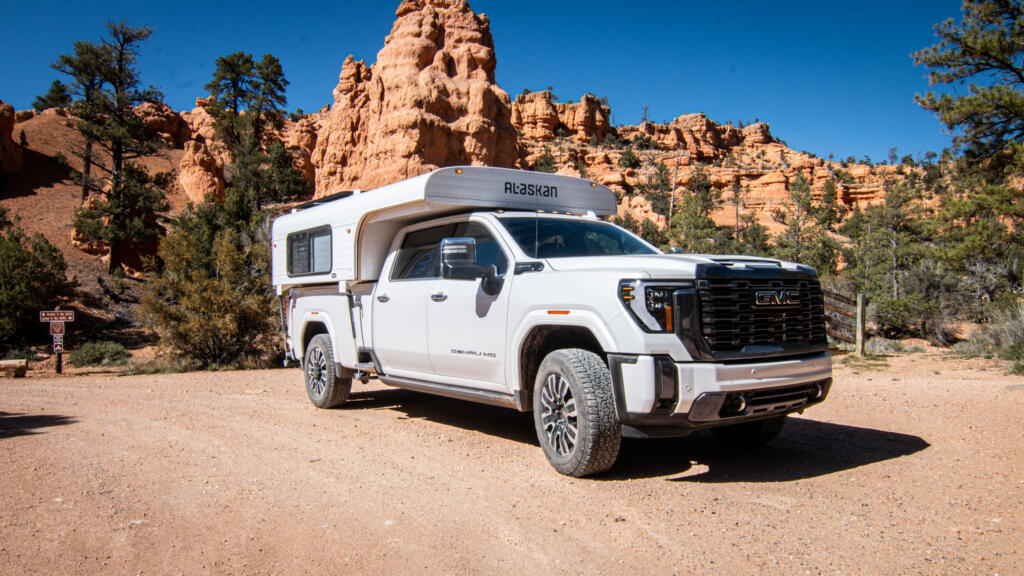
Case #1: The Longevity Equation
We’re not going to get into longevity comparisons or take cheap shots at anyone else in the pop-up world—that’s not our style. We’ll leave the “my camper lasted longer than yours” arguments to the forums. What we can speak to is our own track record.
When an Alaskan is cared for, maintained, and actually used—not left baking in a field or forgotten behind the garage—it can last for generations. We’ve seen it time and again, from freshly restored 1960s models still hitting the road to owners like Curran and Dawn Foley, who’ve had four over the years—not because the old ones failed, but because each new one fit their life a little better.
That kind of loyalty doesn’t come from hype—it comes from solid bones:
- Simple, serviceable construction that rewards care and attention
- All-metal hydraulic lift system—no cables, cranks, or mystery parts
- Marine-grade materials built for real weather, not showroom lighting
- Hand-built craftsmanship that’s been done the same way for decades
And here’s the thing: that durability doesn’t end when the camper leaves the factory. Every Alaskan is still built with parts and panels we can replace decades later—try calling your soft-wall manufacturer for a 1982 window gasket and see how that goes. That kind of repairability keeps older Alaskans on the road and drives their resale value; used ones sell fast and rarely cheap because they don’t age like typical RVs. We’re not calling them investments, but the depreciation curve looks more like a gentle slope than a cliff. Take care of an Alaskan, and it’ll return the favor for decades; neglect it, and it’ll politely remind you that “maintenance-free” was never part of the deal. Treat it right, though, and you’ll see why some campers get passed down—not just as gear, but as part of the family story.
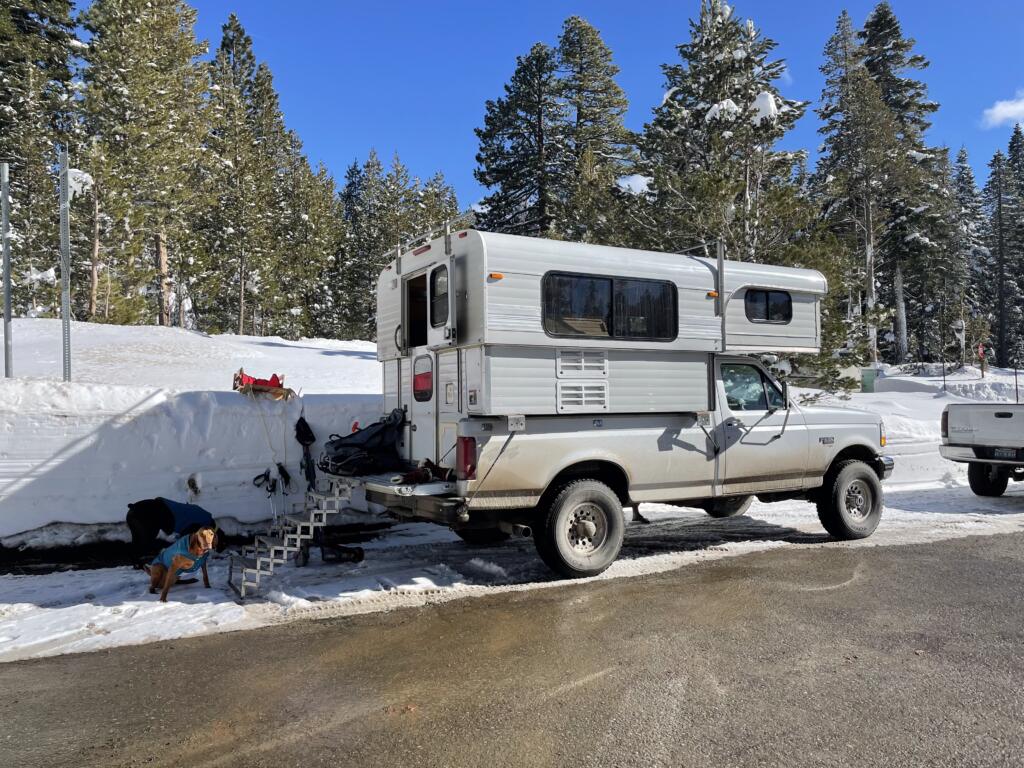
Case #2: Real Comfort in Real Weather
A lot of soft-wall pop-ups claim to be “four-season.” Sure—if your definition of winter camping involves flannel optimism and a portable space heater on full blast. Spend one blustery night on the coast and you’ll find out fast: fabric walls don’t hold warmth, they borrow it briefly.
In an Alaskan, insulation isn’t an accessory—it’s the foundation. The solid walls keep the heat in, the condensation out, and the wind politely outside where it belongs. Suddenly, those chilly shoulder-season trips feel like cozy escapes instead of survival experiments.
And comfort doesn’t stop at temperature. Hard walls don’t just insulate—they calm everything down. No flapping canvas, no drafts sneaking through seams, no question about what’s rustling around out there. An Alaskan surrounds you with solid, insulated walls and real structure—so when the wild wakes up outside, you stay warm, steady, and entirely unbothered.
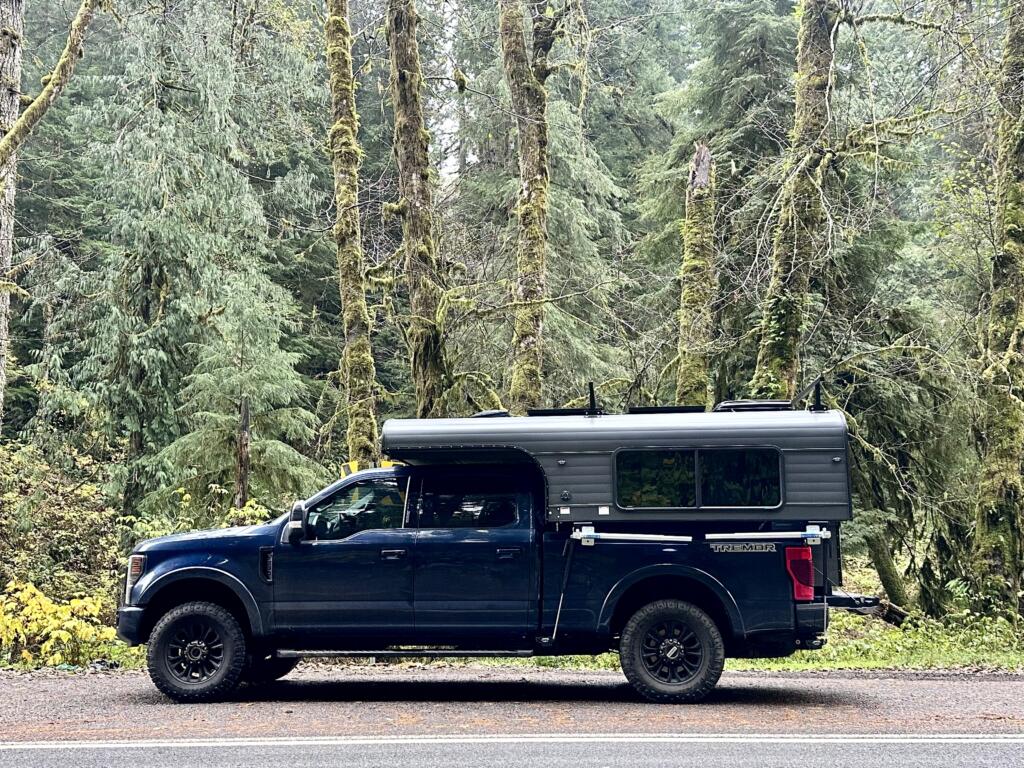
Case #3: Ride and Handling
Yes, we acknowledge it: a hard-sided pop-up like a Alaskan Campers adds some weight. But here’s the kicker—you gain a whole lot more by design than you lose.
When a pop-up’s weight is balanced and its center of gravity sits where it should—ahead of the rear axle, not dangling off the tailgate—the difference is immediate: steadier steering, smoother braking, and less sway in crosswinds. That forward balance keeps the front wheels planted and the frame from flexing under leverage it was never meant to take. It’s the difference between a rig that tracks confidently down the highway and one that feels like it’s constantly negotiating with physics.
What Alaskan’s design does:
- The roof lowers nearly flush with the cab, lowering the camper’s center of gravity and reducing body roll and lean in turns.
- The low profile cuts drag and highway buffeting by keeping airflow smooth and reducing turbulence between the cab and camper.
- Solid hard walls mean no canvas flex or “wind breathing,” which keeps the camper stable in gusty conditions.
- Owners consistently report that Alaskans feel more planted and predictable on the road than taller, fabric-sided pop-ups—a difference you can feel long before you reach the next gust.
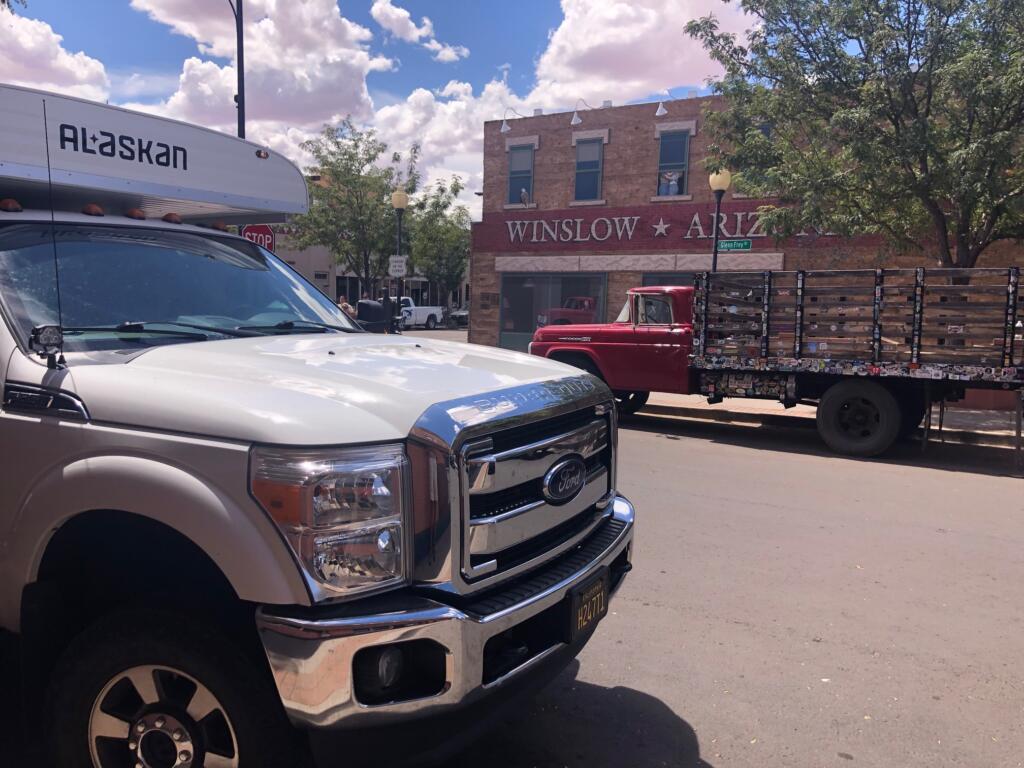
Case #4: Timeless Design vs Tech-Overload
Here’s the thing: you can buy a pop-up camper that looks ready for liftoff—LED mood lighting, touchscreen panels, and enough electronics to make NASA jealous. Impressive, sure, until the battery dies and your roof decides it’s staying put. If you’d rather spend your time camping than troubleshooting, there’s another way to travel.
Alaskan’s path:
- Built in a timeless mid-century style that never needed a rebrand. We don’t chase gimmicks—we build campers.
- No flashy touchscreens or automated gadgets—because if your weekend depends on Bluetooth, you’re missing the point.
- Analog simplicity that works where it matters most: no Wi-Fi, no cell signal, no tech support—just wilderness.
- Design longevity: when something’s built right, you don’t replace it because the interface feels dated. You replace it because you’re ready for the next trip.
In short: if you’re tired of campers that act more like gadgets than gear, go Alaskan. If you’d rather spend your weekends syncing devices than soaking in views, there are plenty of “smart” campers out there happy to help.
So, Which Pop-Up Camper Is Right for You?
Let’s be honest—you came here for comparisons, but you already knew how this story ends. Still, we’ll play fair.
If you’re chasing the lightest setup possible and stick to fair-weather roads, Four Wheel, Hallmark, or Northstar are tried-and-true soft-wall options. They’re light on weight, friendly on fuel, and easy to store—but you’ll trade some insulation and all-weather comfort to keep things that lean.
If you’re after next-level materials and don’t mind a price tag that could fund a modest cabin, Supertramp brings aerospace-grade composites, sleek engineering, and a finish that’ll make your garage look underbuilt. Just know that all that innovation comes with complexity—and cost.
And if your dream setup is minimalist, modular, or just plain efficient, Scout and Soaring Eagle deliver smart, lightweight designs with everything you need and nothing you don’t. They’re simple, modern, and perfect for drivers who’d rather chase horizons than tinker with systems.
But if you want a camper that feels rock-steady, shrugs off bad weather, and still turns heads decades after its first road trip—let’s not pretend you don’t know where this is going.
- Yes, this article lives on AlaskanCampers.com.
- Yes, we think we build the best pop-up camper you can buy.
- And yes, this is the part where we casually suggest you join the club.
Because while others are chasing forecasts, patching fabric, or counting down to their next upgrade, Alaskan owners are just… out there. Warm, dry, comfortable, and still rolling decades later—proof that when you build something right, it never goes out of style.