Kid-Friendly Camper Setup in 15 Minutes
What small families get right — and why compact campers actually make it easier
This article exists because of a family who quietly proved something most people still get backwards. Curran and Dawn Foley have raised two kids, traveled for decades, weathered hard seasons, and owned four Alaskan Campers along the way. When we shared their story in Four Campers, One Close Family, what stood out wasn’t just where they went — it was how naturally life worked inside a small, intentional space.
They didn’t chase square footage. They didn’t need slide-outs or sprawling layouts. They built rhythms instead. The Alaskan wasn’t something they escaped to. It was how they stayed close, even when life was heavy.
We’re not going to lie, that story sparked plenty of follow-up questions, especially from parents:
- Can a compact camper really work with kids?
- Is setup stressful?
- Does everything feel cramped?
The short answer: it works if you don’t fight the camper. The longer answer is what this post is about.
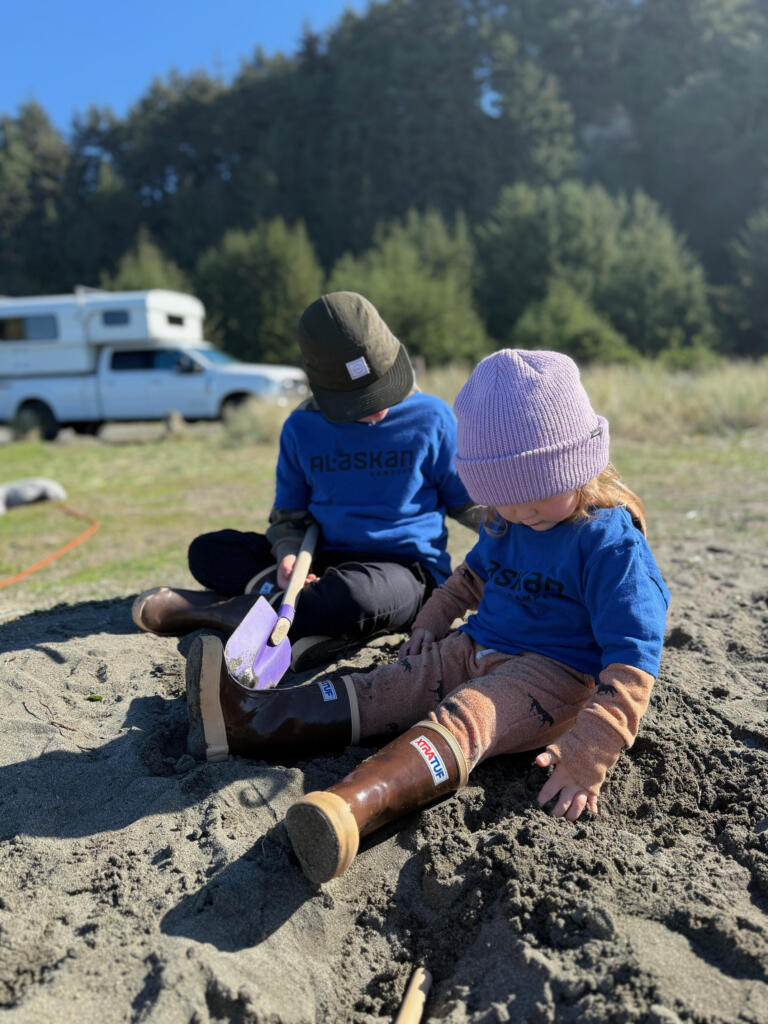
Why Small Campers Actually Work Better for Families
Big rigs promise space. Small campers deliver simplicity. And with kids, simplicity wins every time.
The goal isn’t to recreate your house on wheels. It’s to move cleanly from travel mode to living mode, where setup feels routine instead of rushed and the rest of the experience falls into place more easily.
The Foley family figured this out early. Inside their Alaskans, mornings settled quickly instead of spiraling. The kids gravitated to the cabover with coloring books while the adults moved through the same quiet routine — getting the space open, making breakfast, easing into the day. The camper didn’t demand attention or constant adjustment. It simply supported a rhythm that made sense for a family moving together.
That’s the rhythm that makes a 15-minute setup realistic.
This isn’t about speed for its own sake. It’s about closing what experienced parents recognize immediately: the danger window. The truck stops. The doors open. Hunger, boredom, and pent-up energy all spike at once. A good setup shortens that window before it turns sideways. Instead of a checklist, the goal is a simple sequence that flows naturally. Open the space. Anchor everyone. Release the energy. Small campers don’t fight that process. They make it easier to get right.
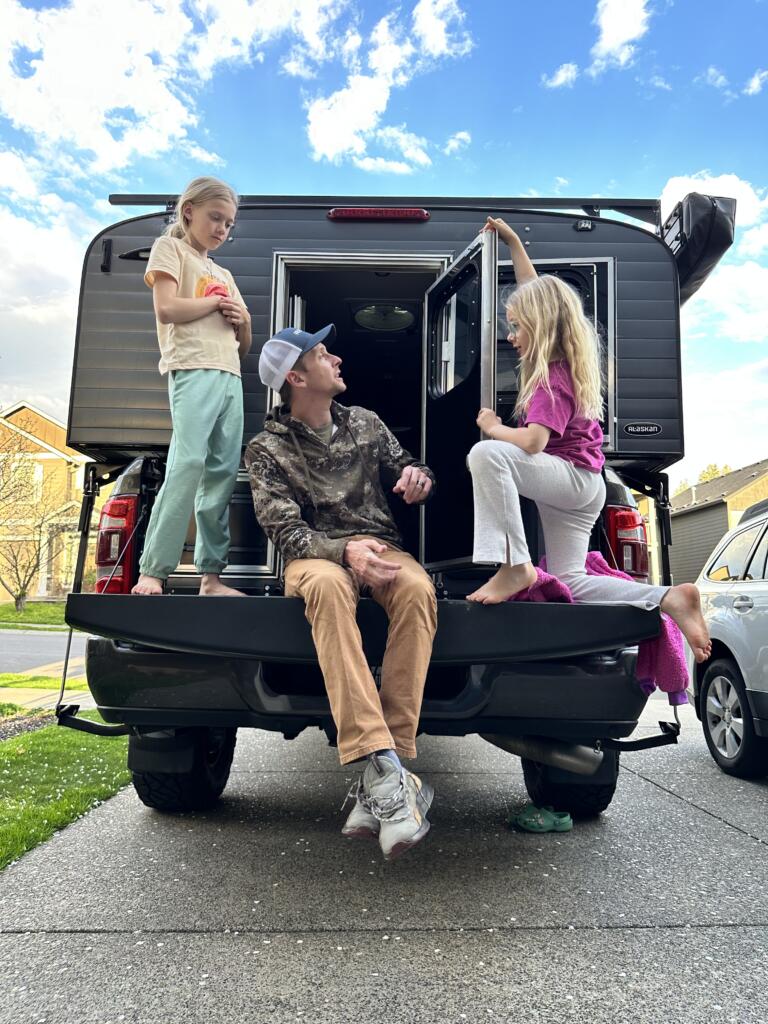
Establish Zones (3–5 Minutes)
The fastest way to calm things down with kids is to give them structure without rules. Zones do that.
Dividing the space into three loose areas — sleep, play, and chill — gives kids predictable places to land so they stop treating every surface like a wall chart for chaos.
Inside the camper
Put sleeping gear — pillows, blankets, favorite books, or small comfort items — in a dedicated nook right away. If your Alaskan has a cabover bunk or a convertible dinette bed, this single step makes the camper feel “ready” instead of transitional. Keep kids’ activity bags nearby. Crayons, coloring books, small games. When these are accessible without digging through bins, kids settle faster and adults stay sane.
Outside the camper
Unfold a small outdoor rug or mat first. It creates a clear landing zone and keeps dirt from migrating inside — especially important when kids are constantly bouncing between inside and out. Set camp chairs in a loose semicircle facing whatever the campsite offers — a trailhead, meadow, or fire ring. Kids feel included when adults set up with them, not just around them. This zoning doesn’t need to be perfect. You’re not assembling furniture. You’re giving everyone a place to start so the fun can begin without friction.
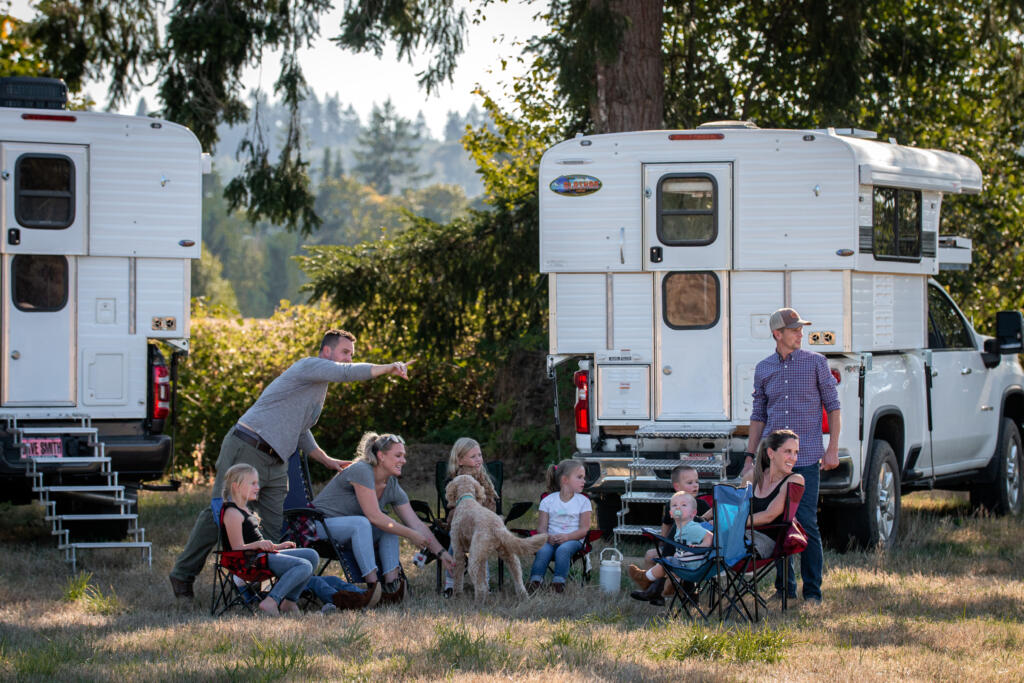
Prioritize Essentials (5 Minutes)
When people talk about “quick setup,” what they really mean is priorities first. Fewer, more purposeful items mean setup moves faster and kids stay happier — especially in a compact camper where every extra step is noticeable.
Lighting and safety
Clip a headlamp or lantern where kids can reach it after dark. In a small rig, light isn’t just comfort — it prevents constant opening and closing of doors and cabinets once the sun goes down. Mark camp lines or stakes with reflective tape. When kids are circling a compact camper all evening, visibility matters more than you think.
Meals and hydration
Hunger derails everything. Pull out the cooler and designate one easy-to-reach spot for drinks and snacks. In a camper without room to pace or roam, quick access keeps minor hunger from turning into a full meltdown. If dinner is simple or prepped, stage it early. Cooking together is part of camp life — but only if everyone isn’t already melting down.
Quick organization
Use small baskets or bins for loose essentials like sunscreen, wipes, bug spray, and utensils. When everyone knows where these live, you avoid repeated scavenger hunts in a tight space. Cloth or door organizers work especially well for kid items and keep small things visible instead of buried.
Within ten minutes, you’ve established a baseline: light, food, hydration, shelter, and easy access to the things everyone will ask for next.
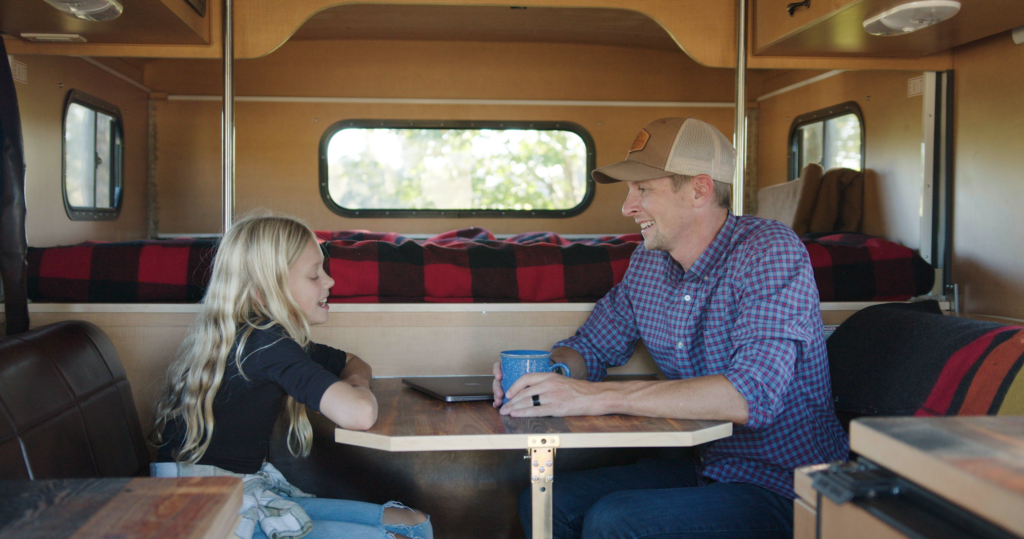
Engagement and Entertainment (5–7 Minutes)
This is where setup stops feeling functional and starts feeling like camping. Once the basics are handled, it’s time to get out of the way.
Natural play zone
Unpack one or two simple outdoor toys — a ball, frisbee, or bug net — and let the environment do the rest. Sticks, rocks, puddles, and leaves outperform screens every time when it comes to resetting kids after a long drive. If there’s a picnic table nearby, turn it into a coloring or drawing station. Let kids personalize the campsite a little. It gives them ownership and buys adults time.
Routine signals
Kids still need structure, even on an adventure. A simple cue like “snack, play outside, help set the chairs” gives direction without turning camp into a chore chart.
Inclusion in setup
Assign small jobs like handing out placemats, setting lanterns, or stacking firewood. It keeps kids engaged during setup and gives them a role without turning camp into a checklist.
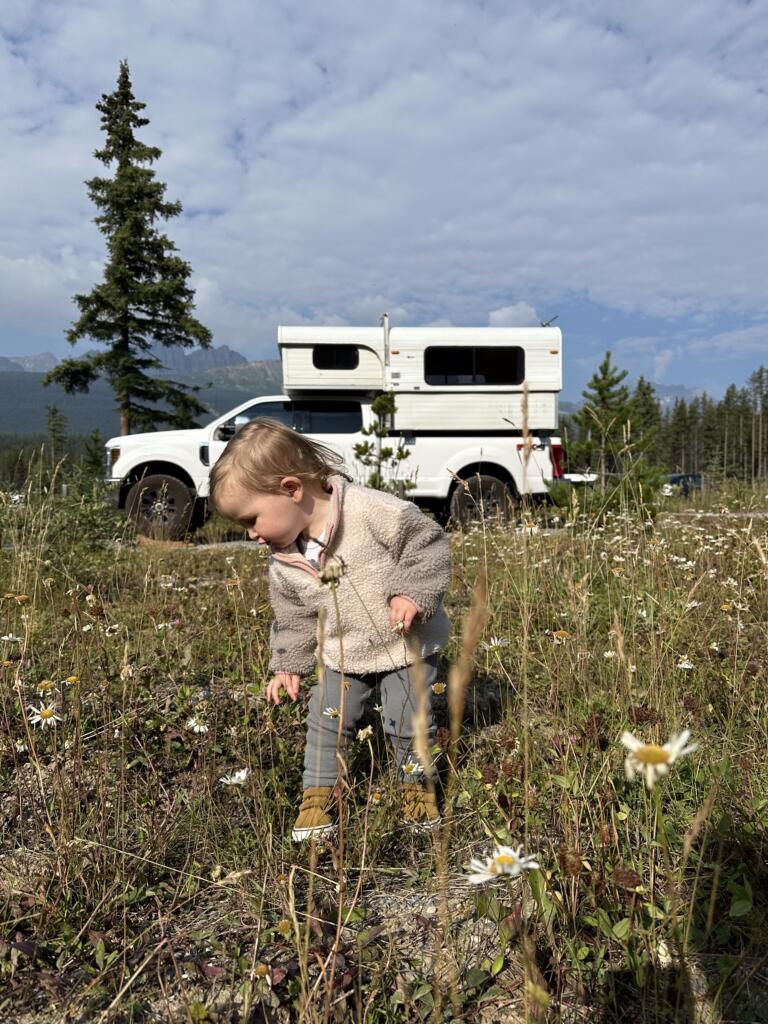
In a compact camper, that kind of participation matters. The space is designed to be shared and active, not segmented, so everyone can stay involved without feeling in the way. That’s where smaller rigs tend to work better for families — the space gets used, not filled.
A Few Tips That Make This Easier Every Time
A 15-minute setup doesn’t come from moving faster. It comes from making fewer decisions in the moment.
Most credible family camping advice converges on the same idea: front-load your thinking at home so camp feels automatic. The families who set up quickly aren’t rushing. They’re repeating a system they already trust.
Pack and stage gear by sequence, not by person. Setup items together. Food and hydration together. Play and downtime items together. In a compact camper, this prevents opening and closing the same compartments over and over just to get settled.
Reserve one bin or drawer that only opens after you’re parked. Coloring supplies, a card game, or a familiar book works well. That item becomes a psychological bridge from travel to camp. Kids learn that when it comes out, the day has shifted.
Resist the urge to solve every discomfort at once. Cold jacket. Extra blanket. Different snack. Experienced parents suggest handling the first need, then pausing. Compact campers naturally reinforce this restraint — overcorrecting quickly turns into clutter. Kids adapt faster when the environment stays predictable, even if it’s a little windy or damp.
What This Looks Like After a Few Trips
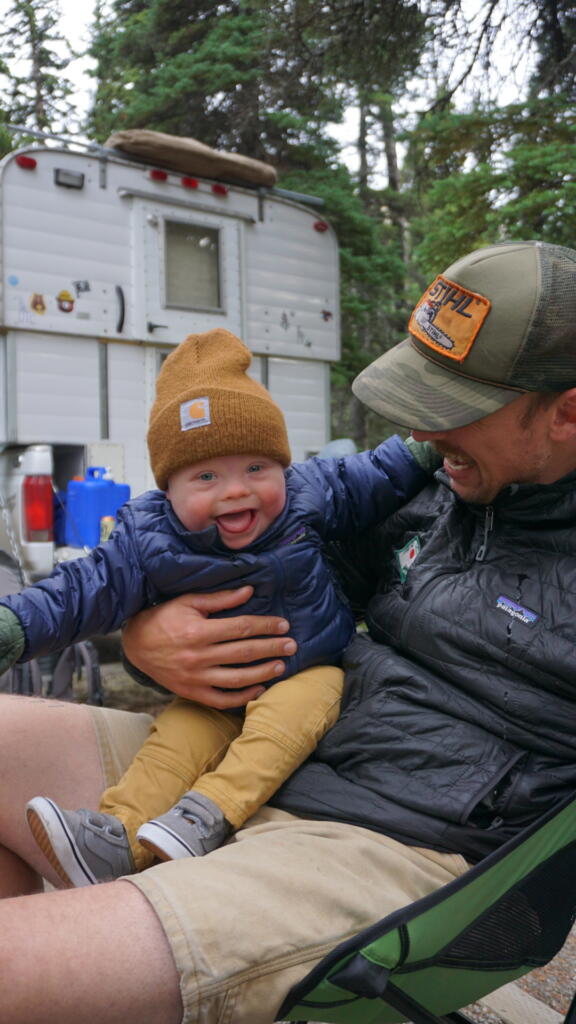
By the third or fourth trip, something changes. Setup stops being a conversation. Kids move toward their zones without being told. Adults follow the same sequence without thinking. And, tellingly, kids stop asking what’s next.
That’s when the camper really starts working for a family. The Foley family didn’t arrive at that rhythm overnight. It developed over years, across four different Alaskans, through wildly different seasons of life. But the pattern stayed the same.
Pop the roof. Set the space. Get outside. Their campers weren’t big. Their system was. And they didn’t optimize camping. They simplified it.