Dispersed Camping: Colorado
For High Clearance and Higher Elevations
Colorado is very good at being obvious. Big passes. Big parks. Big parking lots. If you want a paved turnout with a line of Sprinters and a drone in the air by 7 a.m., you will not struggle.
Dispersed camping in Colorado begins when the pavement ends and the elevation gain starts to feel personal. This is the version of the state that rewards clearance, short wheelbases, and the kind of camper that can slip down a narrow forest road, pop up in a tight clearing, and disappear by morning. In other words, this is Alaskan Camper territory.
Let’s go where the crowds thin, the air sharpens, and the nights actually get dark.
1. Owl Creek Pass — Between Ridgway and Silver Jack Reservoir
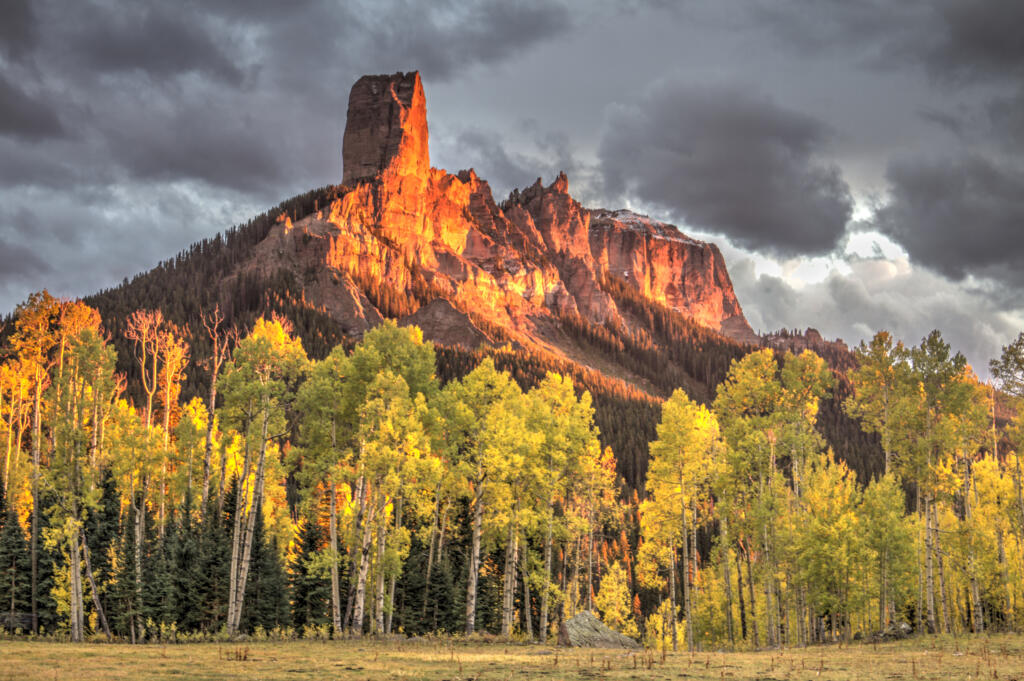
Photo courtesy of the Wikipedia Commons (public domain)
Tucked between Ridgway and the north side of the San Juan Mountains, Owl Creek Pass feels like the back door to scenery most people only see from paved pullouts.
The road is gravel, winding, and occasionally narrow. It climbs through aspen groves, skirts high meadows, and opens into views of Cimarron Ridge that look suspiciously like someone oversaturated them.
Where to look:
Forest Road 858 between Ridgway and Silver Jack Reservoir. Numerous established pull-offs and dispersed sites branch off the main route. Stay on durable surfaces and previously used spots.
What makes it special:
- Massive views without Telluride-level traffic
- Quiet high-elevation meadows
- Fall color that borders on theatrical
- Easy access to hiking without starting at a trailhead parking circus
Tips that matter:
- Elevation ranges 8,000 to 10,000+ feet. Nights are cold. Even in July.
- Afternoon storms are normal. Camp slightly elevated, not in runoff channels.
- The road is fine for a capable 4×4 truck camper. It is not fine for dragging a long trailer around blind corners.
Standard National Forest dispersed rules apply: 14-day stay limits, existing sites only, fire restrictions as posted.
Flat Tops Wilderness Perimeter — Trappers Lake Area
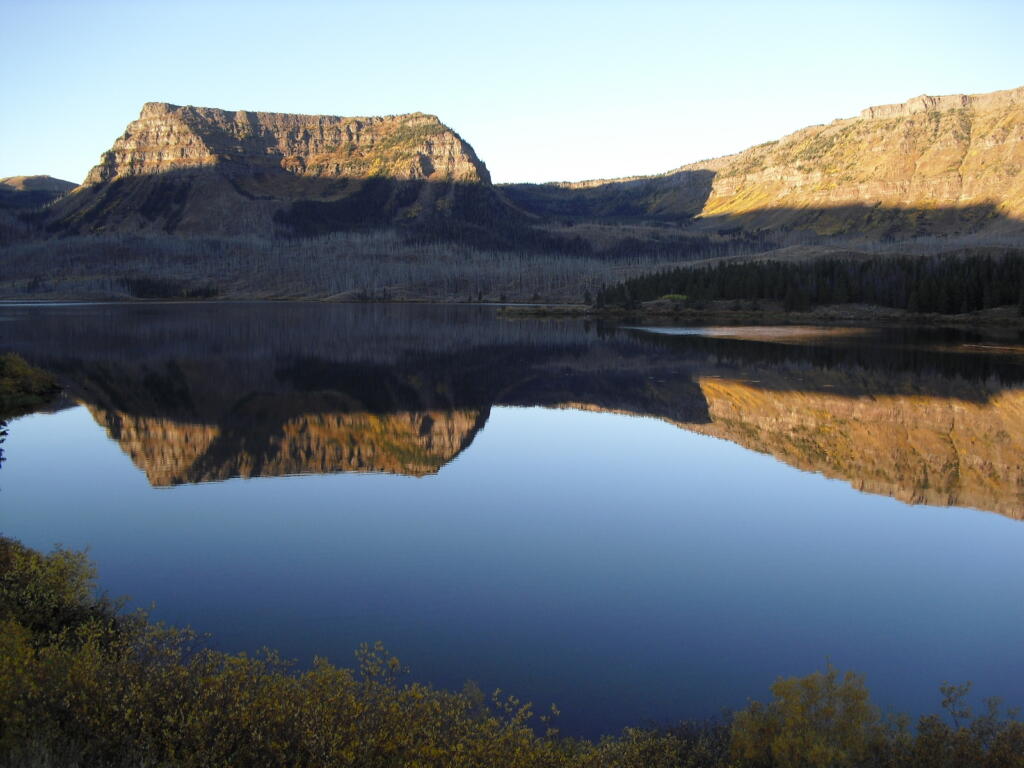
Photo courtesy of the Wikipedia Commons (public domain)
The Flat Tops Wilderness doesn’t get the same hype as the Maroon Bells. Which is perfect.
Near Trappers Lake, you’ll find long stretches of forest road with dispersed sites tucked among spruce and fir, often overlooking wide alpine basins that feel like the state before it learned to brand itself.
Where to look:
Forest Roads 205 and 218 north of Trappers Lake. Stay outside wilderness boundaries and camp only in established clearings.
What makes it special:
- Plateau-style alpine terrain you don’t see elsewhere in Colorado
- True quiet. Not “quiet except for side-by-sides.” Actual quiet.
- Fishing, hiking, and wandering straight from camp
Tips that matter:
- Many roads are washboarded and narrow. Clearance and patience help.
- Mosquitos can be committed. Bring screens and a plan.
- Snow lingers late into summer in heavy winters. Check road conditions before heading up.
Your Alaskan shines here. Tight forest road? No problem. Pop up under trees? Easy. Fast setup before a storm rolls in? Exactly the point.
Carson National Forest Border — Culebra Range Access (Southern Colorado)
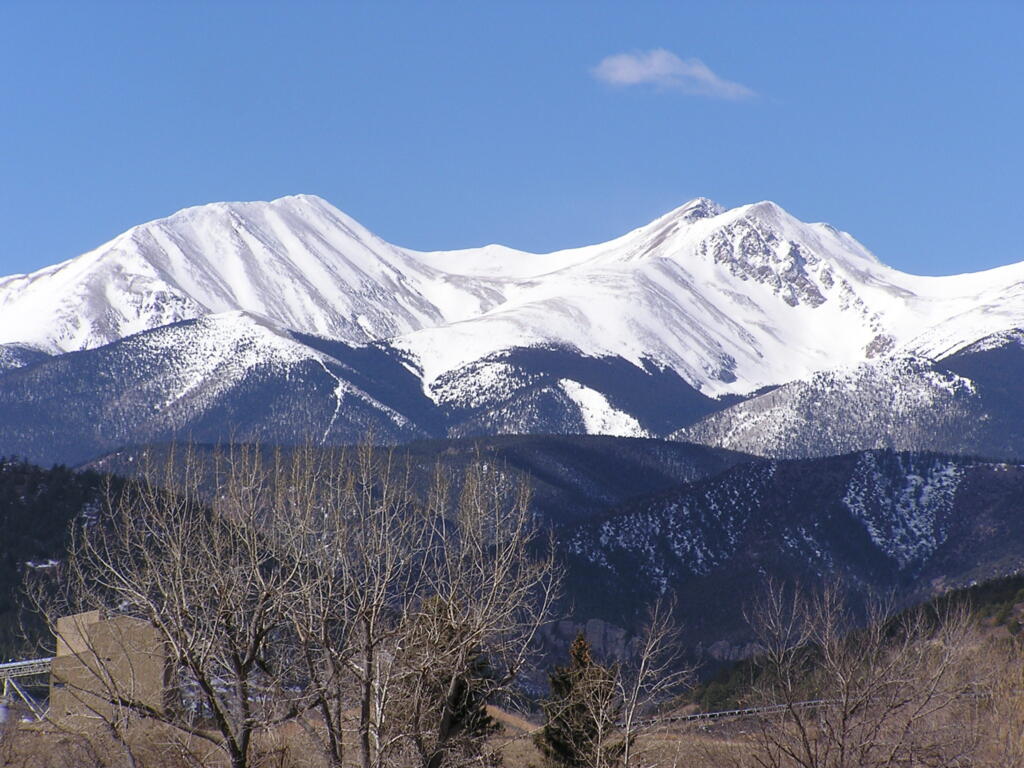
Photo courtesy of the Wikipedia Commons (public domain)
Southern Colorado gets overlooked because it doesn’t have a marketing team. Good.
Near the New Mexico border, the Culebra Range rises sharply from the wide openness of the San Luis Valley. The transition from high desert to alpine forest happens quickly, and dispersed sites along Forest Service roads feel genuinely removed.
Where to look:
Access roads west of Fort Garland into Rio Grande National Forest. Established dispersed sites appear along higher-elevation spurs.
What makes it special:
- Vast valley views at sunset
- Fewer people than almost anywhere else in the state
- A sense that you are a long way from ski towns and Instagram
Tips that matter:
- Wind in the valley is real. Camp nose-into prevailing winds.
- Bring water. Services are minimal and far apart.
- Expect livestock on open-range roads. Slow down and close gates.
If you’ve ever wanted to feel like Colorado is still wide and slightly indifferent to your plans, this is your place.
West Elk Mountains — Kebler Pass Back Roads
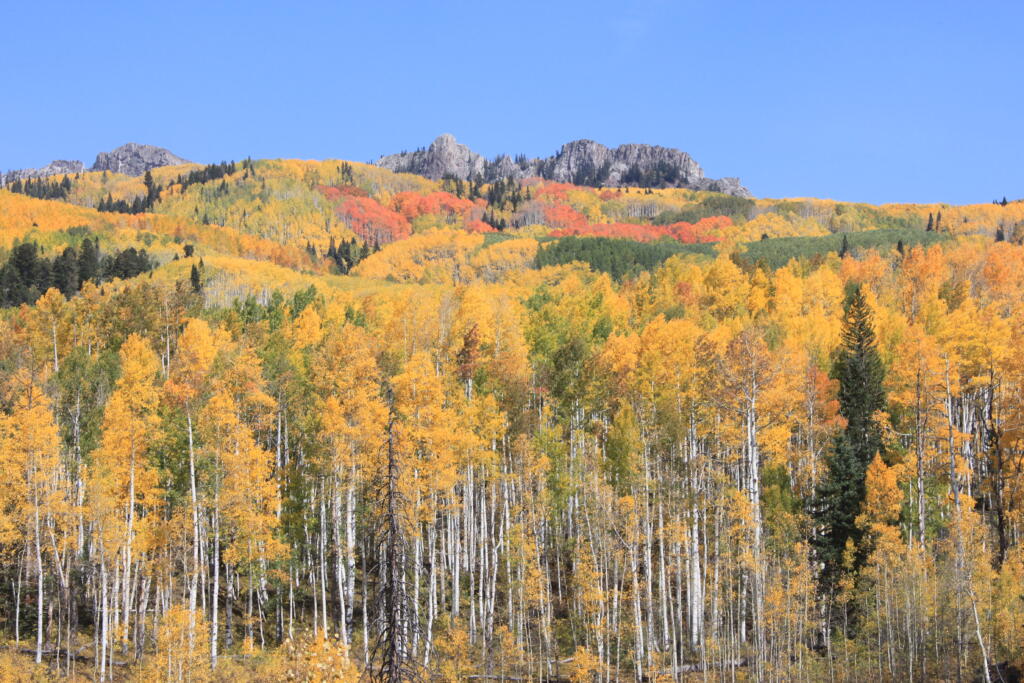
Photo courtesy of the Wikipedia Commons (public domain)
Everyone knows Kebler Pass in October. What fewer people plan around is that it’s a high-elevation route that shuts down once winter commits.
Between Crested Butte and Paonia, Kebler climbs above 10,000 feet through the Gunnison National Forest. When it’s open, the spiderweb of forest roads branching off the main corridor leads to dispersed sites tucked into aspen groves and perched above quiet drainages.
Where to look:
Secondary forest roads off Kebler Pass Road during the typical late spring to mid-fall window. Check current road status with Gunnison County or the Forest Service before committing. Seek previously used clearings, not fresh meadows.
What makes it special:
- One of the largest aspen groves in North America
- Rolling high-country terrain that feels expansive, not crowded
- Easy day access to Crested Butte without camping in a parking lot
Tips that matter:
- This is seasonal. Snow can linger into early summer, and closures arrive quickly after fall storms.
- Fall weekends get busy. Midweek is smarter.
- Afternoon lightning is common. Avoid exposed ridgelines for camp.
- Mud after storms gets slick fast. Good tires matter more than horsepower.
This is classic Colorado high country. Short access roads. Tight sites. Cold nights even in August. A hard-sided pop-up works here because you can handle weather swings, tuck into smaller forest clearings, and leave without needing a plow to follow you out.
Rules of the (Very High) Road
Colorado will absolutely let you be alone. But it expects competence. Dispersed camping is widely allowed on BLM and National Forest land. That doesn’t mean anything goes. It means you’re responsible.
What that actually looks like:
- Use existing, previously disturbed sites only. If it looks untouched, leave it that way.
- Respect 14-day stay limits within a 28–30 day period. After that, relocate as required by the district.
- Plan to be self-contained. No water, no toilets, no trash service. Pack in. Pack out.
- Check current fire restrictions before you travel. Conditions change quickly, and stage restrictions can prohibit open campfires entirely. Propane stoves are often allowed, but not always. Verify with the local Ranger District or BLM office.
- Use Motor Vehicle Use Maps (MVUMs). Not every dirt road is legal to camp on.
- Stay on designated routes. Don’t widen pull-outs or create new tracks.
- Close gates behind you. Grazing allotments and land access depend on it.
Colorado’s high country feels wild because it still is. You get the space, the views, and the kind of quiet that resets your perspective, and in return you leave it exactly as you found it. That simple exchange is what keeps the smaller roads open, the tight clearings intact, and the experience from turning into another parking lot with a view.
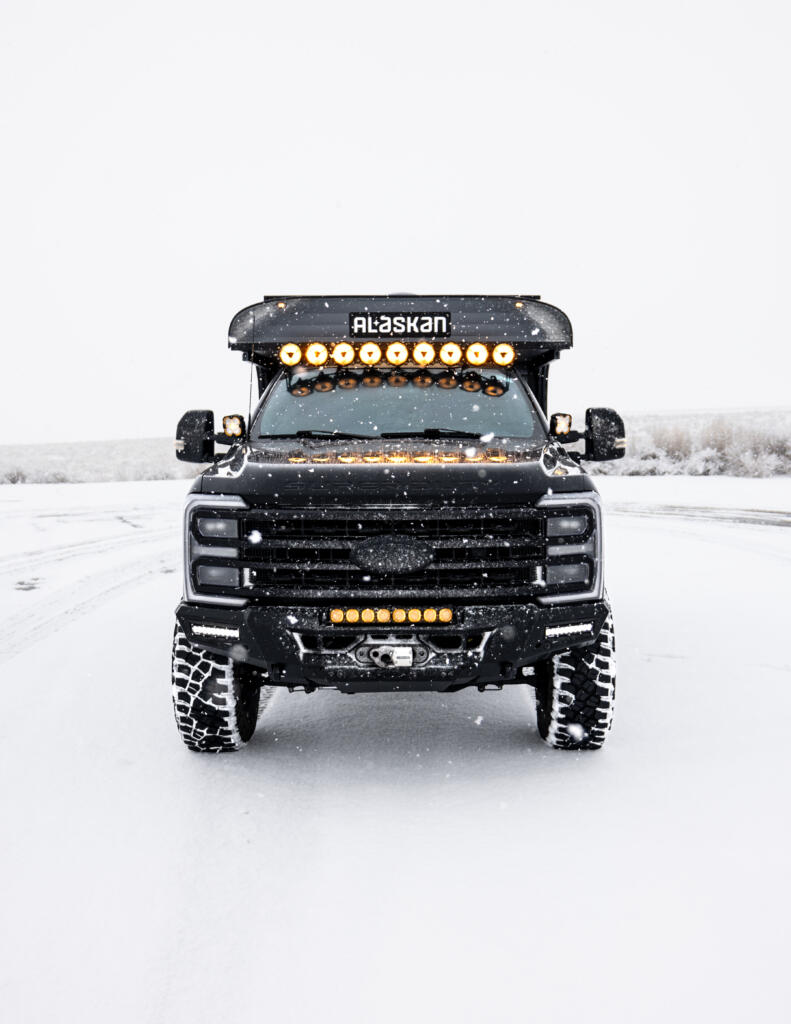
An Alaskan Camper makes it easy to do it right. Compact, insulated, and built for uneven ground and sudden weather shifts, it lets you follow the smaller road, tuck into a clearing at 10,000 feet, and wake up without a reservation or a neighbor five feet away.
Drive past the obvious. Climb a little higher. Set up somewhere that makes you earn it. That’s where Colorado starts to feel like Colorado.