Condensation & Moisture Management in Truck Campers
Condensation in a truck camper isn’t a defect. It’s the natural result of warm, humid interior air hitting colder surfaces in a small, well-sealed space. That moisture settles on windows, metal framing, cabinetry surfaces, mattress platforms, and any material that sheds heat quickly. Hard-sided pop-ups and full truck campers are especially prone to it because they’re compact, often used in cold and wet conditions, and built from a mix of insulated panels and uninsulated elements like aluminum framing and window trim. Those contrast points create the cold spots where condensation forms first.
Why Condensation Forms Inside a Truck Camper
Moisture builds quickly inside a truck camper because even normal activity adds humidity. Breathing through the night, cooking, boiling water, drying damp gear, or taking a shower all raise interior moisture levels. In such a small space, that moisture has nowhere to disperse, and the cooler surfaces inside the camper become collection points. When humidity stays high and airflow stays low, moisture accumulates in tucked-away areas like cabinets, closets, and under mattresses. Those pockets stay cooler and more stagnant than the rest of the cabin, which is why mold and mildew tend to start there. A clear moisture-management plan addresses these conditions before they turn into long-term damage.

Start by Understanding Your Interior Humidity
A small digital hygrometer is one of the most useful moisture-management tools you can own. Relative humidity in the 30 to 50 percent range is ideal in cool conditions. Once humidity climbs above 60 percent, condensation becomes increasingly likely the moment interior air hits a cold surface. Tracking humidity gives you real information, not guesswork. If you begin the evening already near 60 percent, it’s clear you’ll need either more ventilation or more mechanical moisture removal before turning in. They’re cheap, too—like less than $15 in most cases. Here’s the one we use.
Airflow: The Most Reliable Way to Stay Ahead of Condensation
Airflow is the single most effective method for preventing condensation in a truck camper. Moist air must move out and drier air must replace it. That’s true whether you’re parked by the coast, camped at elevation, or staying in a humid forest.
Roof vents and powered fans help expel steam and moisture during cooking, washing dishes, or showering. Leave the fan running for several minutes afterward so the moisture doesn’t settle on cold surfaces once air stops moving.
Cracking windows, even slightly, sets up a passive exchange of indoor and outdoor air. The trick is to allow a small opening on one side of the camper and a vent or window open on the opposite side. This creates a simple cross-draft that prevents pockets of humid air from gathering in corners or behind cabinetry.
Airflow also matters inside closed spaces. Cabinets, under-bed platforms, and closets tend to stay cooler than the rest of the camper. Leaving doors cracked or opening these areas periodically keeps stagnant air from turning into condensation zones.
None of this requires large equipment. It’s about maintaining movement so moisture doesn’t have a chance to settle.
Reduce Moisture at the Source
While ventilation handles moisture already in the air, reducing what you create makes the entire system easier to manage.
Cooking outside when conditions allow removes a major source of humidity. Boiling water and simmering food indoors dumps moisture straight into the cabin. When you do cook inside, keep the fan on and lids on pots whenever possible.
Avoid drying wet clothing or towels inside the camper. Even one damp jacket can raise humidity enough to cause window fogging or cold-surface condensation.
Heat sources matter too. Combustion heaters add moisture to the air, while electric heaters provide dry heat. If you’re running propane heat in cold weather, you’ll need more ventilation to offset the extra humidity it produces.
Mechanical Moisture Tools When Ventilation Isn’t Enough
Cold weather, heavy rain, and limited ventilation windows sometimes make airflow alone insufficient. Mechanical tools help control interior humidity more aggressively.
A compact dehumidifier is the most effective option when you have shore power or sufficient battery capacity. Even small units can pull noticeable amounts of water from the air, especially during long stretches of cold, wet weather. Desiccant-style dehumidifiers perform well in low temperatures where refrigerant-coil models become less efficient.
Passive absorbers such as moisture-absorbing crystals or hanging desiccant bags are helpful in closets, under dinette seats, inside bathroom cabinets, or anywhere airflow is limited. They’re not replacements for a dehumidifier, but they prevent enclosed spaces from becoming musty moisture traps.

Managing Surface Temperatures to Prevent Condensation
Condensation forms on surfaces that are colder than the dew point of the interior air. You can’t always warm the air, but you can minimize the number of cold surfaces waiting to collect moisture.
Windows are the biggest culprits. Single-pane windows cool instantly and fog quickly. Insulated window covers, thermal curtains, or Reflectix inserts dramatically reduce how cold the interior window surface becomes. Using them overnight makes a clear difference.
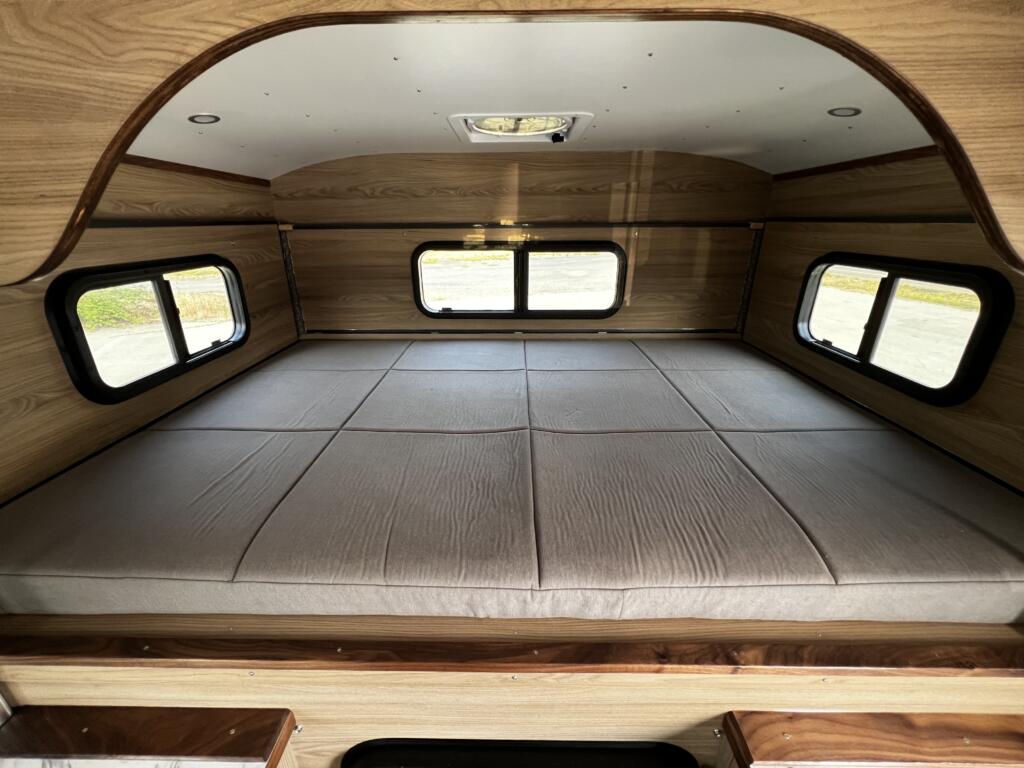
Under the bed is another common problem area. Body heat warms the mattress, but the platform beneath it stays cold. That temperature difference pushes moisture down into the underside of the mattress or the plywood deck. Breathable mattress underlays, slatted platforms, or simply lifting the mattress each morning to air it out help prevent mold growth in this spot.
Keeping interior temperatures steady also helps. Short bursts of high heat followed by cooldowns create uneven surface temps. A consistent, moderate heat source reduces the number of surfaces that drop below dew point.
Habits That Keep Moisture in Check
Moisture management works best when it becomes part of daily routine, not just something you do reactively.
- Wipe down windows or metal surfaces if moisture forms overnight. Standing droplets migrate into seams and framing.
- Pull bedding back each morning or lift the mattress to release accumulated humidity.
- Open cabinets and closets occasionally to equalize air and temperature.
- Keep at least one vent cracked, even slightly, during storage or long rainy periods.
- Regularly inspect roof seams, window seals, and any opening where water intrusion might occur. Leaks often masquerade as condensation and cause more damage.
Individually these habits are small, but together they create a consistent moisture-control system.

Why Managing Condensation Matters
Left unchecked, condensation leads to mildew smells, mold growth, warped wood, soft wall panels, corroded framing, and long-term material breakdown. Pop-up truck campers and hard-siders alike rely on panel stability, adhesives, and seal integrity. Excess moisture undermines all of those.
Moisture management isn’t busywork. It’s a core part of protecting your camper and keeping it comfortable in real-world conditions.
A Practical Moisture-Management Framework for Truck Campers
A complete system blends airflow, reduced moisture production, consistent heat, and selective mechanical tools. In practice, that means:
- Ventilate any time moisture is created
- Use a hygrometer and act before humidity rises too high
- Cook outside when possible
- Keep airflow moving into enclosed spaces
- Insulate windows in cold weather
- Use a dehumidifier when the weather turns wet or cold
- Supplement with passive absorbers in confined areas
- Avoid drying wet gear inside
- Air bedding out daily
Truck campers operate in varied climates and elevations. This framework scales to all of it because it targets the physics behind condensation: moisture, airflow, and temperature difference. Control those and you control the problem.