Camper CO Detectors: Beeps, Testing, and Replacement
November 6, 2026
A camper alarm starts beeping at bedtime. Is it detecting carbon monoxide (CO), warning about low power, or signaling that it needs replacing? CO is a poisonous gas you cannot see or smell. Opening the door may let in enough fresh air to silence the alarm, but that does not tell you where the gas came from or whether it is safe to stay.
The CO alarm in your Alaskan is part of its safety equipment. Knowing how it works is part of owning the camper: recognizing its warnings, keeping it powered and unobstructed, and replacing it when its service life ends.
Key Takeaway: Know what your camper’s alarm detects, test it as instructed, and check its replacement date. Keep bedding and gear clear of it, and confirm whether the battery disconnect cuts its power. When replacement is due, choose an alarm specifically listed for RV use.
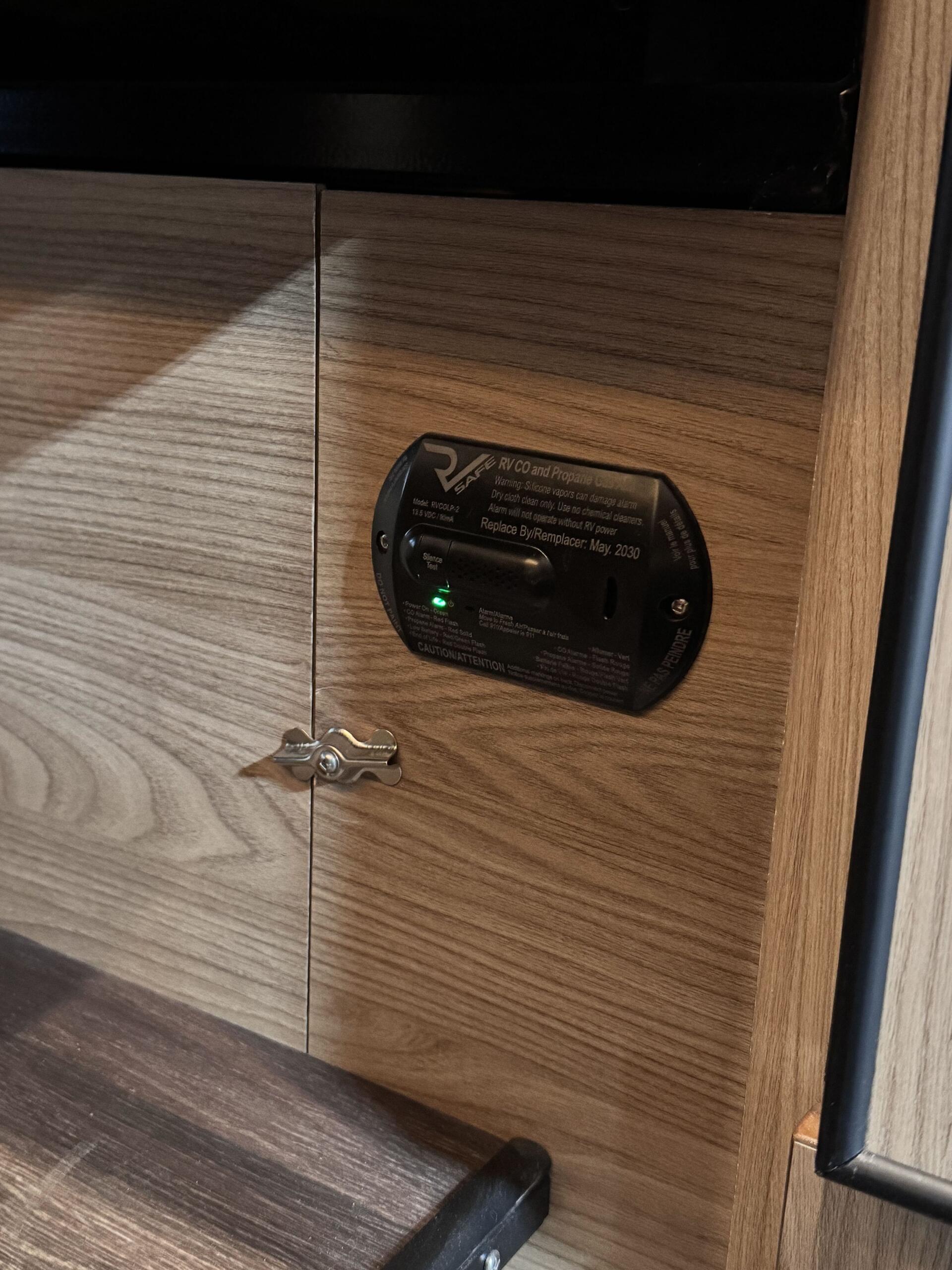
Do you need to call 911 when a camper CO alarm sounds?
Yes, if it is signaling carbon monoxide. Get everyone outside to fresh air, call 911 or the fire department, and stay out until responders say it is safe to return. An identified maintenance chirp requires a different response.
The Oregon State Fire Marshal distinguishes CO emergency warnings from battery, trouble, and end-of-life signals. If you cannot tell whether the alarm may be detecting CO, get outside and call for help.
| Signal or situation | What to do |
| CO emergency alarm, commonly four beeps and a pause, repeating | Leave, call for emergency help, and stay out until cleared to return. |
| Battery, fault, or end-of-life signal positively identified in the manual | Follow the specified service or replacement instructions promptly. |
| Unfamiliar warning that could indicate CO | Treat it as a possible CO emergency. |
Before your trip, use the Test button as directed in the manual to hear the alarm’s warning sound. Check the manual for other beep and light patterns, which can indicate low power, a fault, or an alarm that needs replacing.
Watch for symptoms even when the alarm is silent. The CDC lists headache, dizziness, weakness, upset stomach, vomiting, chest pain, and confusion as common signs of CO poisoning, and warns that people who are asleep can die before noticing symptoms. If you suspect exposure, get outside and seek emergency help without waiting for the detector to confirm it.
Do campers need an RV-rated carbon monoxide detector?
Yes. Your nose is not a carbon monoxide detector. An alarm provides a warning your senses cannot reliably give you. Having one installed also means taking responsibility for its power, testing, and eventual replacement.
For a new Alaskan, CO detection is included equipment rather than an optional upgrade. Owners of older or previously modified campers should identify what is actually installed and check its condition and replacement date.
When it is time to replace an alarm, choose one specifically listed and marked for RV use. UL explains that a product’s listing and markings identify its evaluated application. A household alarm is not automatically suitable for a camper, even if its packaging references UL 2034, the standard covering CO alarms for several applications.
What Can Cause Carbon Monoxide Inside a Camper?
CO forms when fuel burns incompletely. Potential sources around a camper include malfunctioning furnaces or water heaters, improperly used cooking or heating equipment, and exhaust from trucks and generators.
The source does not have to belong to you. The Texas Department of Insurance warns that exhaust from nearby vehicles and generators can enter an RV, particularly when campers are parked close together. Consider where neighboring engines are running and where their exhaust could enter through your doors, windows, or vents. Exhaust ignores campsite boundaries.
Inside the camper, keep appliance intake and exhaust openings clear, follow ventilation instructions, and have suspected faults checked by a qualified technician. CPSC emphasizes that a CO alarm cannot replace proper appliance installation, use, and maintenance.
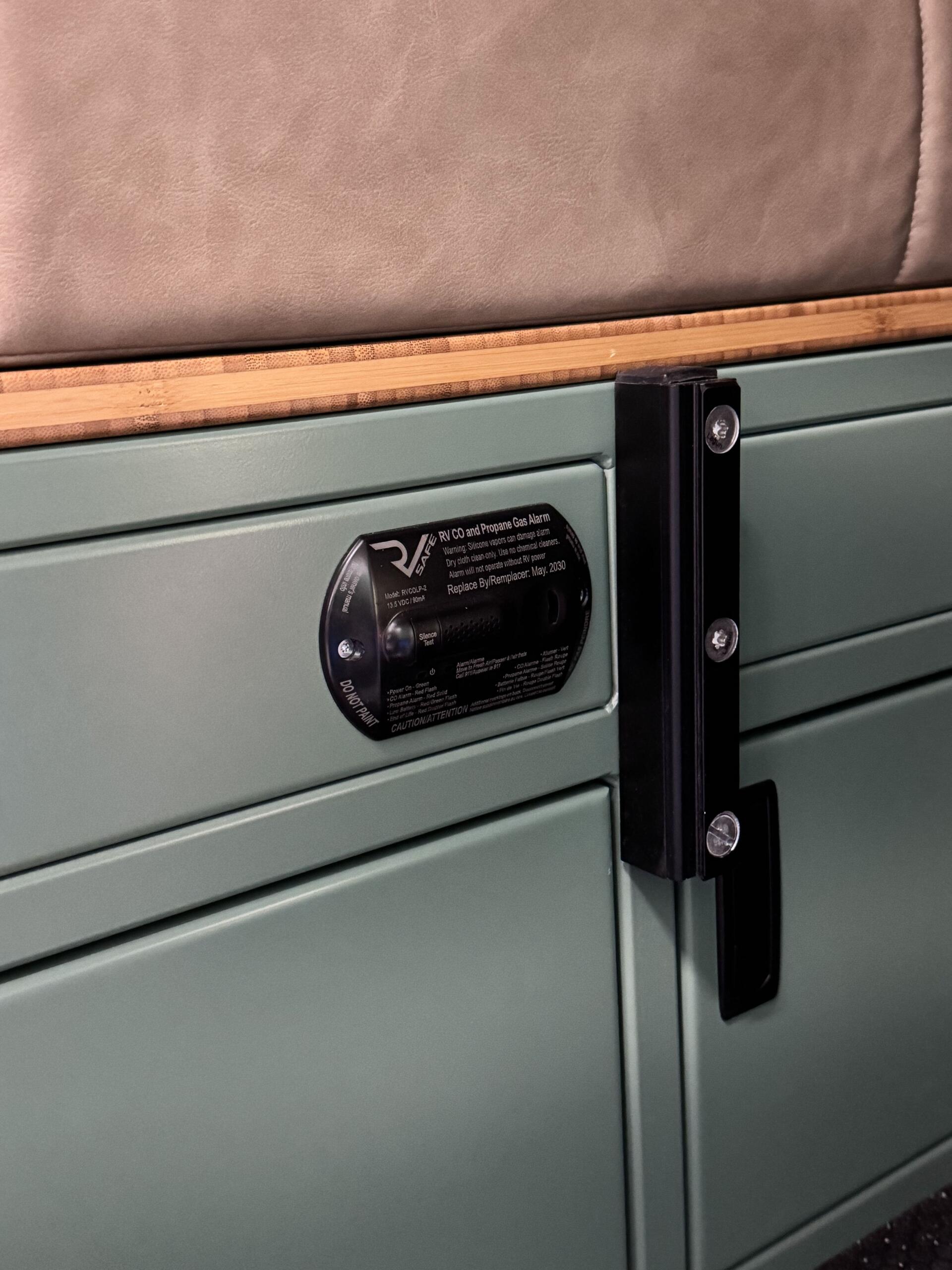
What makes an RV-rated CO alarm different from a household alarm?
An RV-rated alarm is evaluated for conditions beyond ordinary household use, including temperature extremes, humidity, vibration, corrosion, and cooking fumes. Those conditions matter when the alarm travels rough roads and spends winter parked without heat.
MTI Industries, the maker of Safe-T-Alert alarms, illustrates the difference in its residential-versus-RV testing comparison. Examples include 120 hours of vibration testing and at least 72 hours at approximately minus 40°F, with performance checks to establish that the alarm still works as required.
The manufacturer’s comparison dates to 2016 and illustrates the additional testing rather than reproducing the complete current standard. These are laboratory exposures, not operating instructions. Check the temperature range and mounting requirements for any replacement you select; an RV rating does not mean the alarm belongs outdoors.

What CO level sets off a camper carbon monoxide alarm?
A CO alarm responds to how much carbon monoxide is present and how long it has been there. Higher levels trigger a faster warning; lower levels may take longer. Safety testing uses specific levels and response times.
First Alert’s BRK brand explains the response times required under the UL 2034 safety standard. The same requirements appear in CPSC’s alarm testing report and are summarized below. Carbon monoxide levels are measured in parts per million (ppm).
| Nominal CO concentration | Required alarm response window at that test point |
| 70 parts per million (ppm) | 60 to 240 minutes |
| 150 ppm | 10 to 50 minutes |
| 400 ppm | 4 to 15 minutes |
Alarms also have a floor. Safe-T-Alert’s manual notes its alarm may give no signal at low CO levels and suggests people with medical conditions consider a device that warns below 30 ppm (Safe-T-Alert 25 Series manual). A silent alarm can’t confirm the air is CO-free.
Is a CO alarm the same as a propane detector?
No. A CO alarm detects carbon monoxide; a propane detector detects leaking fuel gas. A combination CO/propane alarm does both. A smoke/CO combination alarm does not automatically detect propane, so identify the functions on your installed alarm’s label.
The distinction appears in the standards: UL 2034 covers CO alarms, while UL 1484 covers fuel-gas alarms, including those that detect propane.
Knowing which type you have matters at replacement time. Replacing a CO/propane unit with a CO-only alarm would remove propane detection unless a separate detector provides it. Do not assume two devices offer the same protection because they look similar.
Where should a CO detector go in a truck camper?
Keep the installed alarm unobstructed and follow its manual for placement and clearances. If you replace it or add another, use that model’s RV installation instructions. CO-only, smoke/CO, and CO/propane units do not share one mounting height.
For everyday use, look at the alarm with the cabover bed made, curtains drawn, and gear stowed. Bedding, a jacket, or a bag should not cover its openings. If a partition separates a sleeping space from the main cabin, ask the installer whether additional coverage is appropriate.
When replacing or adding an alarm, manufacturer instructions show why placement must be model-specific:
| Product example | Placement instructions in its manual |
| Safe-T-Alert 62 Series, CO-only | Wall mounting at least 4 inches above the floor; at least 12 inches from opening windows, exterior doors, and heating or return vents. |
| Fireboy-Xintex CMD5, CO-only | Instructions address the main accommodation area and separate sleeping spaces. |
| RVSafe combination CO/propane | Mount 4 to 18 inches above the floor in the kitchen area, with the manual’s clearances from openings, drafts, and cooking appliances. |
Why does a camper CO detector beep when the battery is low?
Some hardwired alarms use the camper’s battery and warn when their supply voltage falls too low. The warning pattern and threshold depend on the model. A low-voltage signal needs attention and does not explain away a CO emergency warning.
Safe-T-Alert’s 62 Series specifications list a low-voltage warning at 7 volts. The RVSafe manual identifies a low-battery state below 9 VDC and warns that performance cannot be guaranteed below that threshold. Neither number is a recommended discharge target for a 12-volt battery bank.
Have the battery, wiring, connections, and supply circuit checked as appropriate. Adding solar or battery capacity will not necessarily fix the fault. Once it is resolved, our battery-versus-solar guide can help evaluate longer-term power needs.
Check what your battery disconnect controls, too. The 62 Series manual permits wiring through the main disconnect and warns against occupying the RV with that disconnect off. Confirm your own camper’s wiring before switching off house power overnight.
How long does a camper CO detector last?
Replace the installed alarm by its specified date or service interval, or sooner if it fails or signals end of life. Safe-T-Alert specifies five years; other manufacturers use different intervals. Check the label and manual for your model.
MTI’s replacement notice applies a five-year interval to Safe-T-Alert CO and propane alarms. By comparison, the Fireboy-Xintex CMD5 manual describes seven to ten years of sensor life and directs owners to the device’s replacement date.
A fresh battery does not renew an expired sensor. Record the model, installation date, and replacement date in your maintenance notes. If the history is unknown or the label unreadable, contact the manufacturer or replace it with a suitable RV-listed unit that preserves the required detection functions.
End-of-life sounds vary. The CMD5 manual identifies one beep every 60 seconds as its replacement warning, compared with four beeps and five seconds of silence for CO. Check your manual rather than applying another brand’s signal pattern.
How do you test a camper carbon monoxide detector?
Use the manufacturer’s procedure and schedule. A successful button test does not establish sensor accuracy or a safe CO level. Never generate carbon monoxide with an engine, stove, or heater to test the alarm.
CPSC explains that the test button checks circuitry rather than sensor accuracy. Safe-T-Alert’s instructions make the same distinction and describe approved CO test gas as a separate sensor-testing procedure.
For its 62 Series, Safe-T-Alert calls for a test after storage, before each trip, and at least weekly during use. Follow the schedule for your installed unit.
Clean it only as instructed and keep sprays away from it. After restoring power, allow its specified warm-up period and verify the normal operating indication before relying on it.

What should you check before your next trip?
Identify the installed alarm, check its replacement date, and test it as instructed. Make sure bedding and gear leave it unobstructed, and confirm whether the house battery disconnect cuts its power.
Keep the correct manual available offline and a photo of the model label in your maintenance records. At pickup or during service, ask the team to demonstrate the warning sounds and explain how the alarm receives power.
The alarm is already part of your camper. Knowing how to keep it working, and what to do when it sounds, is part of being ready to leave the driveway.