3 Days. No Hookups. No Problem.
How We Pack our Alaskan for a Self-Sufficient Long Weekend
It’s long enough that systems matter. Short enough that you don’t need to overthink it. And just uncomfortable enough that poor planning shows up fast. Low batteries. Wet bedding. Empty water tanks. Meals that sounded great at home and feel like work by night two.
We’ve seen this trip play out hundreds of ways. What follows isn’t a survival checklist or a gear flex. It’s how we actually think about packing an Alaskan for a three-day stretch with no hookups, no campground safety net, and no desire to make things harder than they need to be.
One quick housekeeping note: None of the products we mention here are sponsored or paid placements. They’re just tools we’ve used, tested, or seen work well in real Alaskan setups. Take them as suggestions, not prescriptions, and feel free to source gear however you prefer.
First: Define the Trip Before You Pack Anything
Before a single bin comes out, we answer four questions:
- Are we driving every day or setting up once?
- What’s the coldest overnight low we should expect?
- Are we working during the trip or fully unplugging?
- Is this a “cook real meals” weekend or a “keep it simple” weekend?
Those answers change how we pack far more than destination does. A moving trip favors lighter gear and faster setup. A stationary camp rewards comfort items. Cold nights demand different power and moisture habits than mild weather. Work trips change charging priorities. The mistake is packing for all versions of the trip at once.
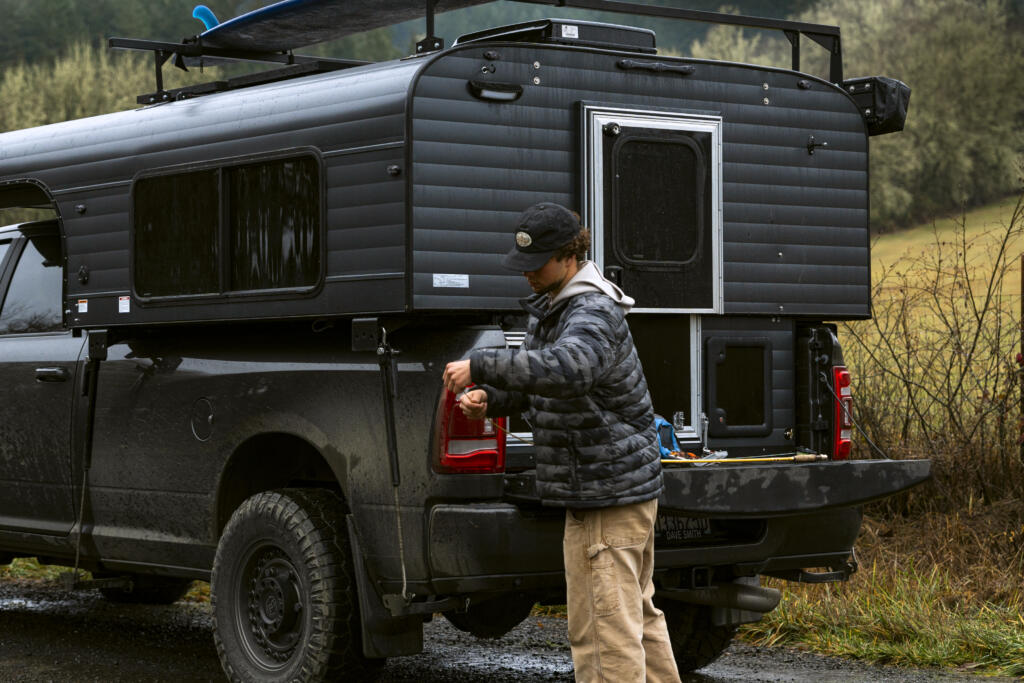
Power Planning: Think in Blocks of Time
Instead of thinking in watts or amp-hours, we think in time blocks. It’s a simpler way to keep power use intentional without getting lost in the numbers.
| Time of day | Primary power use |
| Night (highest priority) | Lights, refrigerator cycling, furnace fan (if needed), phone charging |
| Morning | Coffee, quick device top-offs, water pump use |
| Daytime | Solar recovery, minimal loads while away from camp |
| Evening | Cooking, ambient lighting, charging what matters for tomorrow |
Practical power gear that earns space
- Anker PowerLine II USB-C cables
These last, charge fast, and don’t fray. That matters more than specs. - Anker 737 Power Bank (PowerCore 24K)
A quiet backup for phones, cameras, or a laptop without touching your house batteries. - Nitecore NU25 UL headlamp
Lightweight, rechargeable, and bright enough for real work. Everyone should have one.
https://www.amazon.com/dp/B078PHW3KT
We also do one simple thing that saves trips: if batteries are lower than expected at dinner, we adjust that night. Earlier bed. Fewer lights. No late device charging. It’s always easier to recover power during the day than overnight.
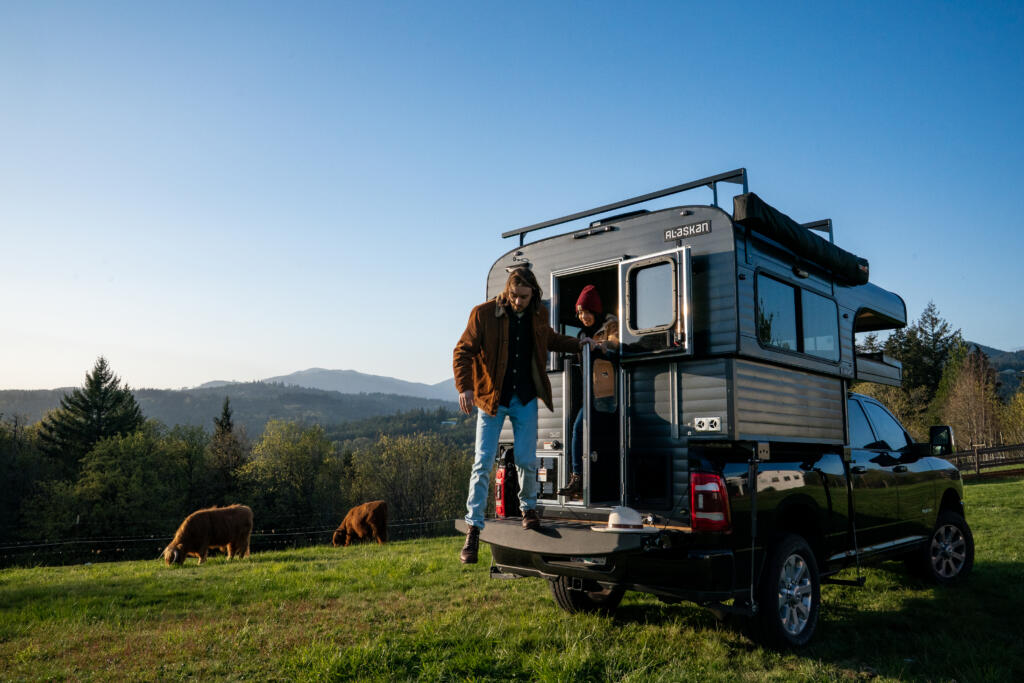
Water: Plan for Comfort, Not Minimalism
Most people either overestimate their tank or underestimate how fast small uses add up. For three days, our mindset is simple: water should never be stressful.
How we actually manage water use
- Drinking water is mentally protected. We don’t blur it with dishwater math.
- Dishes are minimized by design, not discipline.
- We clean up as we go so nothing piles up into a big water hit later.
Useful water-related gear
- Reliance Aqua-Tainer 7-Gallon Container
A reliable way to extend range or separate drinking water. - OXO Dish Brush with Soap Dispenser
Uses far less water than soaking dishes.
A small spray bottle for pre-rinsing dishes is another quiet water saver that works shockingly well.
Food Strategy: Decide Once, Eat Well All Weekend
Food planning fails when every meal is treated as a new decision.We aim for repeatability and flexibility.
What works consistently
| Meal | How we plan it |
| Breakfasts | Same menu each morning, fast cleanup, minimal prep |
| Lunches | No stove, cold, handheld, or leftover-based |
| Dinners | One-pan or one-pot meals, comfort-focused, easy cleanup |
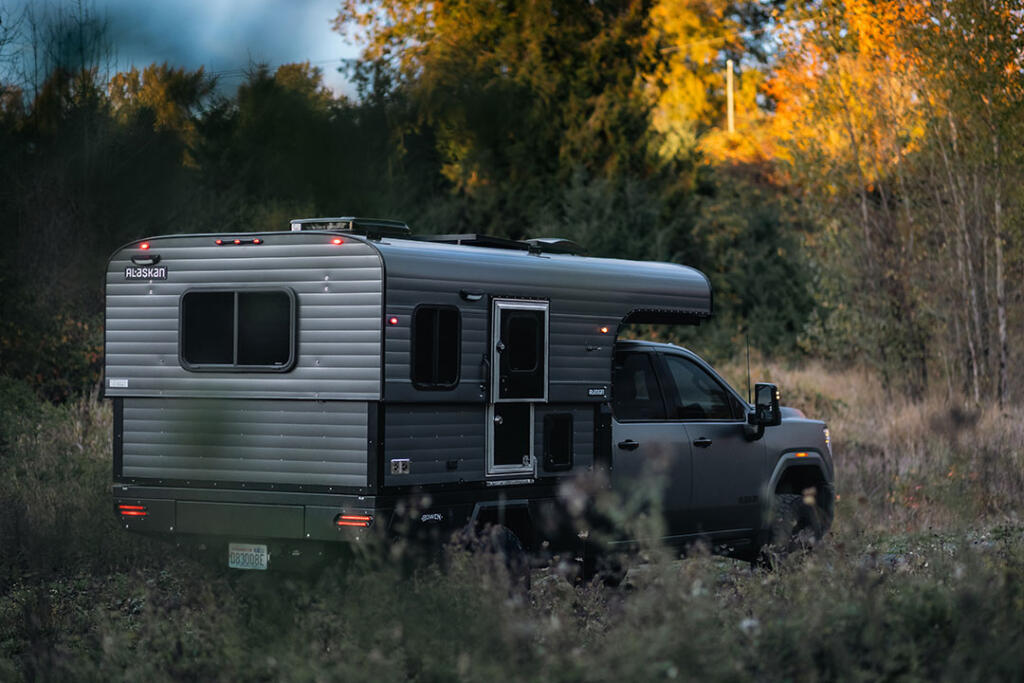
Kitchen gear that actually makes life easier
- GSI Outdoors Pinnacle Frypan
Durable nonstick that cleans with minimal water. - Stanley Adventure Base Camp Cook Set
Compact, usable, and tough enough for real trips. - Hydro Flask 20 oz Insulated Food Jar
Keeps meals hot without reheating or extra dishes.
We also pack one morale meal. Something easy that feels like a reward when the weather turns or energy dips.
Condensation, Ventilation, and Staying Dry
Hard-sided pop-ups handle cold and wet conditions well, but they still need airflow. Condensation isn’t a defect. It’s the natural result of warm, moist air meeting cold surfaces inside a small, well-sealed camper.
The goal isn’t to eliminate condensation entirely. It’s to manage it early so moisture doesn’t compound into damp bedding, fogged windows, or a clammy interior by night two.
Simple habits that make a real difference
- Crack a window while cooking to give moisture somewhere to escape
- Run the roof vent briefly before bed to purge built-up humidity
- Wipe down cold surfaces in the morning, especially windows and metal trim
- Keep wet gear out of sleeping areas whenever possible
This isn’t about perfection. It’s about breaking the moisture cycle before it becomes a problem. For a deeper look at why condensation forms and how to manage it in different conditions, see our full guide: Condensation & Moisture Management in Truck Campers
Clothing: Build a Small, Reliable System
We don’t pack outfits. We pack layers that work together across changing conditions. Three days off-grid doesn’t require variety. It requires flexibility, fast drying, and a margin for weather surprises. The goal is to stay warm and dry without filling every cabinet.
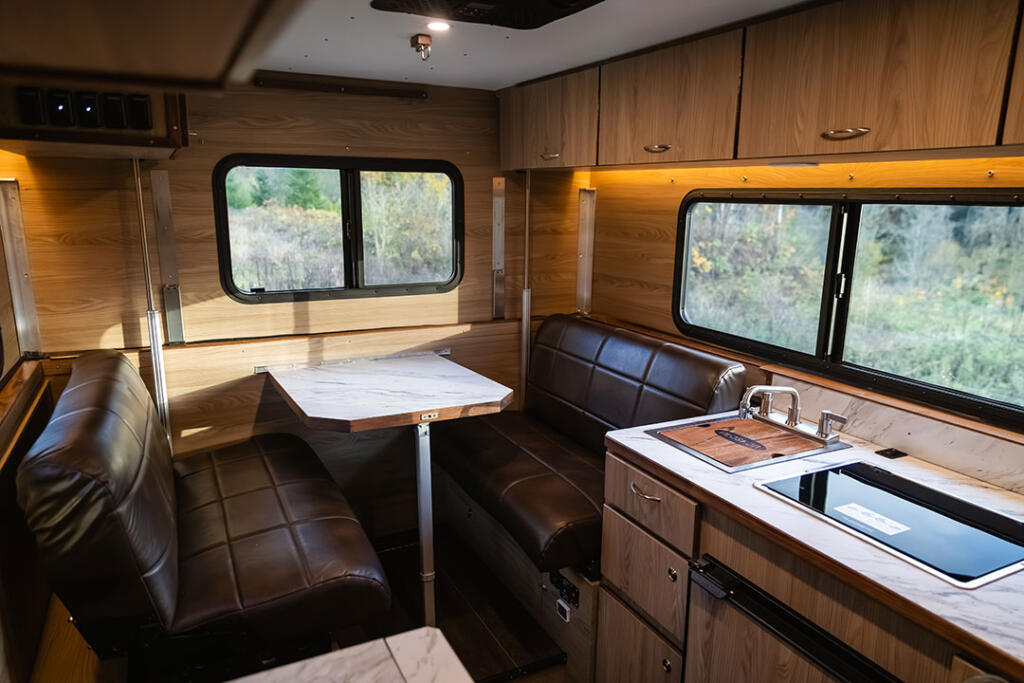
The core system we rely on
- One active layer
Something you can hike, work, and move in without overheating. Breathability matters more than insulation here. - One warm insulating layer
This is for mornings, evenings, and sitting still. It should add real warmth without bulk. - One dry backup layer
A spare base layer or mid-layer that stays untouched unless something gets soaked. This is insurance, not redundancy. - Dedicated sleep clothes
These never leave the camper. Keeping sleep layers clean and dry does more for comfort than almost anything else.
This system works because each piece has a job. Layers can be combined when it’s cold, stripped down when you’re moving, and rotated if weather turns. For most shoulder-season trips, this covers everything without forcing you to manage wet gear or overflowing storage. If space starts to feel tight, clothing is usually the first place to cut back without sacrificing comfort.
Helpful clothing gear
- Sea to Summit Ultra-Sil Dry Bags
Keep sleep clothes dry no matter what. - Smartwool Merino 250 Base Layers
Warm, breathable, and forgiving over multiple days.
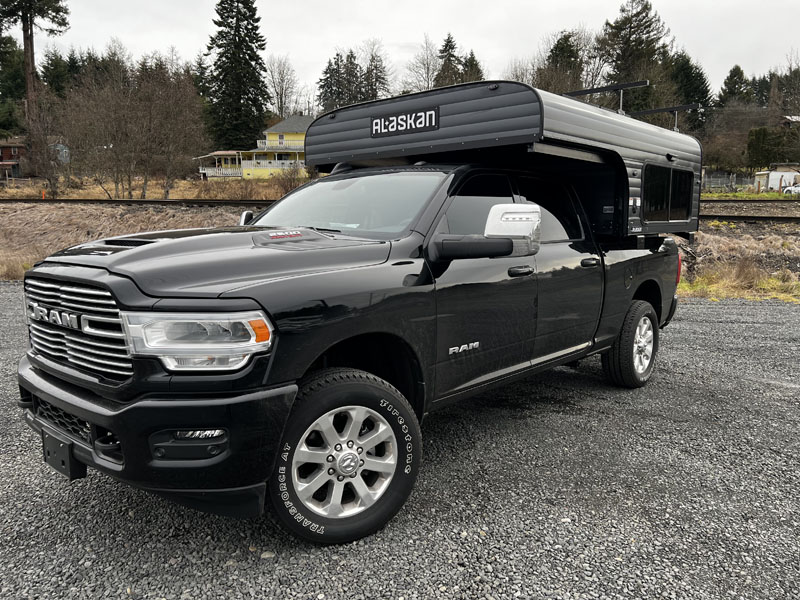
Lighting, Tools, and the Little Things That Keep Trips Easy
Most off-grid frustrations don’t come from big failures. They come from small inconveniences stacking up after dark. A poorly lit interior. A loose latch. A blown fuse with no spare. None of these end a trip, but they chip away at comfort fast. This is where a few well-chosen items quietly earn their keep.
Lighting that makes the camper feel livable
Good lighting changes how the camper feels at night. We think in two categories:
- Task lighting for cooking, reading, and organizing gear
- Ambient lighting for winding down without blasting the interior with harsh light
Brightness isn’t the goal. Comfortable, even light is.
- Luminoodle USB LED Light Strip
Low power draw, fully dimmable, and easy to hang or tuck anywhere inside an Alaskan. It creates soft, usable light without touching your battery reserve in any meaningful way.
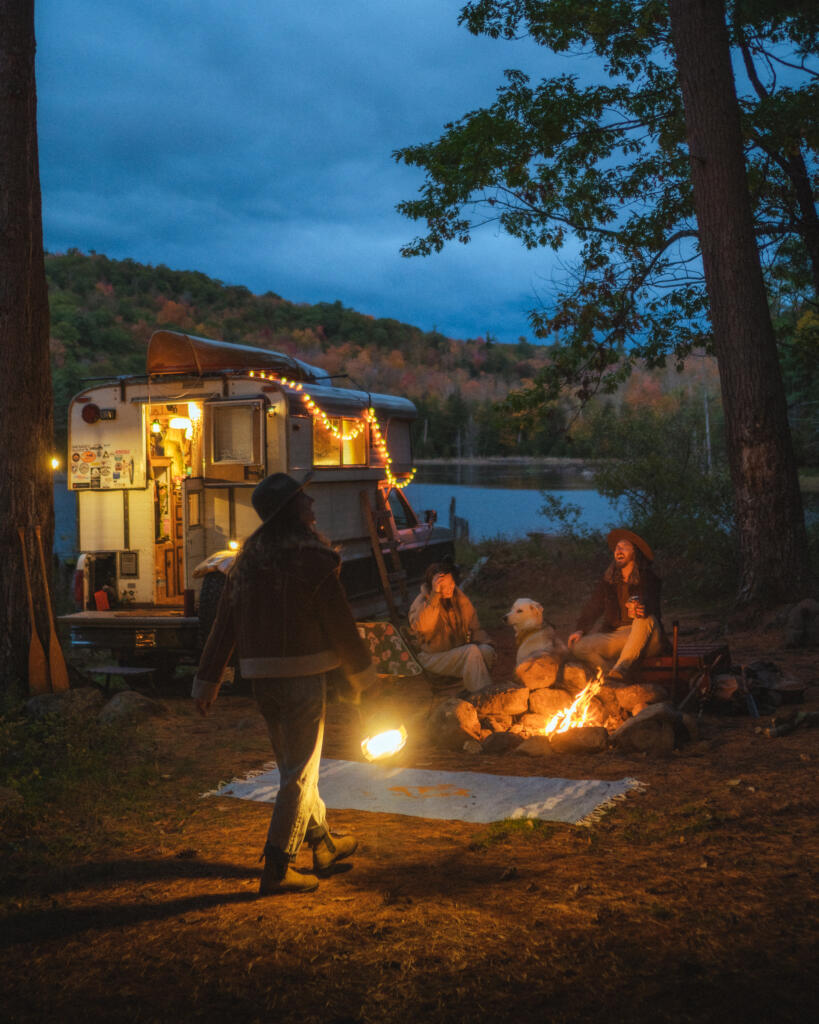
Tools and spares: quiet insurance
This isn’t about preparing for worst-case scenarios. It’s about removing friction when something small needs attention. The goal isn’t to fix everything. It’s to handle minor issues quickly so they don’t become the story of the trip. We carry a small set of basics:
- A compact tool kit
- Spare fuses
- Duct tape
- Zip ties
- A few shop towels
Most trips, they never leave the cabinet. When they do, they save time, stress, and improvisation.
- Crescent 170-Piece Tool Set
Compact enough to store easily, but complete enough to handle almost anything you’d realistically adjust or fix on the road.
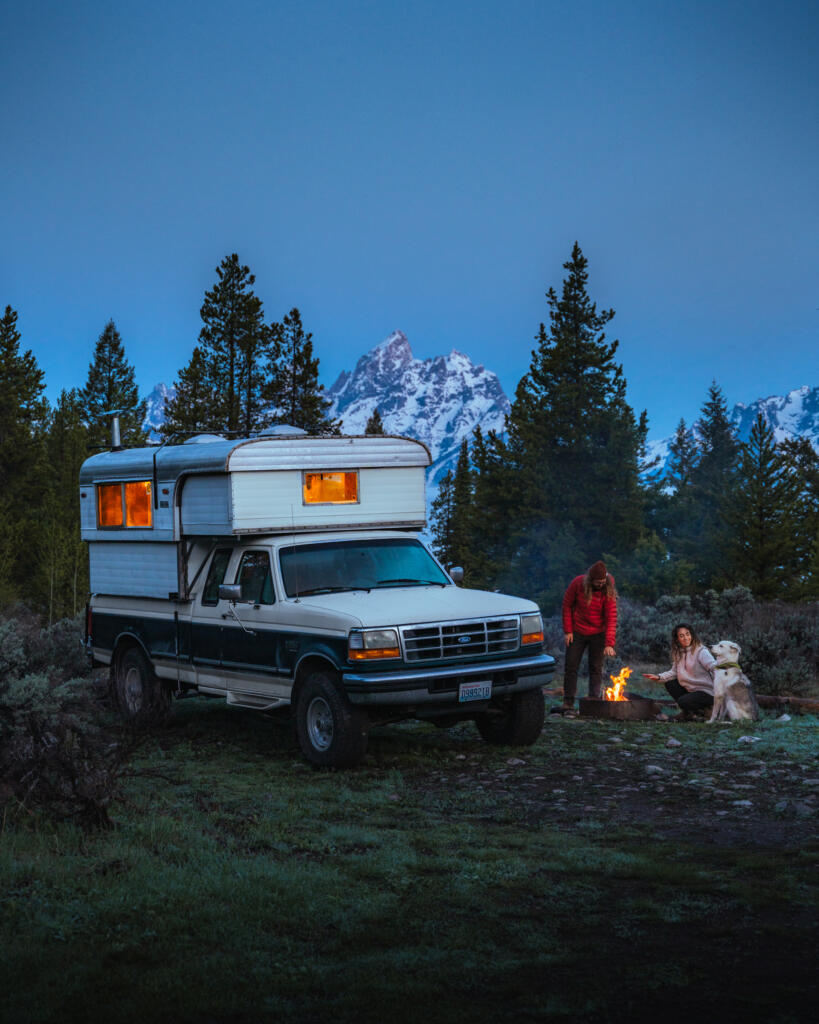
Packing With Intention, Not Excess
This is where an Alaskan really earns its reputation. When you pack with intention, the advantages compound. The low profile reduces wind drag and makes travel more efficient. Hard walls provide real insulation and quieter nights. Simple, proven systems mean fewer surprises when you’re miles from the nearest outlet.
What matters most, though, is how the trip feels once you arrive. If you’re constantly checking battery levels, second-guessing water use, or reshuffling gear, something was overpacked or underthought. If the camper stays warm, dry, and comfortable without demanding attention, you got it right.
That’s the real measure of a successful three-day, no-hookup trip. Not how little you brought, and not how hard you pushed the systems. It’s whether the camper quietly supports the experience instead of becoming part of the workload.
Three days off-grid isn’t about proving independence or testing limits. It’s about understanding your camper well enough that it fades into the background, leaving you free to focus on the place you parked it and the reason you came.
Pack that way, and the Alaskan doesn’t just support the trip. It disappears into it.