Off the boat, onto the road with Michelle Meyers-Garcia’s rebuilt 1972 Alaskan.
Somewhere in Alaska’s Shelikof Strait, between Kodiak Island and the mainland, the Bristol Bay gillnetter trailing behind Michelle Meyers-Garcia’s boat started to break apart in heavy weather. Four-inch aluminum cleats ripped clean off. The reel on the back broke loose, hit the water, and disappeared in about fifteen seconds. The boat itself went under soon after.
The captain radioed the Coast Guard to report the debris and confirm nobody was at risk, then continued toward Homer.
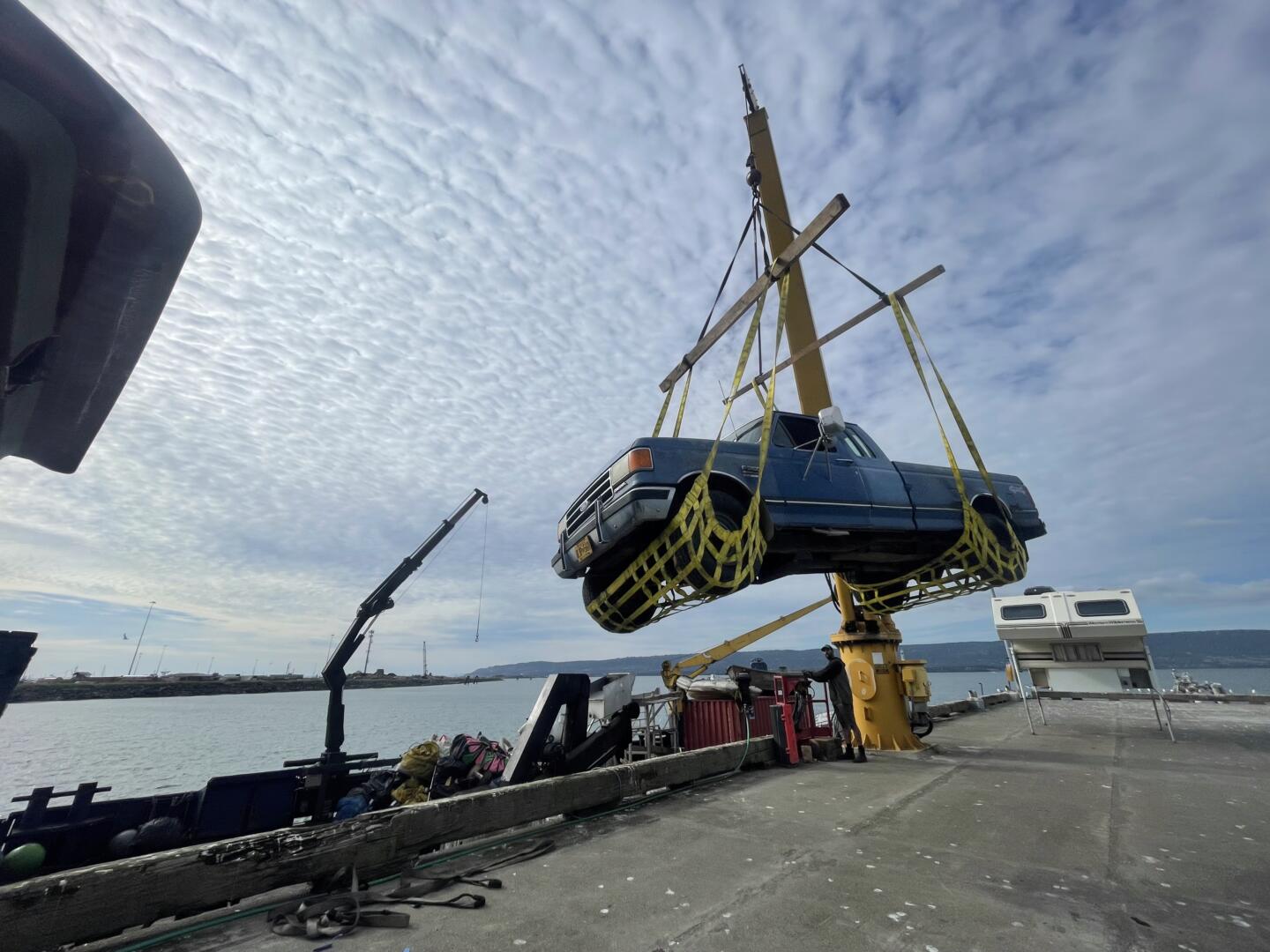
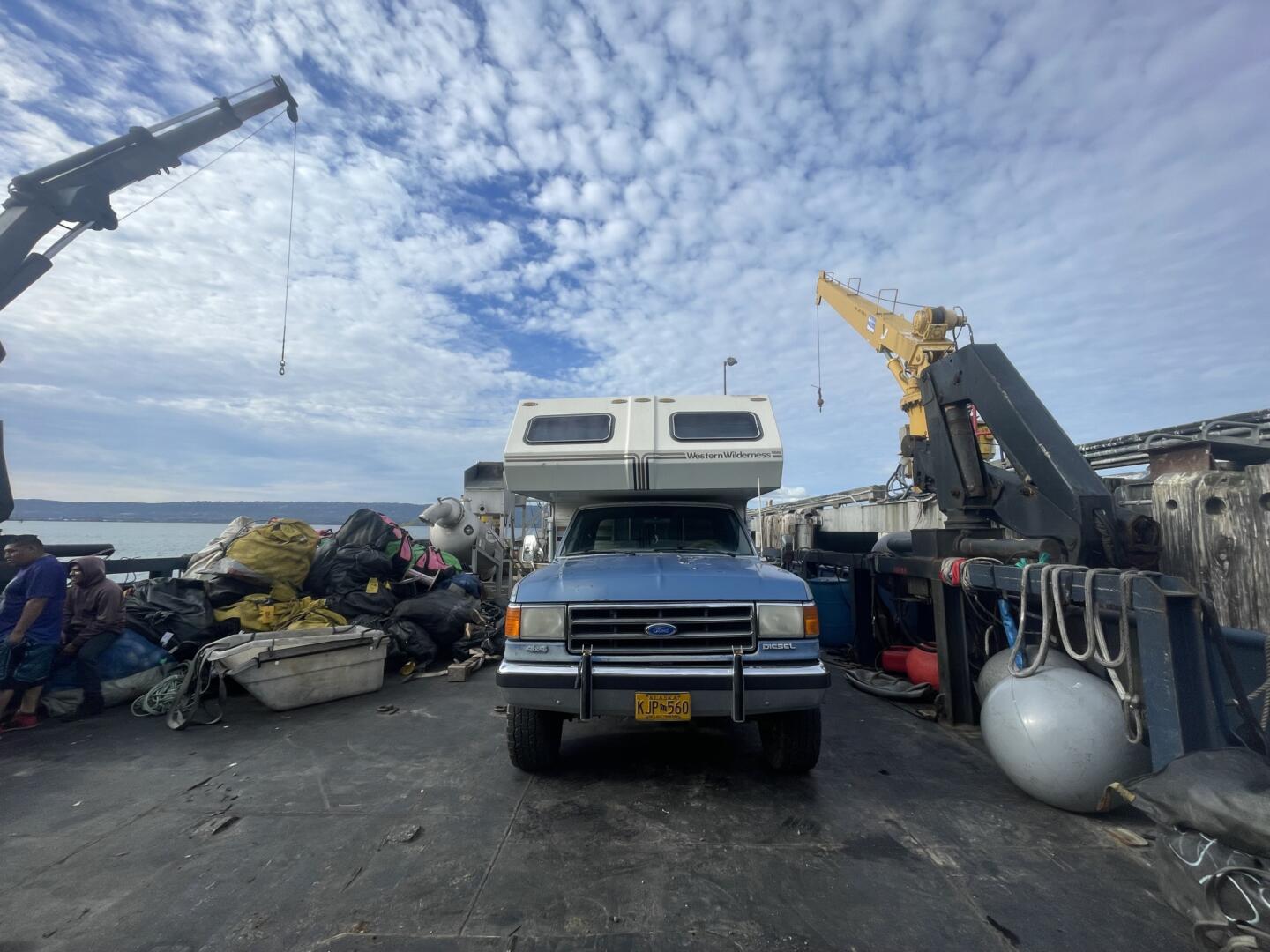
A day later, Michelle’s pickup sat lashed to the back deck of the same 150-foot fishing boat, taking wave after wave through another stretch of rough weather after being craned aboard in Homer for the trip south. That’s when the captain looked over and joked: “I wouldn’t mind if we lost something else that mattered to us.”
Michelle did. The truck on that deck, and the 1972 Alaskan that would later ride on it, became the setup she arrived at after years of hauling heavier campers, rebuilding old rigs, and moving between commercial fishing seasons along remote stretches of coast where breakdowns become your own responsibility very quickly.
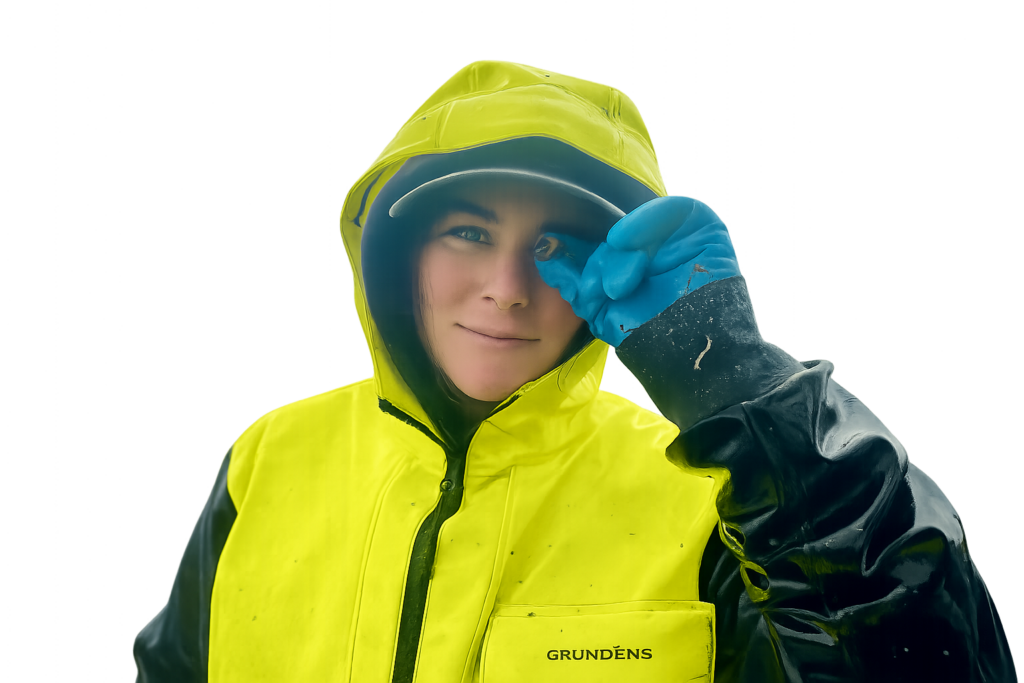
Meet Michelle
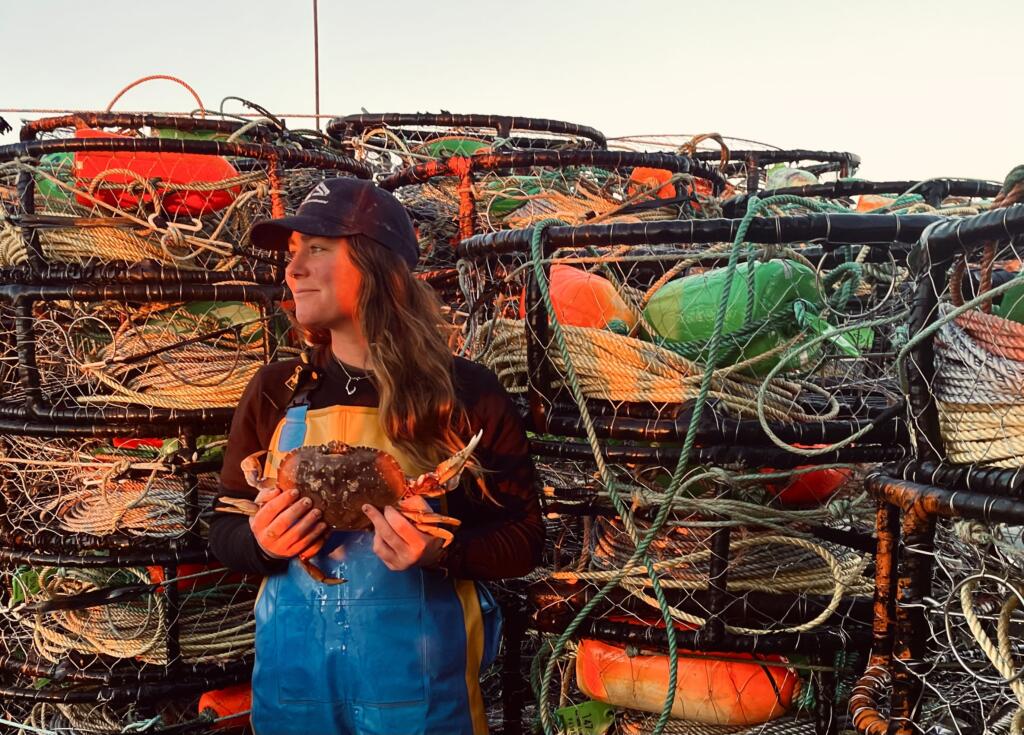
Michelle Meyers-Garcia lives outside Anchor Point, Alaska, where she splits her year between commercial fishing seasons and long stretches on the road. She fishes Bristol Bay in the summer and works crab boats along the Oregon and Northern California coast during the winter.
Before Alaska, Michelle worked in journalism and environmental science after growing up surfing competitively in California. Eventually, office life wore thin. Seasonal work, rough weather, and life on the water pulled harder so she moved north and started commercial fishing instead.
The writing always came with her. In fact, every year, Michelle drives to Astoria, Oregon for the annual Fisherpoets Gathering, where commercial fishermen share original stories and poetry shaped by life at sea. Earlier this year, she published her first collection of poems, many of them drawn from the same rough coastlines and working waters that now shape the rest of her life.
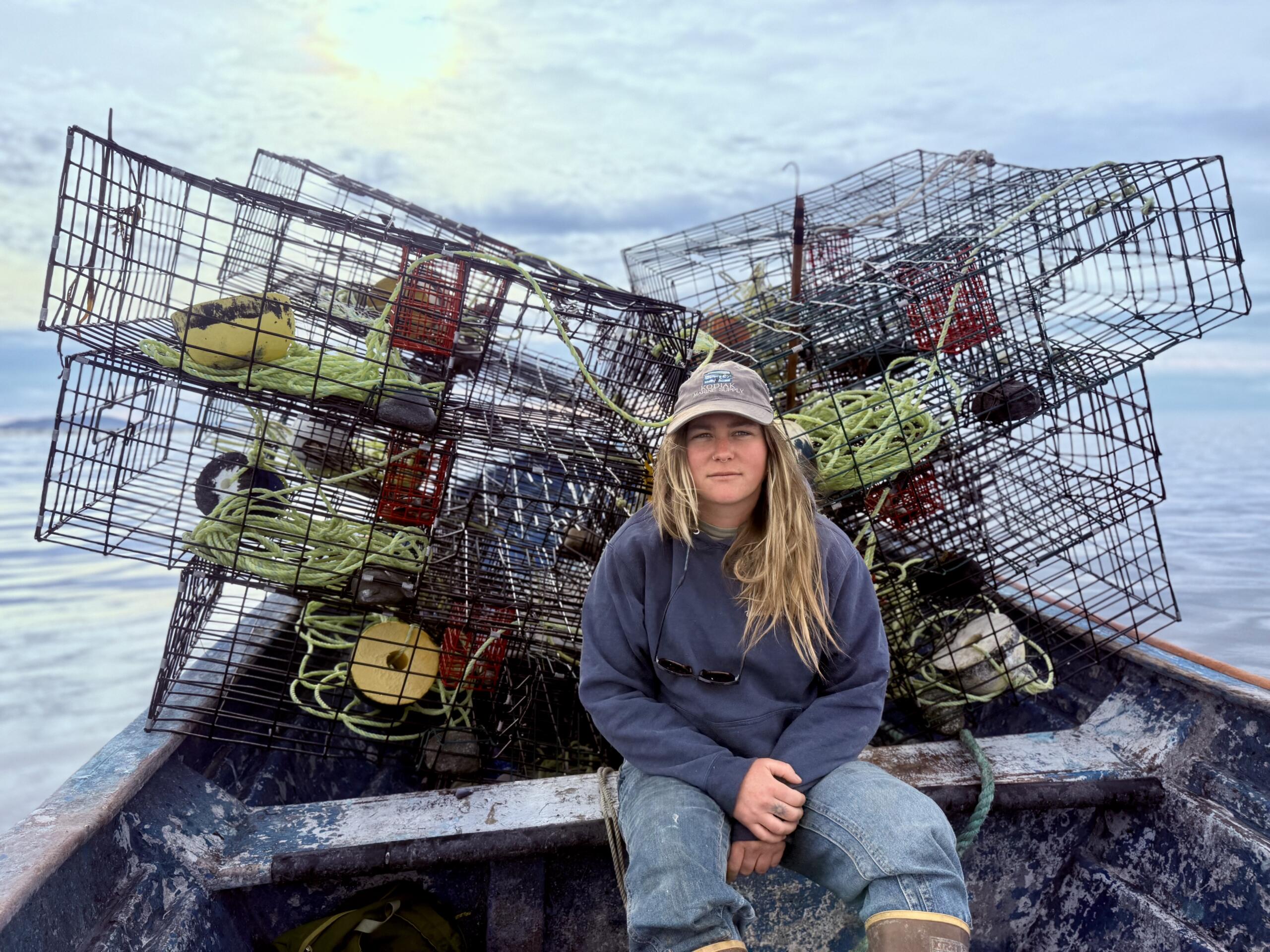
Too Much Camper
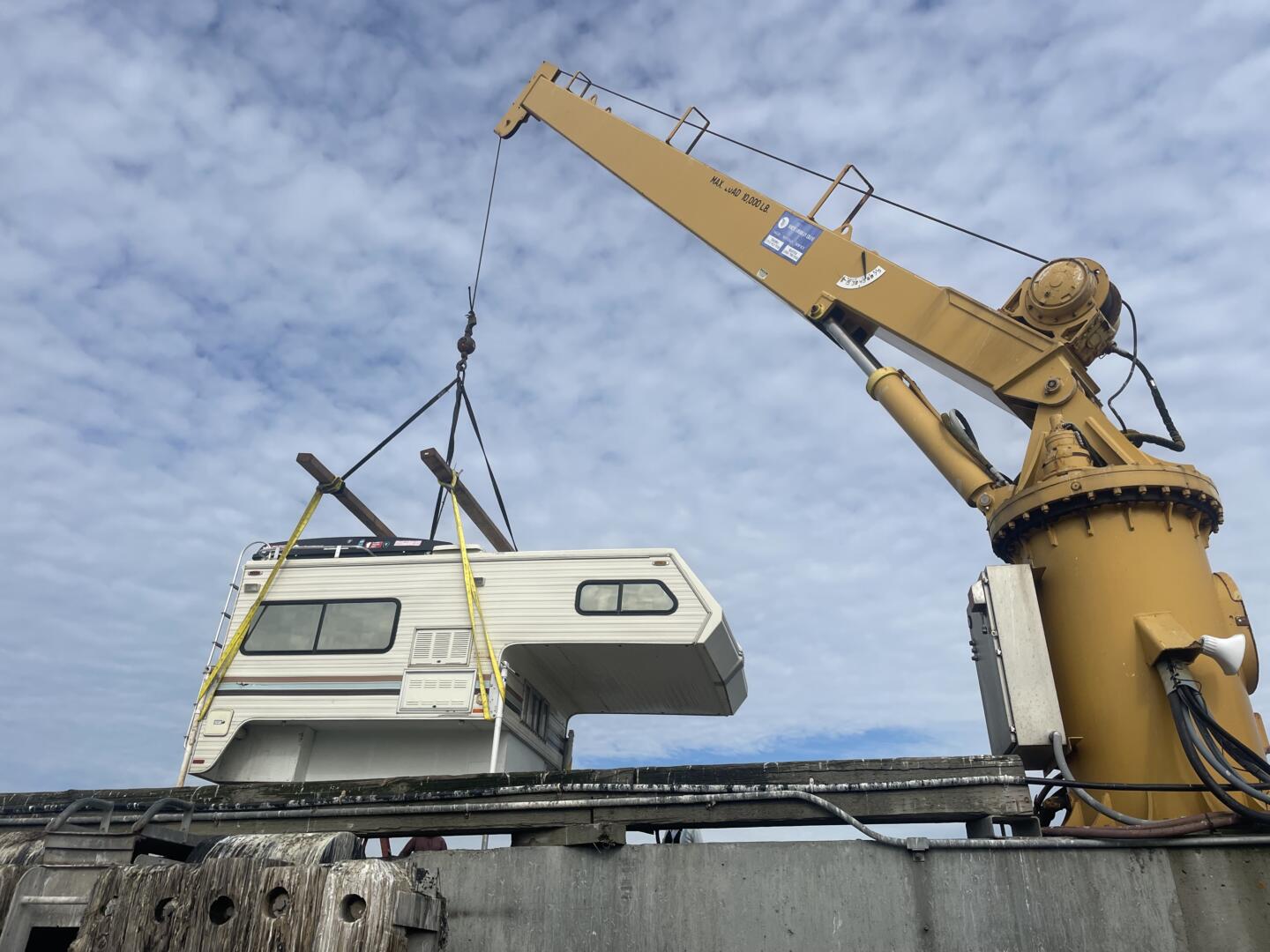
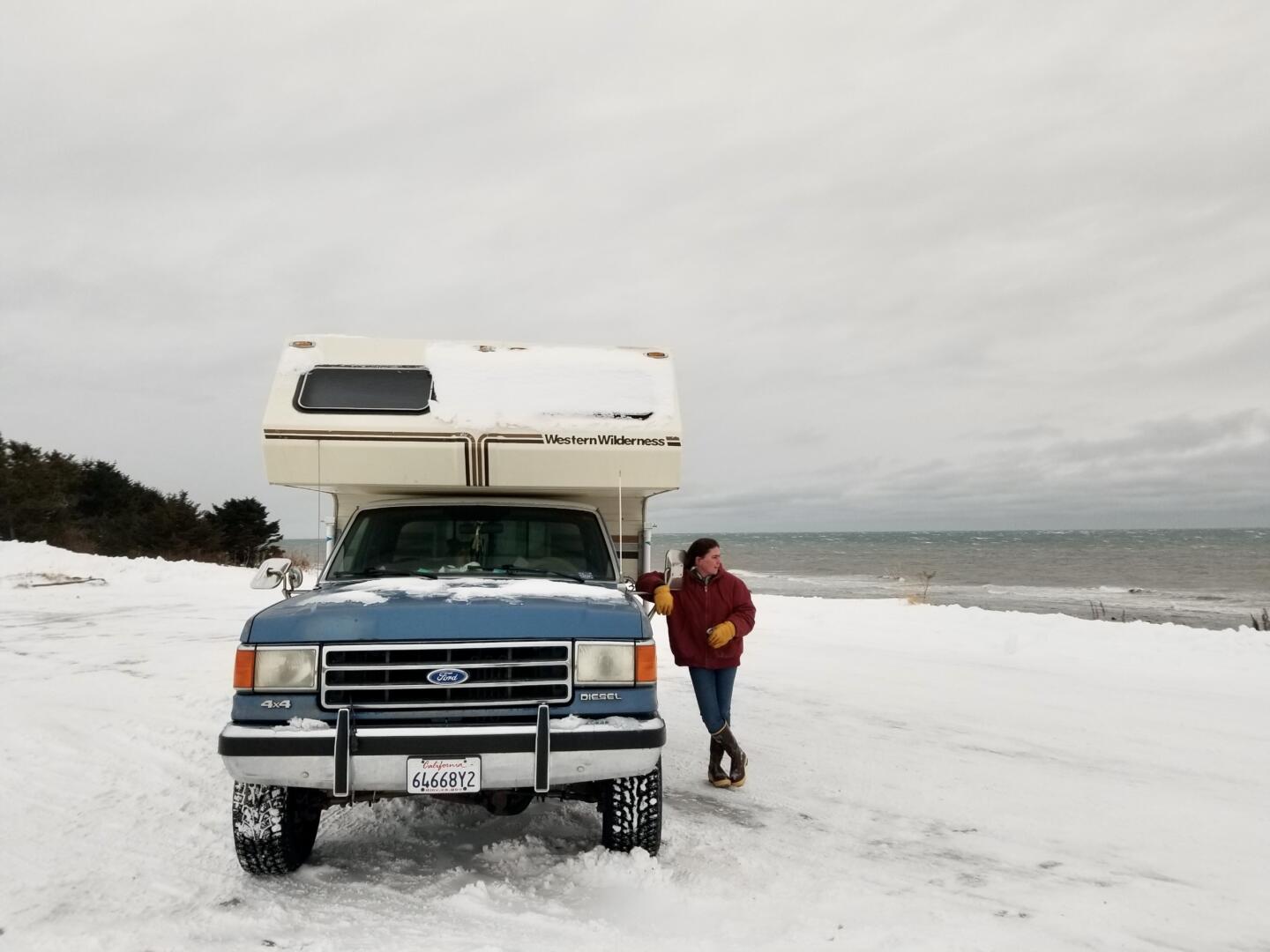
Before the Alaskan, Michelle was running a Western Wilderness camper on her F-250. Her first rig had been an Astro van she’d picked up in Compton for next to nothing; the Western Wilderness was the upgrade. Bigger, more comfortable, and far better to live out of for long stretches.
The trouble started once the truck was moving. The camper swayed through corners and wore on the truck. For a life built around constant movement between fishing seasons and remote coastlines, it gradually stopped making sense. After enough Alaska miles in it, Michelle realized she no longer wanted the biggest camper she could haul. She wanted the smallest one she could comfortably live in.
By the time the truck was craned onto the back deck of the 150-foot fishing boat bound for Washington, towing the same Bristol Bay gillnetter that would later sink in the Shelikof Strait, Michelle was already looking for something smaller. She sold the Western Wilderness within weeks of landing in Bellingham. The search for an Alaskan started almost immediately.
Hunting Down an Alaskan
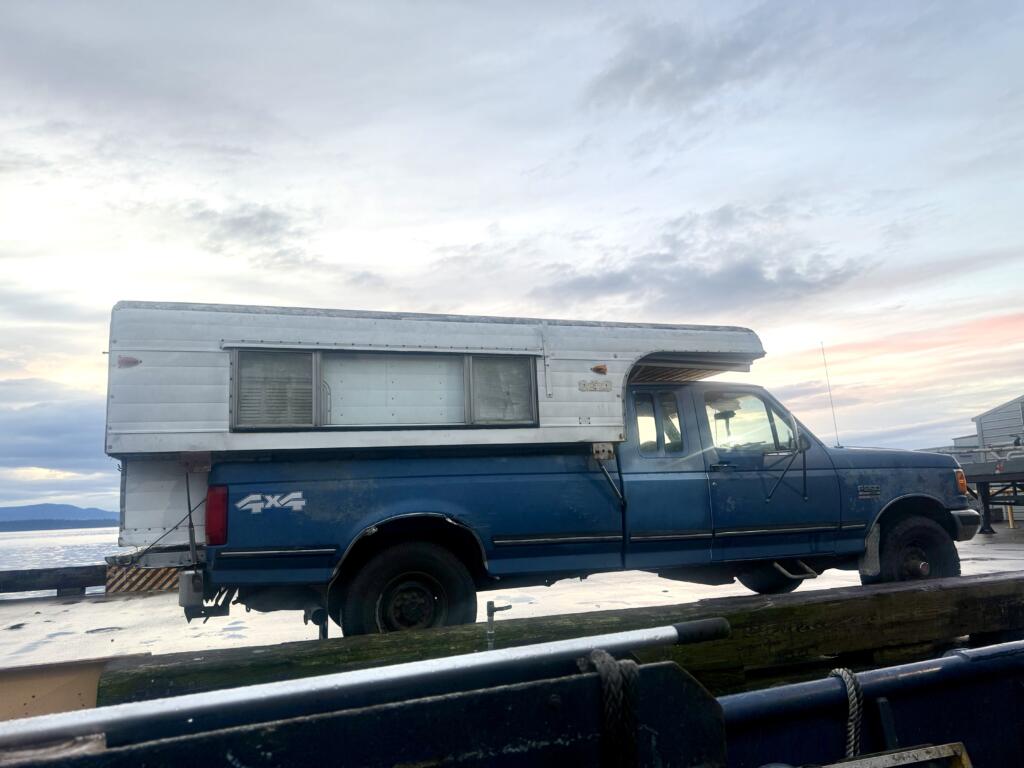
When Michelle reached Washington, she sold the Western Wilderness almost immediately and started searching for an Alaskan. The problem was finding one that wasn’t either completely destroyed or wildly overpriced.
I was hunting these things down. I was ready to drive across the coast and get one.
She bought a 10-foot Alaskan first and threw herself into rebuilding it — replacing hydraulics, chasing water damage, working beside the dock where her fishing boat was tied up. Eventually, though, the project became too much. When she went to sell it, the floor fell out. Michelle ran back to the boat, grabbed a drill and screws, fastened everything back together, and sold the camper for a hundred bucks.
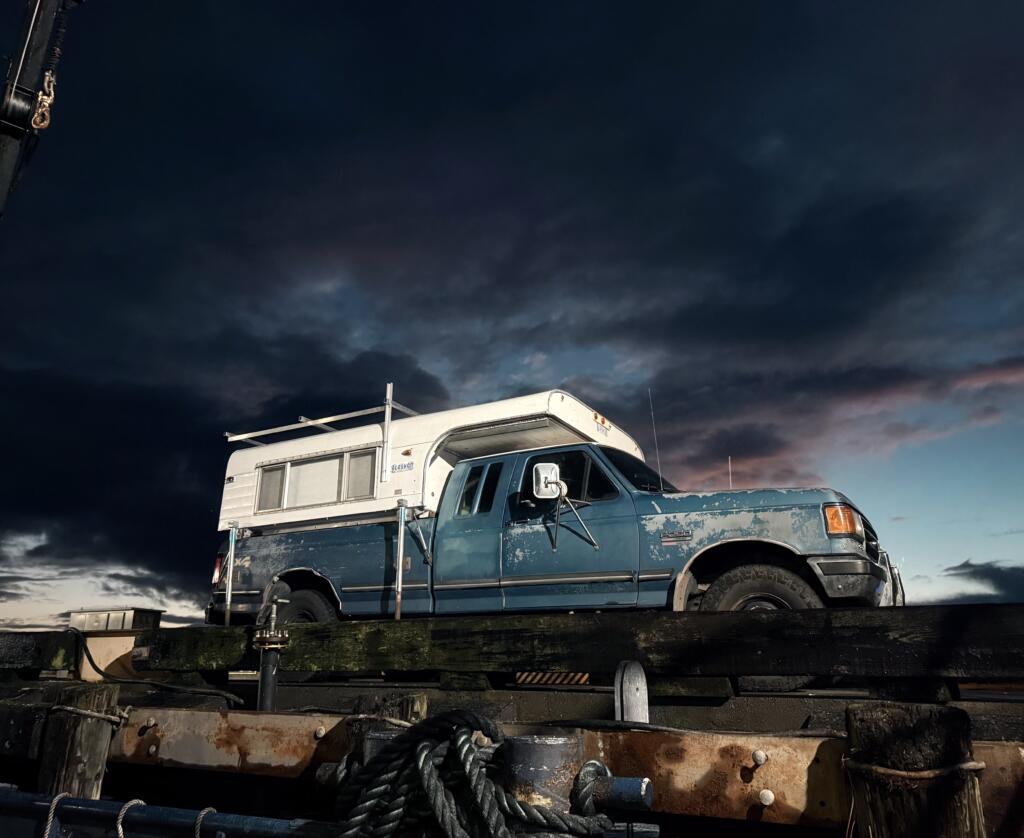
Then she found the 1972 Alaskan Camper.
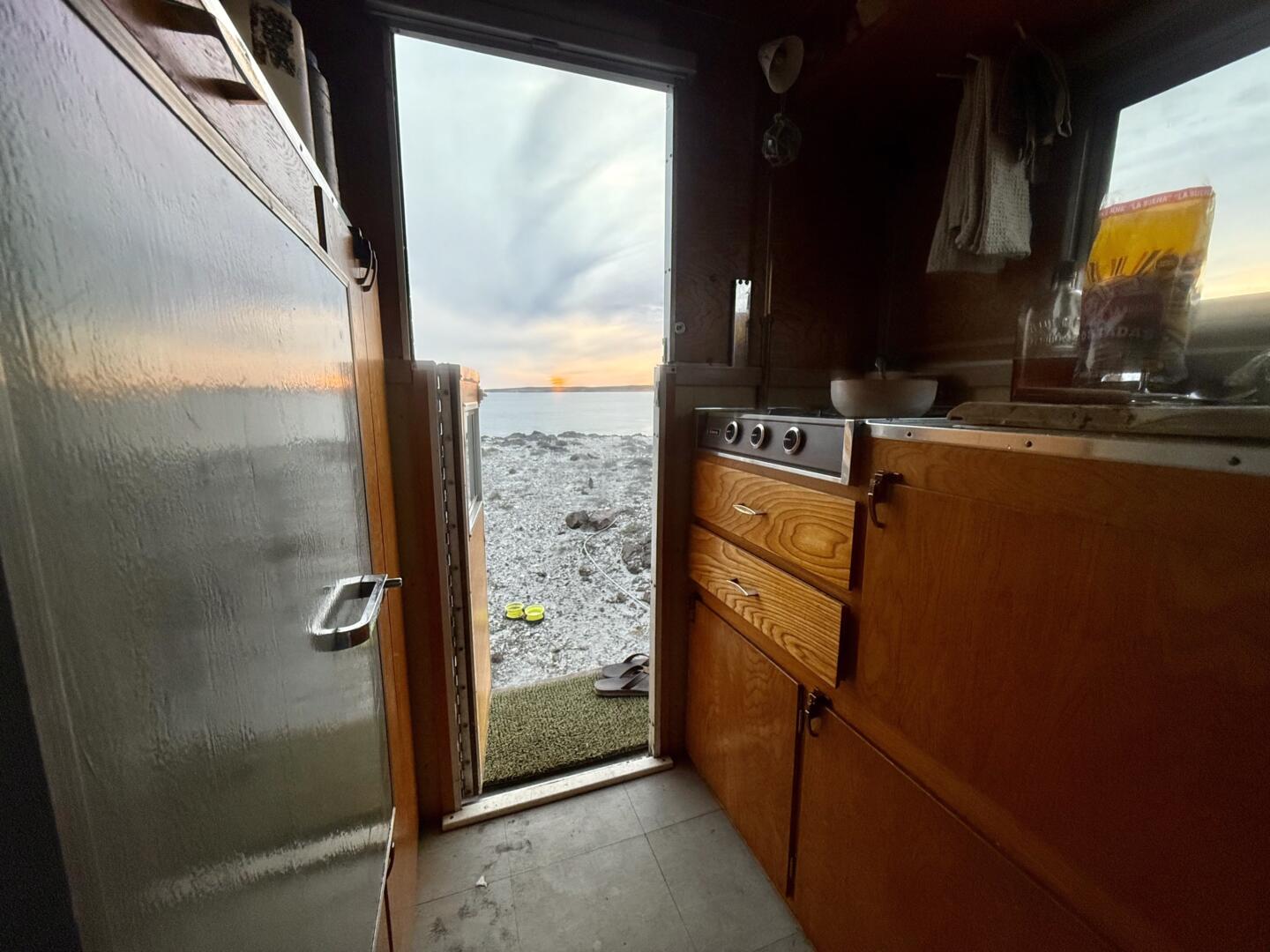
The camper still needed work, but Michelle immediately liked how straightforward it was. The hydraulics worked. The leak points were manageable. The camper had very little electrical system to chase through walls or troubleshoot on the road. Most problems came down to hinges, seams, seals, or hydraulics, the kind of things she could actually repair herself without losing weeks to a shop.
It’s so simple. I just top it off with fluid. I can replace the seals pretty easily.
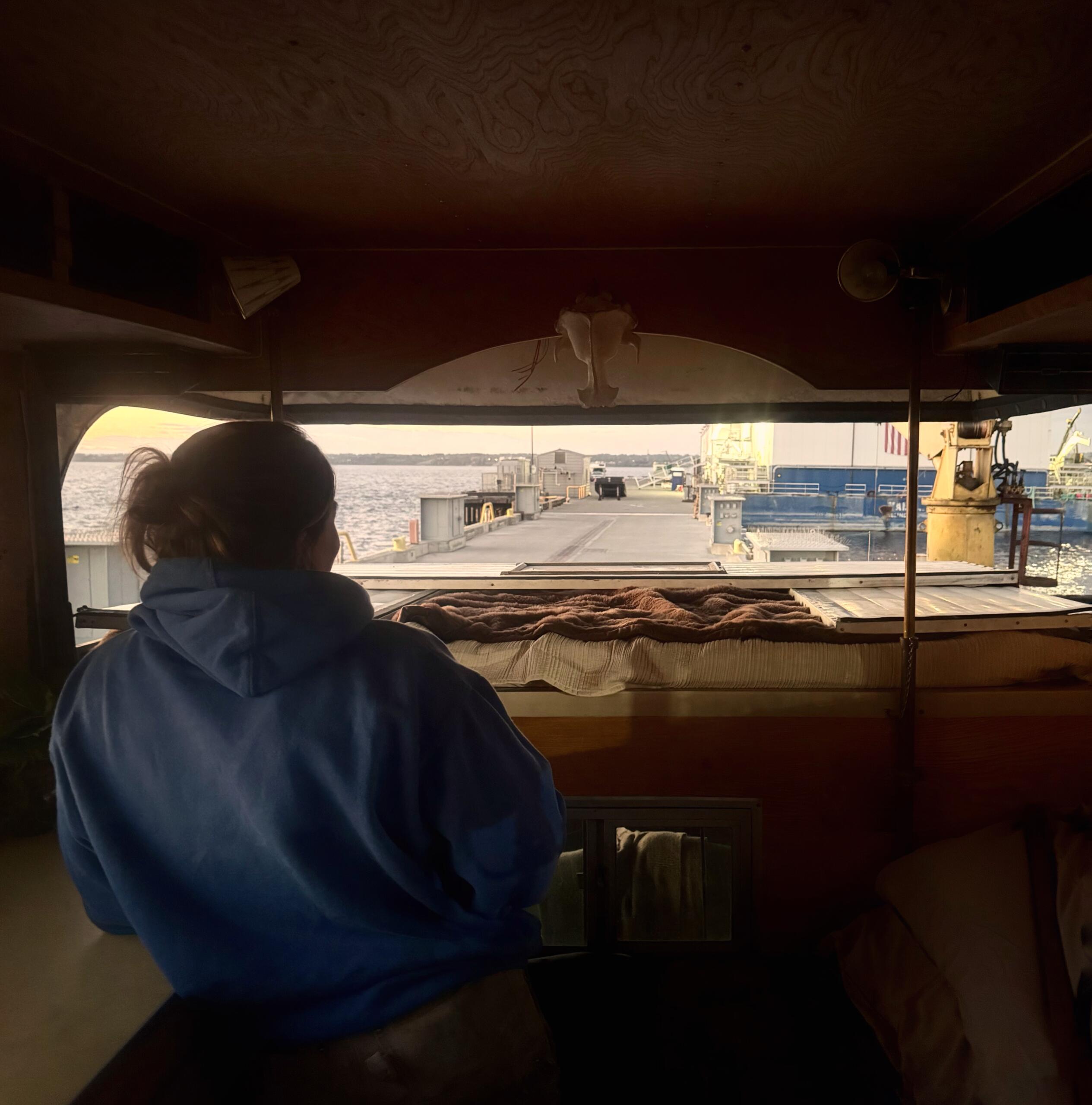
So through the fall and early winter, parked beside the same dock where the first Alaskan project had unraveled, Michelle started rebuilding the camper piece by piece.
Working It Over
Through November, Michelle rebuilt almost every major system on the camper. She fabricated an aluminum roof rack from raw stock using boat tools and the fishing boat’s own cranes. She installed the propane system. Refit the electrical. Re-caulked the seams. Sealed and repainted the wood. And serviced the hydraulic lift system.
The truck got the same treatment in parallel, spread across months of work from Alaska to California: brake booster, steering box, vacuum pump, master cylinder, transmission fluid and filter twice, the second after the truck dumped fluid across somebody’s driveway. Glow plugs, belts, battery cables, front and rear suspension, tie rod ends, steering drag link, fuel filter, injector reseal kit, then eventually the vacuum pump again.
By the time Michelle pointed the rig south toward Baja, very little on either machine still felt unfamiliar.
Southbound
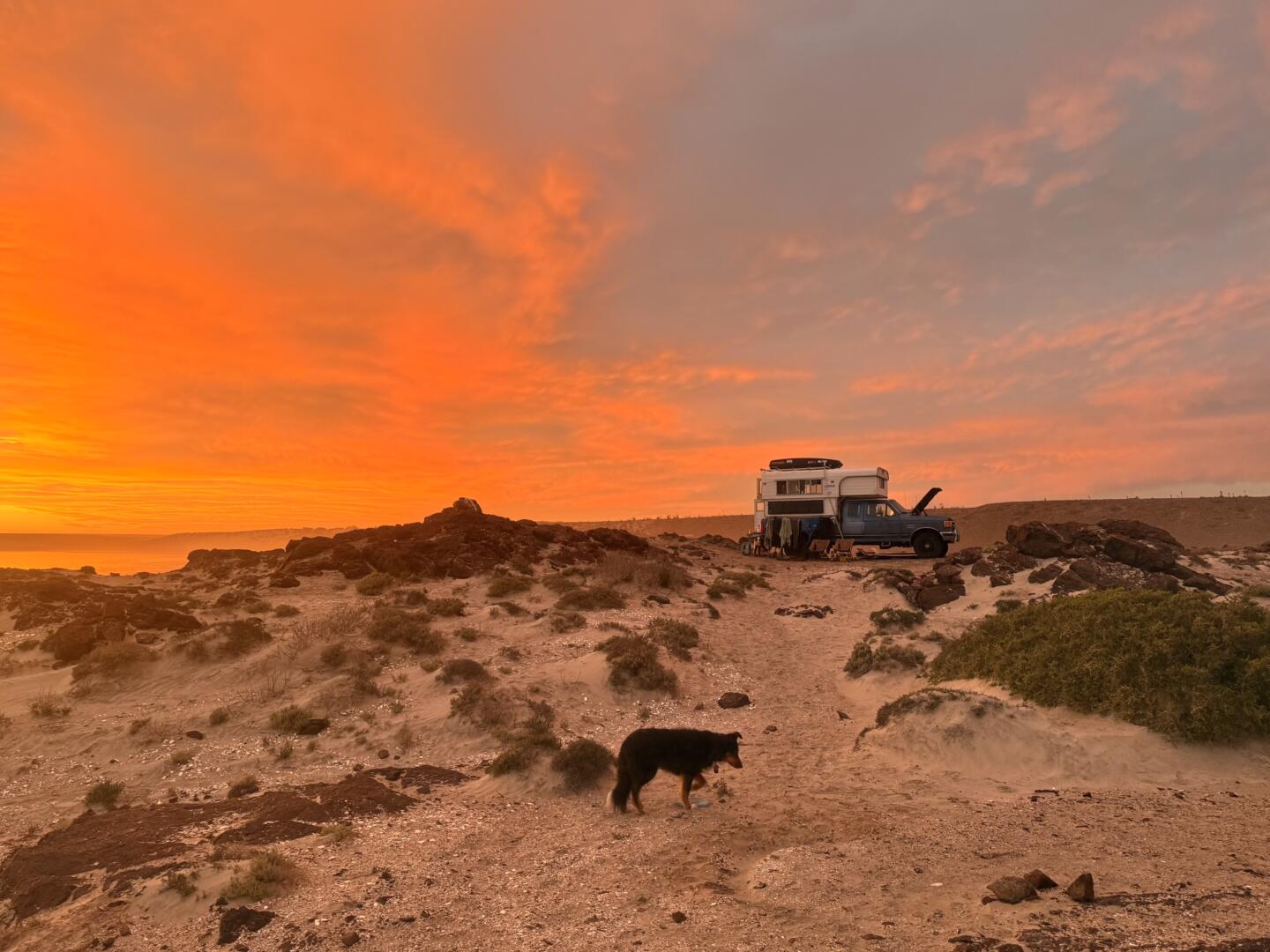
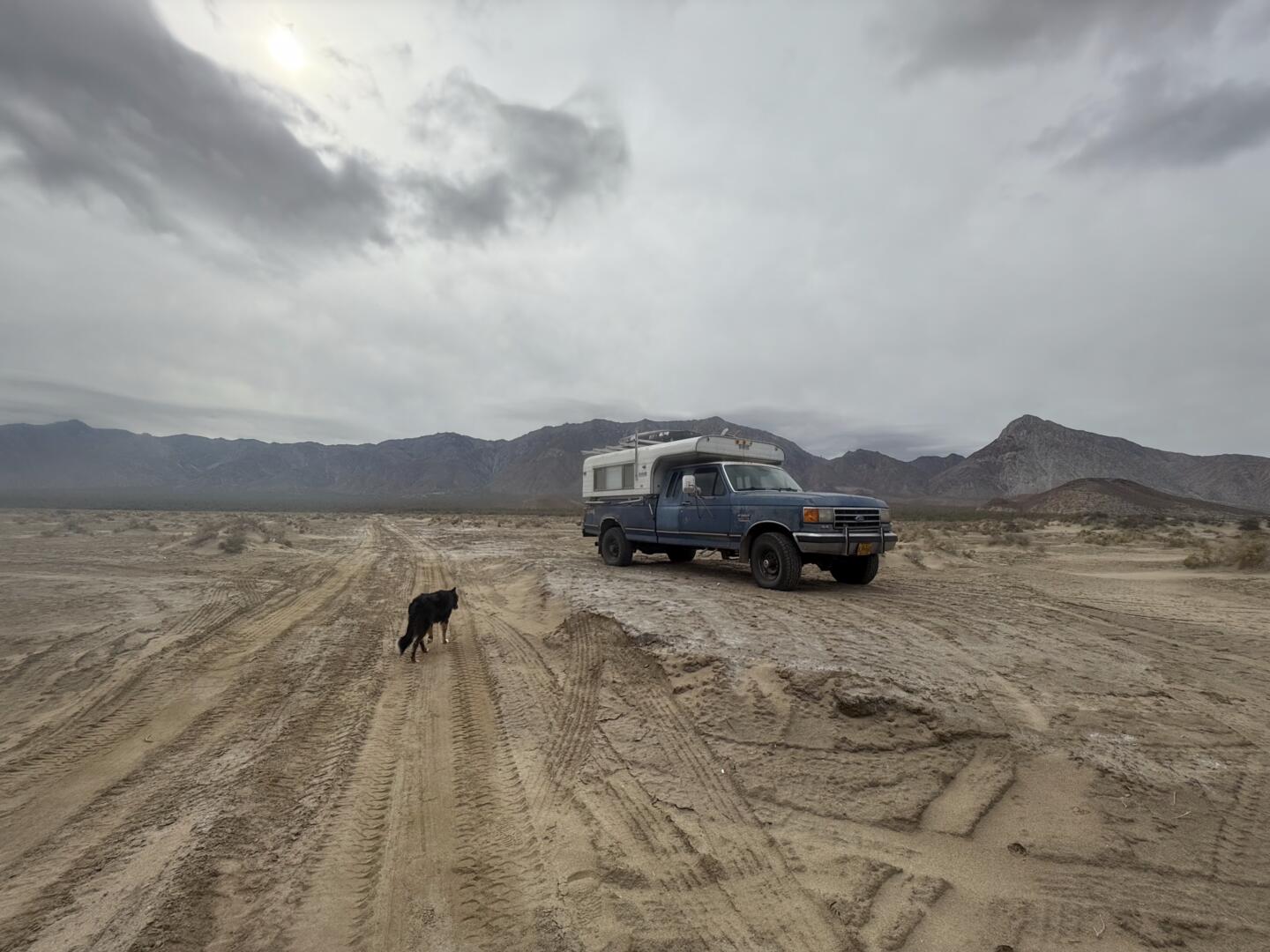
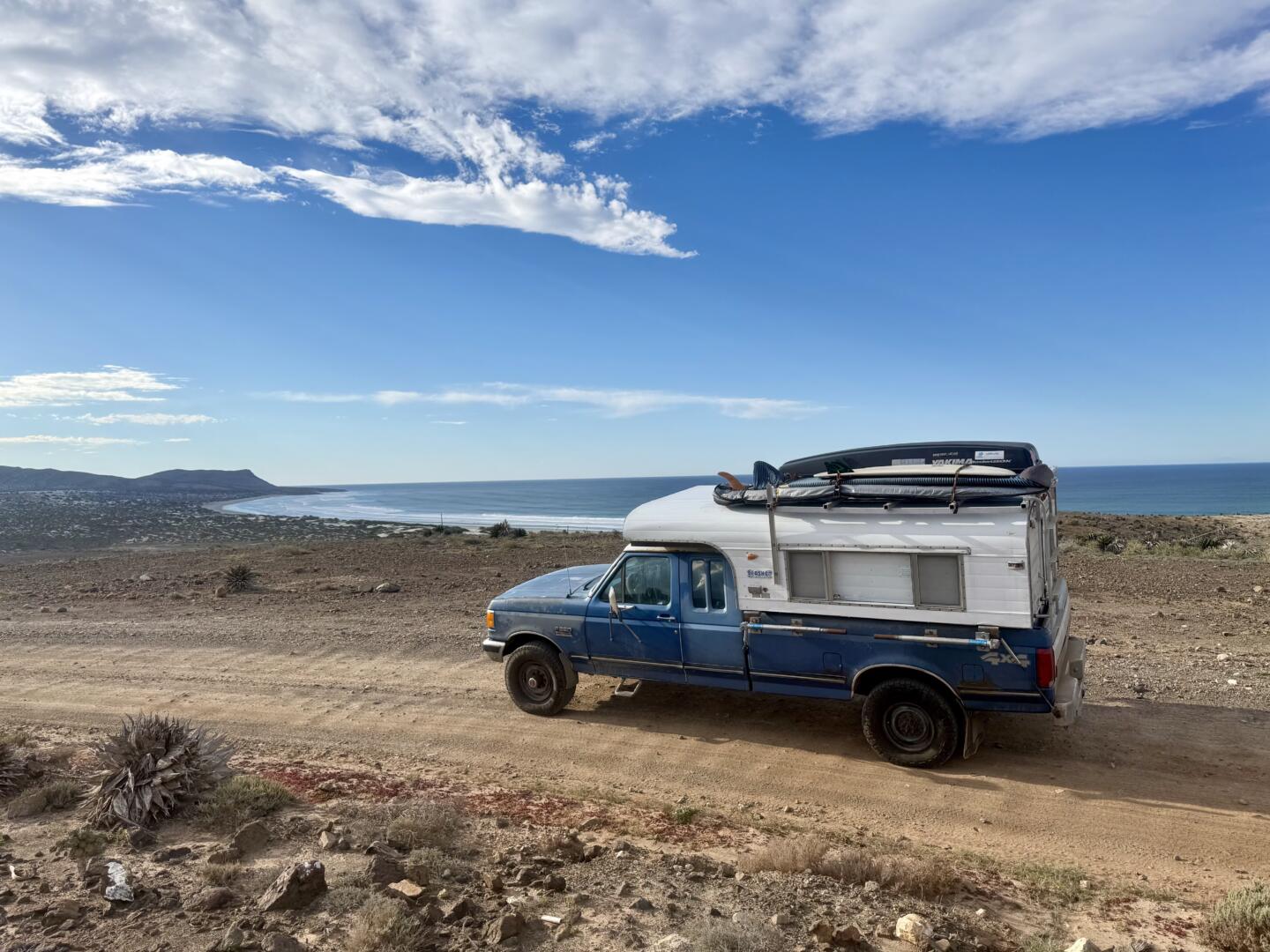
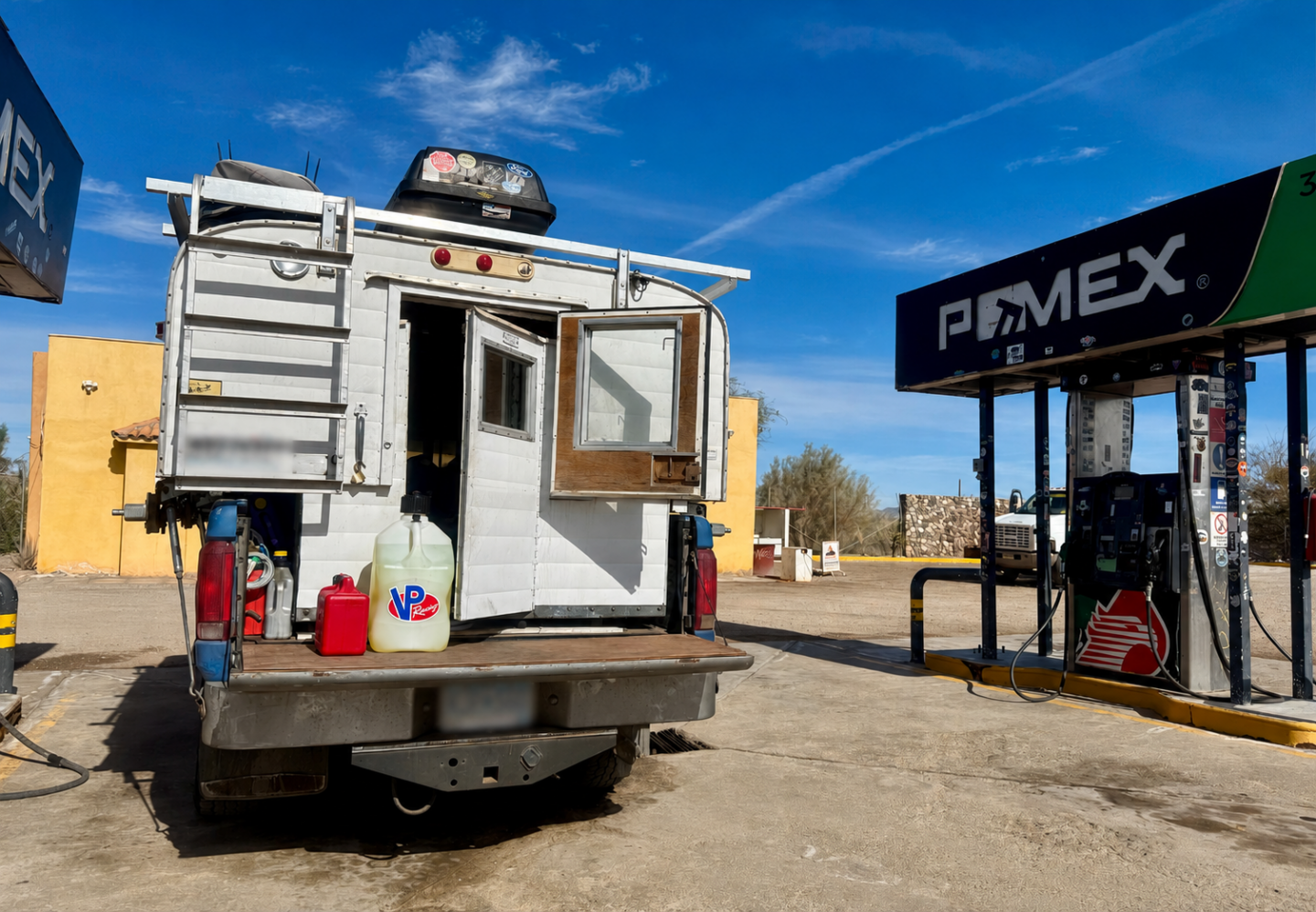
Michelle crossed into Baja in late January, heading first to Bahía de los Ángeles on the Sea of Cortez before cutting back across the peninsula toward the Seven Sisters surf breaks on the Pacific side. By then, the truck and camper had absorbed months of repairs, rebuilds, and roadside fixes from Alaska to California. Baja was the first real run.
The smaller Alaskan started making more sense almost immediately.
The Western Wilderness was huge, but it felt so cramped in there. With the Alaskan, you could open all the windows, sit comfortably with friends and the dog, and actually spread out.
The 1972 felt lighter in every way: better on rough roads, easier through turns, and more livable once parked. With the top raised and the windows open, air moved through the camper constantly.
For the first time in a while, the setup matched the way Michelle actually traveled.
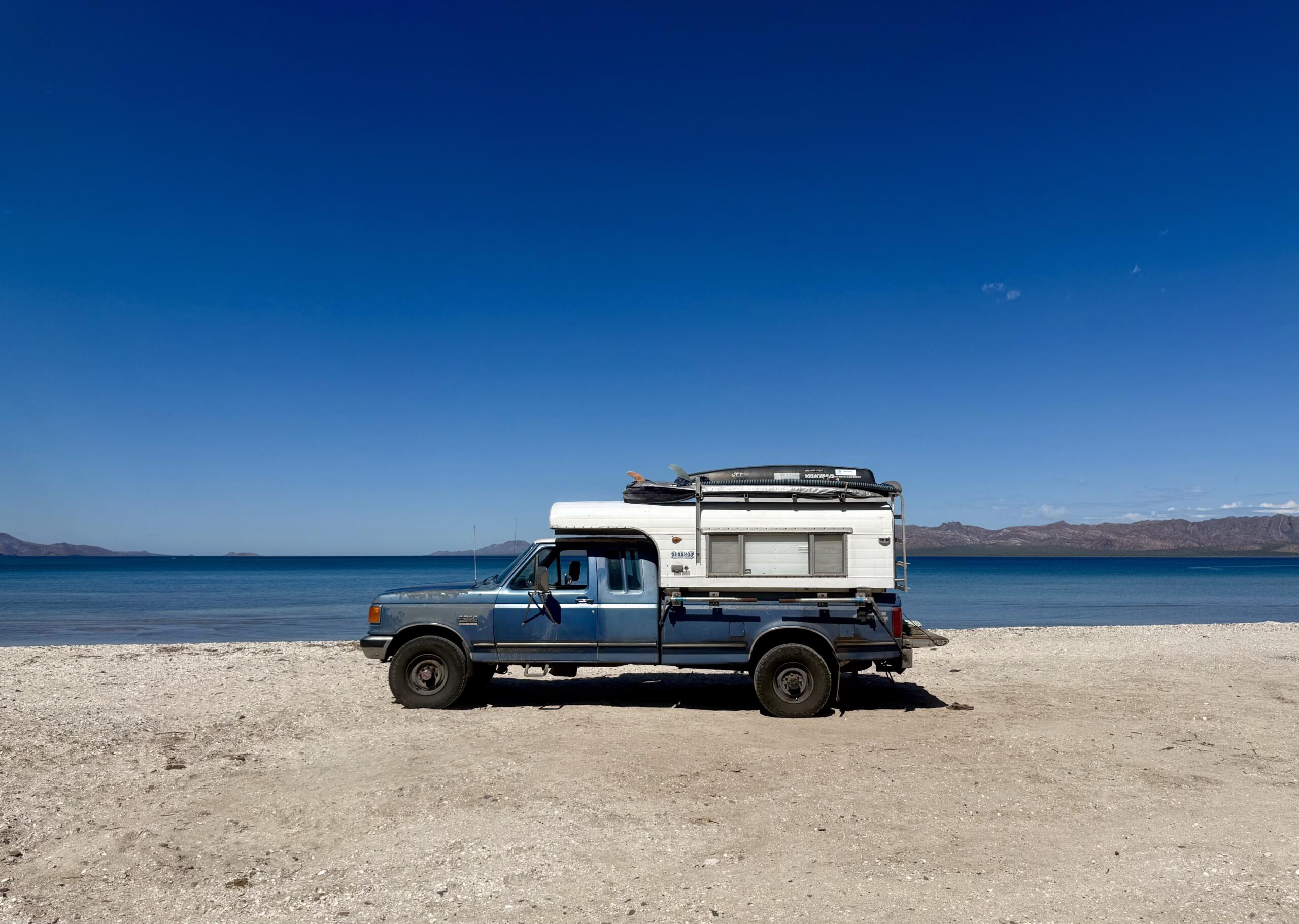
She spent about a month and a half camped along the Baja coast, surfing, spearfishing, and living out of the camper. The original icebox held ice for about two days at a time. After that, Michelle would usually find somebody nearby with a Dometic fridge and rotate water bottles through their freezer to keep things cold. A modern fridge is still on her upgrade list.
They stayed longer than planned, spending time with friends farther south near La Paz before eventually turning north again to make it back to Astoria in time for the annual Fisherpoets Gathering.
By then, the old Alaskan had already proven itself across rough roads, long beach camps, surf breaks, and enough Baja miles to feel less like a project and more like a dependable traveling setup.
Worth Keeping Around
The rig still needs things. Linear actuators eventually. A Dometic fridge. More solar. The work continues the same way the rest of it has: piece by piece, usually parked beside a dock somewhere.
But somewhere between Alaska and Baja, the old Alaskan stopped feeling temporary.
The truck and camper have crossed rough coastlines, fishing ports, desert highways, and enough bad weather together that Michelle knows almost every system on both by feel. Years around boats and old equipment taught her that reliability rarely means perfection. Usually, it just means something can still be repaired when it breaks.
That captain in the Shelikof Strait joked he wouldn’t mind losing Michelle’s truck too after everything the weather had already taken. Fair enough. Without him, the truck never would’ve made the trip south in the first place, and a lot of the camper rebuild happened because he let Michelle work beside the boat using its cranes, tools, and dock space along the way.
But after enough miles, rebuilds, fishing seasons, and long drives south, Michelle already knew what was worth keeping around.
The 1972 Alaskan. The 1991 Ford. Friends in camp, surfboards on the roof, and the dog stretched out somewhere inside with all the windows open.
Everything else is replaceable.
Huge thanks to Michelle for sharing her story, photos, and perspective with us. Stories like this are a big part of what makes the Alaskan community what it is: people actually using these campers across rough roads, long seasons, remote coastlines, and all the unpredictable miles in between.
If you’re out putting your Alaskan to work somewhere interesting, we’d love to hear your story too: [email protected]