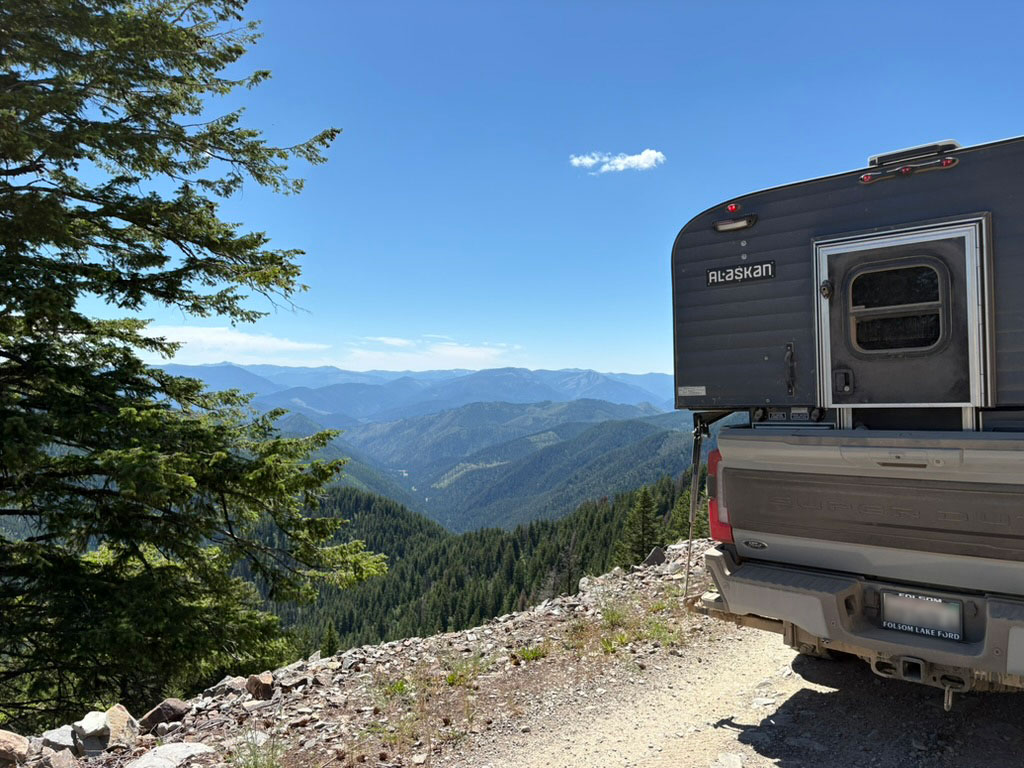
Three days stuck in Montana mud made Stephen Kelly rethink his rig. This summer, he returned in an Alaskan Camper for 900+ miles of backcountry travel.
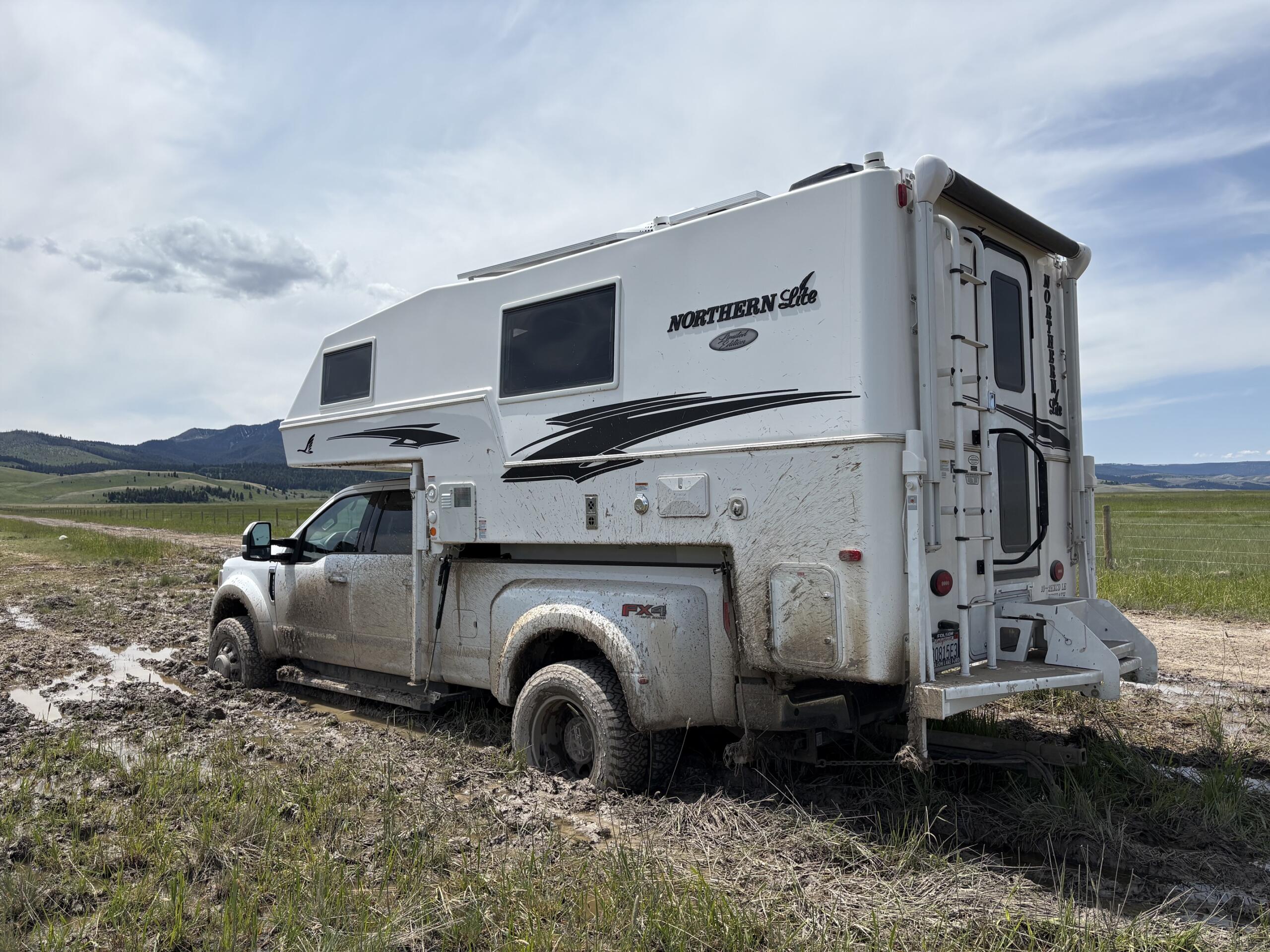
Stephen Kelly made it about 15 feet down a muddy drive-around in Montana before his F-450 dually sank to its axles. As detours go, this one took a while: three nights of trying to get free before a farmer pulled him out.
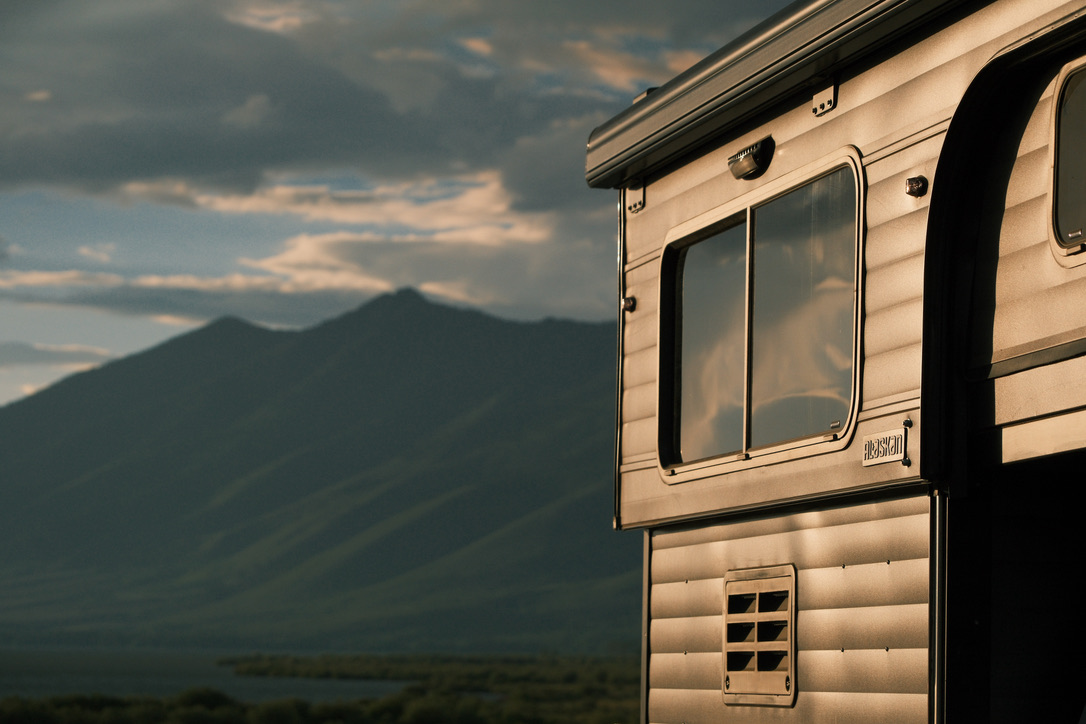
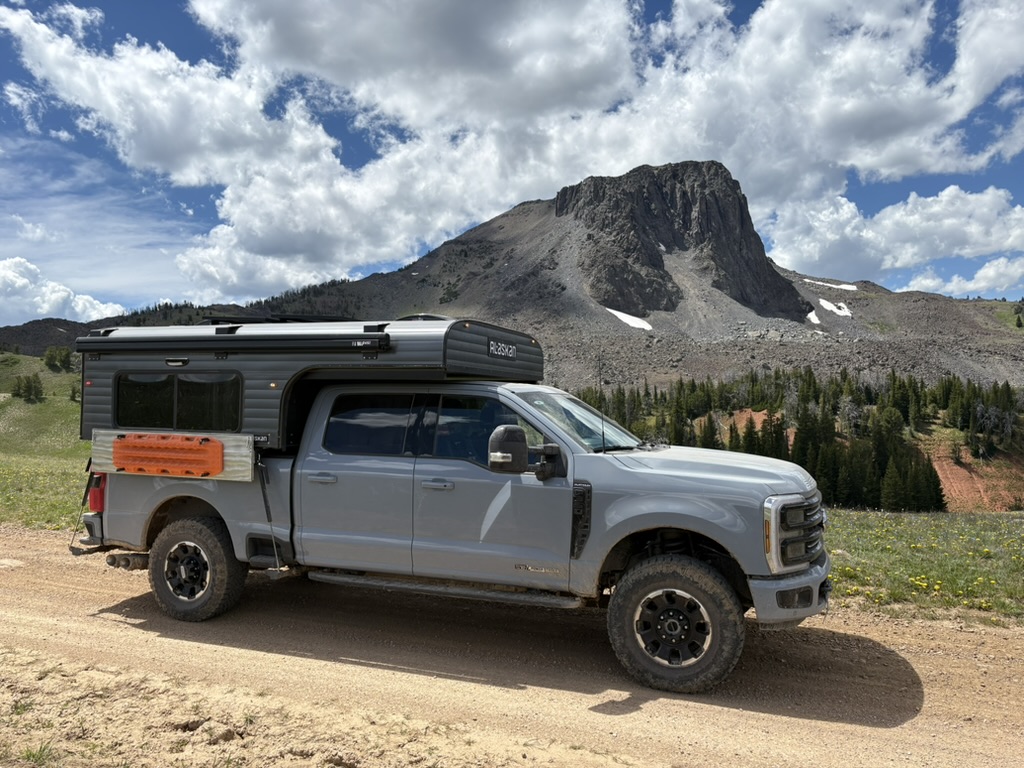
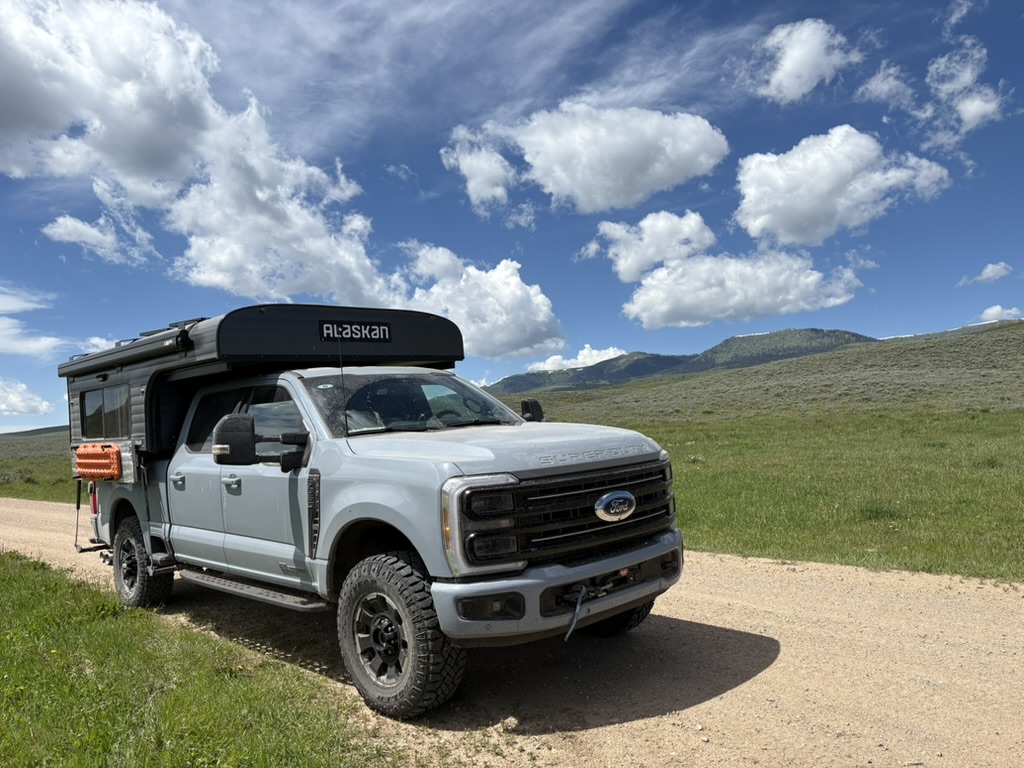
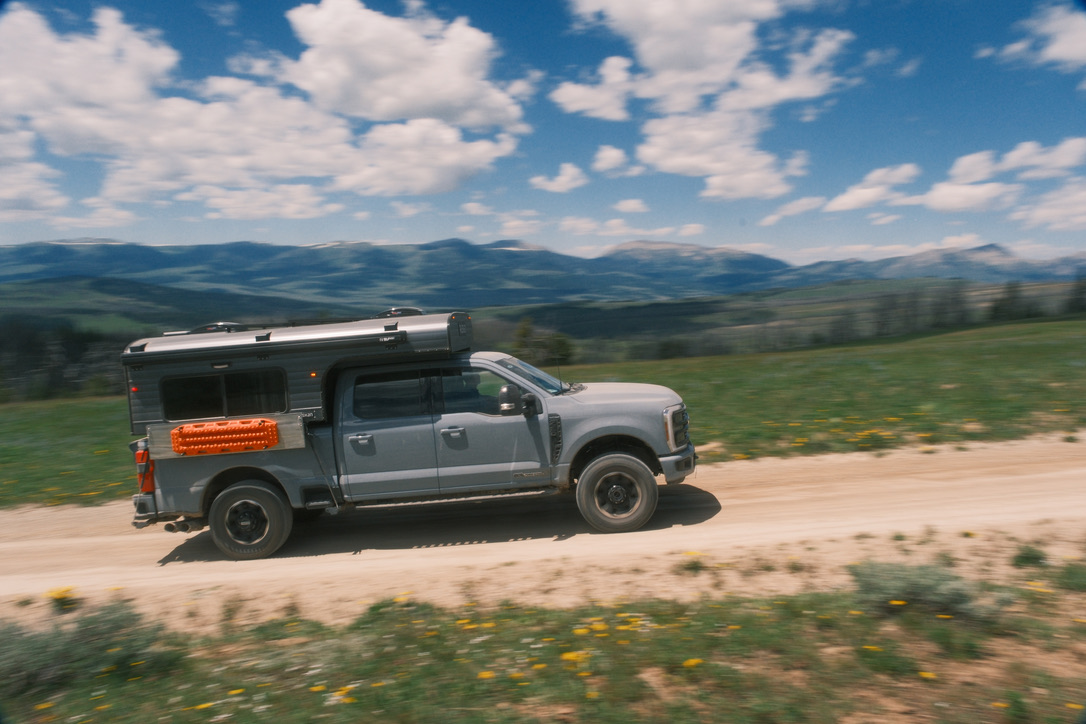
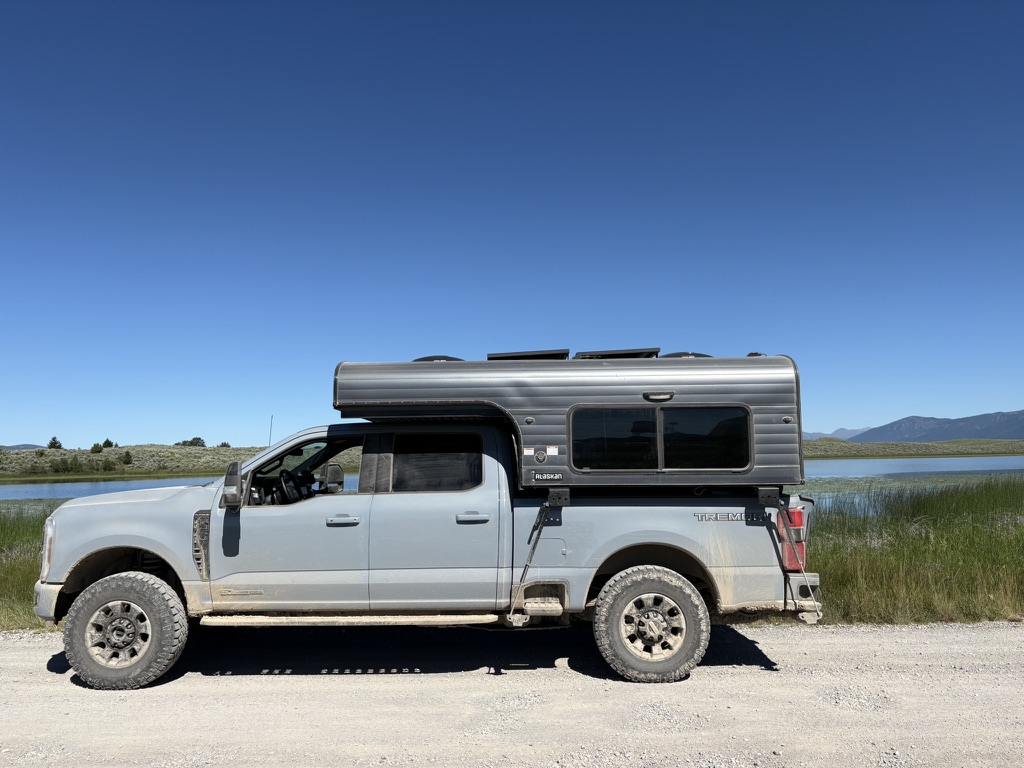
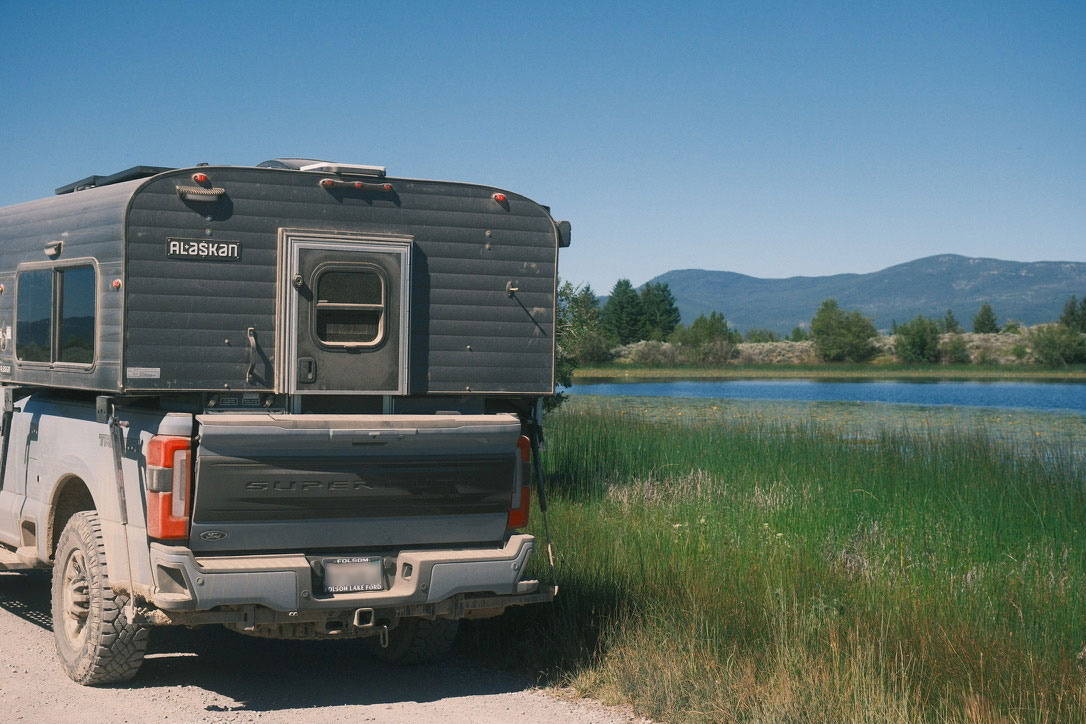
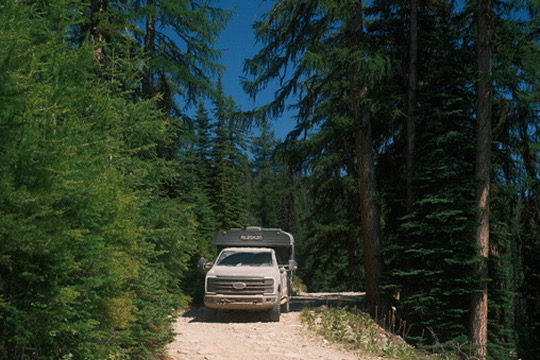
A year later, Stephen and his son passed the same spot while traveling the newly released Montana Backcountry Discovery Route. Stephen was now driving an F-350 carrying an Alaskan 650, camping each night along the roughly 900-mile route.
Stephen has followed one backcountry route after another, first on motorcycles and then in vehicles built for camping. He has changed what he drives to keep exploring those roads and enjoy the hours after he reaches camp.
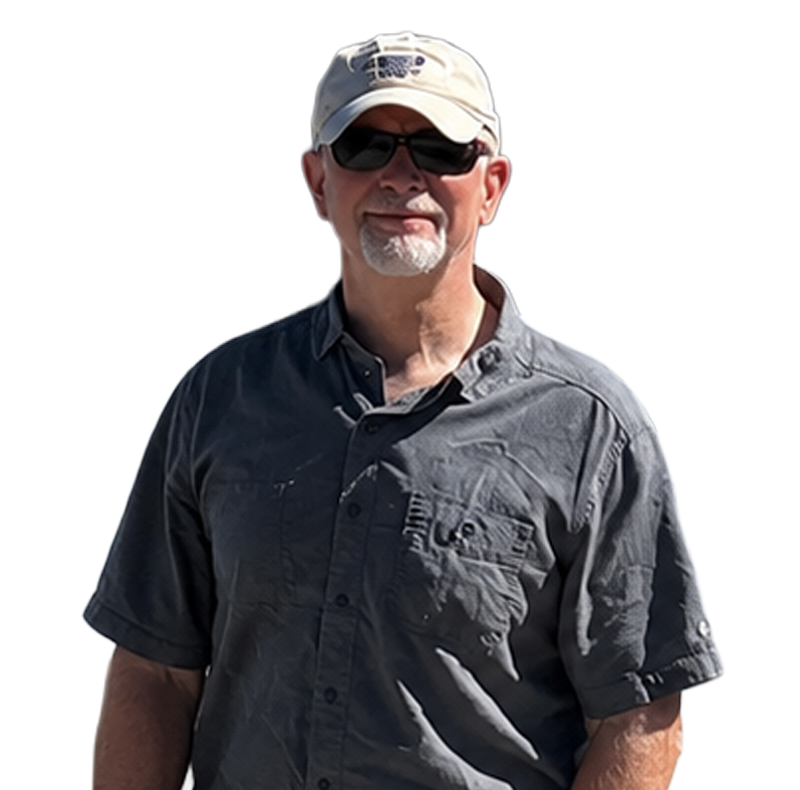
Meet Steve
Stephen lives in Grass Valley, California. He retired about three years ago after 40 years in tech sales, giving him more time for the kayaking, hiking, mountain biking, and camping he had long enjoyed.
He and his son began riding Backcountry Discovery Routes (BDRs) on Yamaha 250s, eventually moving up to Honda Africa Twins. Developed for adventure motorcyclists, BDRs provide mapped routes and GPS tracks through a state or region. Stephen no longer rides, but he still follows those tracks by vehicle where the roads allow.
His fiancée, Laura, prefers a few more comforts when they travel together. Stephen kept that in mind when he chose his first truck camper.
From Pop-Up to Dually
Before buying a truck camper, Stephen traveled in a Sportsmobile E350 (picture a four-wheel-drive van set up for camping, pop-up roof and all). He later sold it to his son. For his first truck camper, he went big: a Host Mammoth triple-slide on an F-450 dually. He wanted more comfort on trips with Laura, and the Host delivered. The whole rig, though, felt too big for some of the roads he wanted to travel.
He switched to a smaller Northern Lite 10-2 and kept the F-450. In northern British Columbia, he and his brother camped beside a river, then barely made it out when rain left the road muddy and rutted.
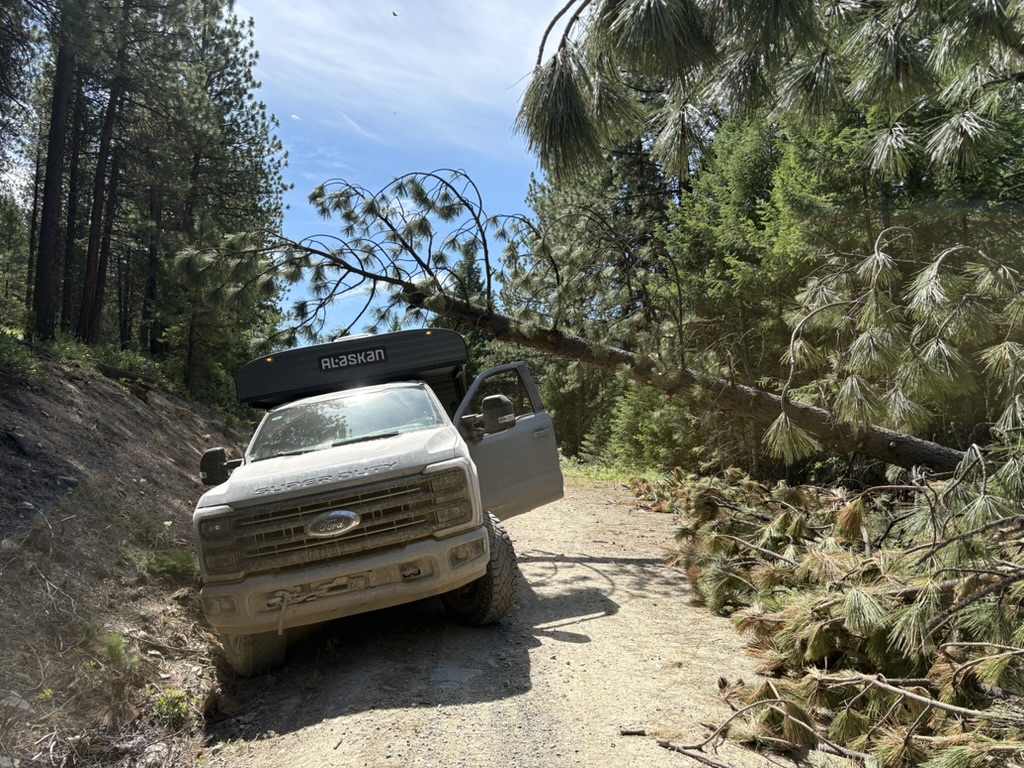
In Montana, the truck and camper weighed roughly 16,000 pounds by his estimate. The F-450’s 35-inch tires spun, and three nights with Maxtrax and other attempts to get free ended when a farmer pulled him out. He still liked the Northern Lite, but he replaced the truck with a 2026 F-350 on single rear wheels. “I kept getting myself in trouble with the dually.”
I kept getting myself in trouble with the dually,
The Miles Start Adding Up
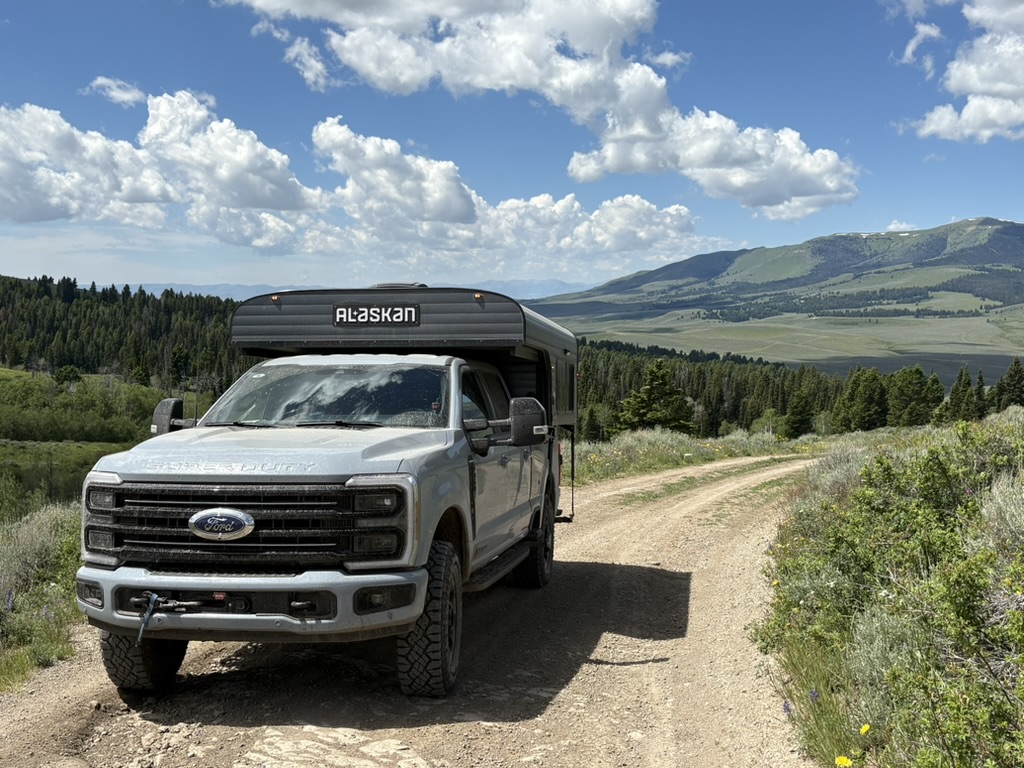
Stephen picked up his Alaskan in Winlock, Washington, in February and took it into the Olympic rainforest for a shakedown trip. He then followed the Washington, Oregon, and California coasts south. More trips followed: the Owyhee Mountains in southeastern Oregon, dispersed camps near Bishop in the Eastern Sierra, the Tahoe area, and parts of the Northern California BDR.
Stephen says the Alaskan gives him plenty of battery power. He added a 50-amp DC-to-DC charger, with heavy wiring and Anderson plugs connecting the camper to the F-350’s dual alternators. It replenishes the batteries while he drives, particularly useful when cloudy weather limits solar charging.
Friends involved in search and rescue built him a fold-down aluminum side table that also carries his Maxtrax. After trying to use the boards in Montana mud, Stephen wanted a place for them outside the truck.
A New Route Through Montana
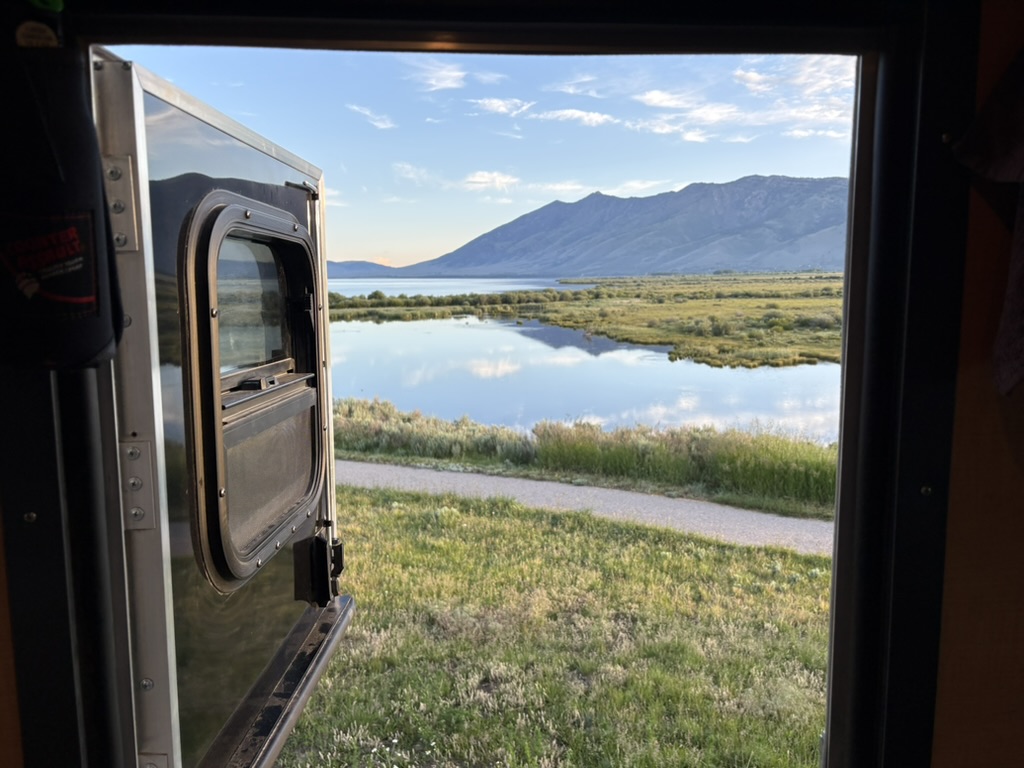
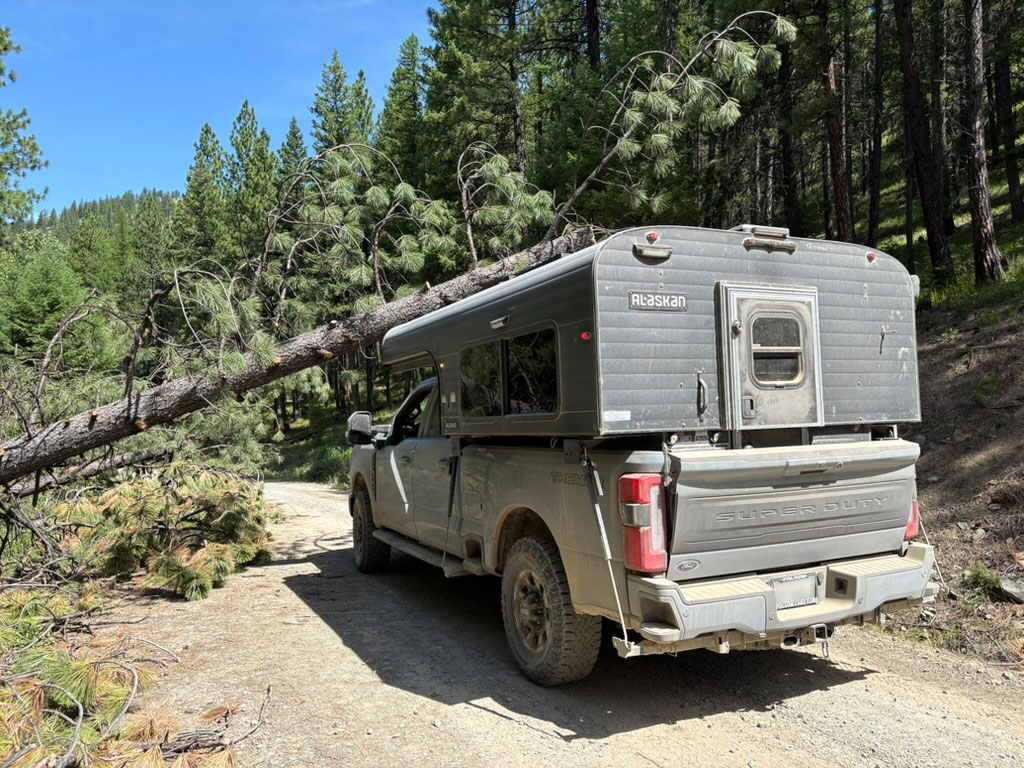
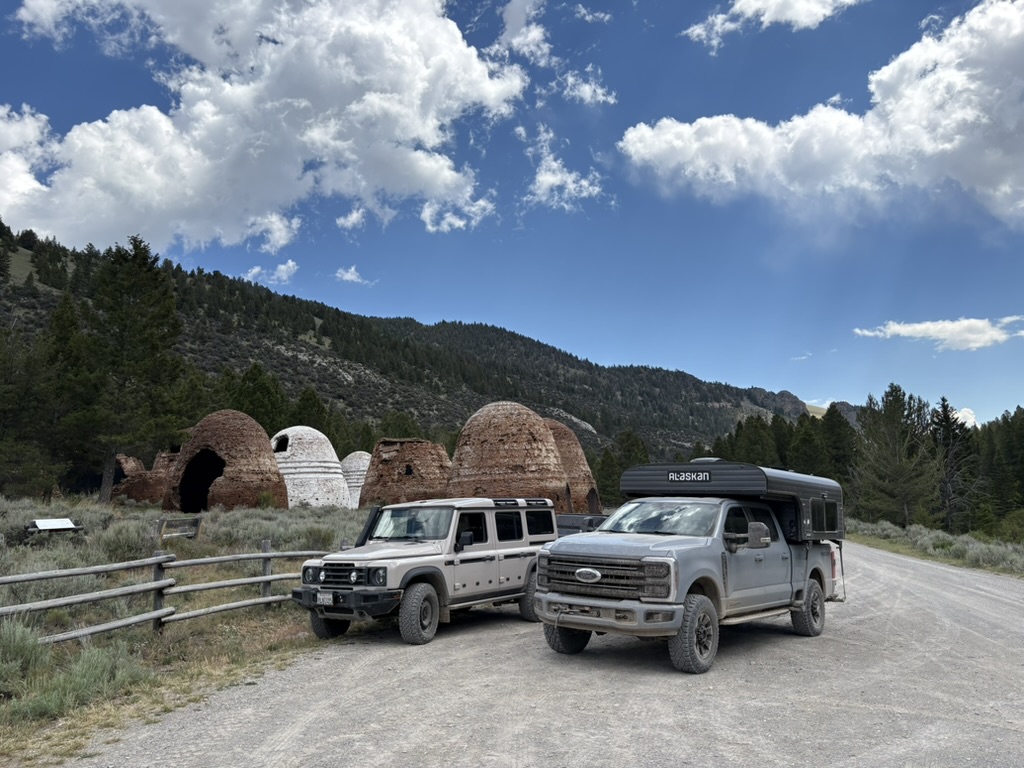
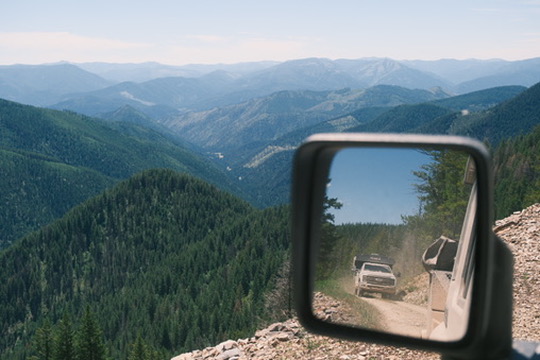
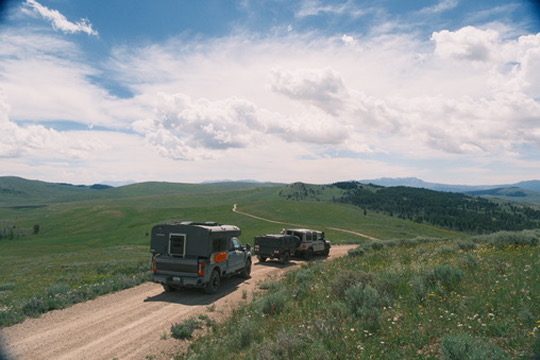
After those first trips, Stephen took the Alaskan onto the newly released Montana BDR. The route carried him roughly 900 miles from Yellowstone country toward the Canadian border. He spent about two and a half weeks on the route, camping each night, and around three weeks on the road altogether.
For that trip, he weighed the F-350 and Alaskan on a CAT Scale with full propane and water, gear, tools, and a recovery kit aboard. The total was 11,250 pounds, 750 pounds below the truck’s 12,000-pound GVWR
His son drove the other rig he’d loaned him, an Ineos Grenadier towing a Patriot X3 trailer. Each had a place to sleep when they stopped for the night.
They passed the spot where Stephen had buried the F-450 the year before, before the Montana BDR was released. A new sign read “Impassable When Wet.” Steve had learned that lesson the long way.
The Next Place to Camp
Stephen and Laura are planning three weeks in Port Townsend with the Alaskan. He also takes it on shorter state park trips, where he likes how quickly he can settle in once he arrives.
More BDRs are on his list, along with a return to British Columbia in the 650, more time in Alberta and on Vancouver Island, and a first trip to the Badlands. Each offers another road to follow and another place to make camp. “Don’t plan on stopping anytime soon,” he says.
Have a Story to Share?
Huge thanks to Steve for walking us through the rigs he’s traveled in, the miles he’s put on his Alaskan, and three nights in the Montana mud. He was a good sport about the whole story and a hell of a guy to talk with. We appreciate the time and the honest look at how he uses his camper. Thanks again, Steve.
If you have an Alaskan story of your own, we’d love to hear it. Email [email protected]