Fish Smarter on Your Next Camping Trip
March 28, 2026
Tournament-tested strategies that help you find fish faster, make better decisions, and actually understand what’s working on the water
Same Water, Different Results
You don’t have to fish long to notice the pattern. Same lake, same weather, same general gear, and somehow one person quietly figures it out while the other spends the day rotating spots and explaining why it’s “just slow today.” It usually isn’t.
The difference comes down to approach. Most anglers fish in a way that feels productive but doesn’t actually generate much useful feedback. Tournament anglers, by contrast, operate on a simple loop: they start with a plan, pay close attention to what’s happening, and adjust in small, deliberate ways. It’s not about intensity. It’s about clarity.
The upside is you can take that exact approach and apply it on a relaxed camping trip without sacrificing the reason you’re out there in the first place. If anything, it makes the whole experience better, because you spend less time guessing and more time understanding.
Stop Fishing Randomly (Even If It Feels Productive)
There’s a version of fishing that looks busy but isn’t actually effective. Casting, moving, switching lures, repeating. It fills the day, but it doesn’t always build toward anything.
The shift isn’t complicated, but most people skip it. Start each session with a direction you can actually explain. Not a rigid plan, just a working idea grounded in how fish behave. Fish don’t scatter randomly through a lake. Their position is driven by a few consistent factors, season, water temperature, structure, and available food. That’s not guesswork, that’s baseline fisheries biology and something tournament organizations like Bassmaster and Major League Fishing rely on constantly.
Once you’re on the water, that idea becomes a test. Every cast has a purpose. You’re not just fishing, you’re checking whether your assumption holds. If it works, repeat it in similar areas. If it doesn’t, adjust one variable at a time, depth, location, or presentation, not all three at once.
That’s the shift most anglers miss. One person is filling time. The other is actually learning something.
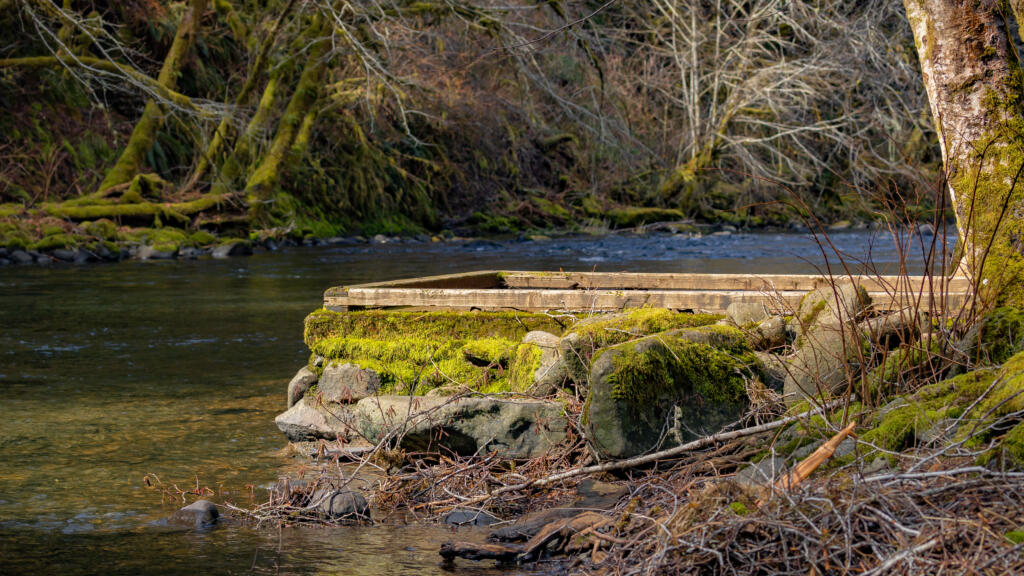
The Nestucca River is one of Oregon’s most popular sport fishing destinations, known for strong summer and winter steelhead runs, above-average cutthroat trout fishing, and easy access for both drift and bank anglers. Photo courtesy of Wikimedia Commons (free-use license).
Preparation: The 10% That Changes the Other 90%
That “direction” doesn’t come from instinct. It comes from a small amount of preparation that most anglers either overcomplicate or skip entirely. You don’t need much. Five to ten minutes is enough to avoid starting from zero and save yourself hours of guessing later.
Before you ever cast, take a quick look at a few reliable tools:
- Mapping apps like Navionics or Fishbrain to identify depth changes, points, and submerged structure
- Local reports from state fish and wildlife agencies for seasonal behavior, stocking info, and species notes
- Weather tools like Windy or NOAA Weather Radar to understand recent patterns and incoming changes
You’re not trying to become a fisheries biologist. You’re just trying to answer a few grounded questions before you start:
- What season are we in, and where should fish be holding right now?
- Are they likely shallow, deep, or moving between the two?
- What structure nearby gives them cover and access to food?
Water temperature and seasonal phase do most of the heavy lifting. In colder conditions, fish tend to hold deeper and conserve energy. In warmer conditions, especially during feeding windows, they often move shallower and become more active. Structure then determines exactly where they set up within those zones.
Put that together and you get a simple, usable starting point. Not perfect, but informed. And that’s all you need.
It’s also a lot easier to think this through from inside your camper with a cup of coffee than it is standing at the boat ramp pretending you meant to “just wing it.”
Alaskan Camper owner Jeff Marks
Pattern Recognition: The Skill That Actually Scales
Catching a fish feels like success. Figuring out why you caught it is what leads to more of them.
Professional anglers in circuits like Bassmaster and Major League Fishing rely on pattern recognition because it’s the only way to make results repeatable. They’re not chasing fish, they’re isolating conditions, depth, structure, light, and presentation, because those variables tend to repeat across the water.
A simple way to frame it:
- One fish → coincidence
- Two fish → signal
- Three fish under similar conditions → pattern
That’s not just a catchy rule, it’s how pros validate whether something is worth committing to. Where most anglers go sideways is right after that first fish. The instinct is to cast back to the same spot like it’s magically stocked. Sometimes it is… more often it’s not. A better move is to pause and break it down:
- What depth was the fish holding in?
- What structure was it relating to?
- When did it hit during the retrieve?
You don’t need a notebook. Just don’t immediately forget everything that just worked. From there, shift your focus. Not “how do I catch another one here,” but “where else does this exist?” Same depth, same cover, same conditions. That’s how patterns expand.
Another consistent pro tactic is controlling variables. If something stops working, change one thing, not everything. Adjust depth, or presentation, or location, but isolate the change so you learn something from it. And don’t overcommit too early. One fish doesn’t prove anything. It just gives you something to test.
Gear: Simplify So You Can Focus on Fishing
It’s easy to overestimate how much gear contributes to success. More options feel like more control. In practice, they usually just create more hesitation.
Experienced anglers and guides tend to converge on the same idea: limit your setups to a few techniques that match conditions, then fish them well. Studies on angler behavior and plenty of on-the-water coaching point to the same pattern, too much switching reduces effectiveness because you never gather enough feedback from any one approach.
A simple, purpose-driven setup covers most situations:
- Search bait (reaction)
Crankbaits, spinnerbaits, swimbaits. These help you quickly locate active fish and understand where life exists. - Contact bait (structure-focused)
Jigs, Texas rigs, soft plastics. These are for working specific cover like timber, rock, or ledges where fish hold. - Finesse option (low activity)
Drop shots, light plastics, subtle presentations. When fish won’t chase, this keeps you in the game.
This structure mirrors how many guides and competitive anglers approach new water: start broad, narrow down, then slow down when needed.
Where most people go wrong is pace. If you’re switching lures every few minutes, you’re not testing anything long enough to learn from it. A common recommendation from experienced anglers is to give a bait enough time to answer a question. Is it the wrong depth? Wrong location? Or actually the wrong lure? If you change all three at once, you reset the experiment every time.
Another detail that shows up consistently in professional advice is preparation on the front end. Pre-rigging a few rods or setups isn’t about looking serious, it’s about eliminating downtime. When conditions change or you want to adjust, you can do it immediately instead of burning ten minutes re-tying while the window passes.
Line choice and basic setup also matter more than people think:
- Heavier line for heavy cover to prevent break-offs
- Lighter line or fluorocarbon for clearer water and finesse presentations
- Matching rod action to technique so you’re not fighting your own gear
None of this is complicated, but it’s often overlooked in favor of buying more lures instead. And to be fair, gearing up is half the fun. There’s a certain optimism in thinking the next lure is the one that fixes everything.
But simplifying your gear isn’t about doing less, it’s about removing friction. The less time you spend digging, switching, and second-guessing, the more time you spend actually fishing, and learning what’s working instead of arguing with your tackle box.
Common Mistakes That Sneak In
Some of the habits that hold anglers back don’t feel like mistakes. They feel reasonable in the moment, which is why they stick.
Relying on what worked last trip
Conditions change. Fish move. What worked before doesn’t automatically apply now.
Fix: Use past success as a starting point, then check it against current conditions before committing.
Sticking with familiar lures too long
Confidence is helpful, until it turns into stubbornness.
Fix: If you’re not getting feedback in good water, adjust one variable, depth, retrieve, or presentation, before abandoning the area.
Ignoring a pattern once it appears
Catching a couple fish and moving on is a missed opportunity.
Fix: Slow down and test it. Look for similar structure, depth, and conditions nearby to see if it repeats.
Making reactive changes out of frustration
Rapid, unplanned changes usually reset your progress.
Fix: Pause, decide what you’re testing, and change one thing at a time. Let it play out long enough to learn something.
The Big Fishing Tournaments Out West
You don’t need to fish tournaments to benefit from them. In fact, most people reading this probably prefer their fishing without entry fees, weigh-ins, and the quiet pressure of realizing everyone else knows what they’re doing.
But these events are where a lot of modern fishing strategy gets tested, refined, and occasionally exposed. Watching how anglers approach these waters can tell you a lot about what actually works when conditions get tough.
A few worth knowing:
Wild West Bass Trail
One of the most prominent circuits in the West, covering everything from California reservoirs to the Columbia River. Conditions vary wildly, which forces anglers to adapt quickly instead of relying on one style.
What you can steal: versatility. These anglers rarely rely on a single pattern all day. They adjust constantly based on conditions.
US Open of Bass Fishing
Held on Lake Mead, where conditions are about as forgiving as a parking ticket. Clear water, pressured fish, and constantly changing conditions make this one a grind.
What you can steal: finesse and patience. When fish get pressured, subtle presentations and precise depth control matter more than anything flashy.
Bassmaster Opens (Western stops)
This is where serious anglers try to move up the ranks. You’ll see a mix of experienced pros and very motivated amateurs.
What you can steal: preparation. These anglers don’t show up guessing. They’ve done their homework and fish with a plan from the first cast.
Major League Fishing Toyota Series (Western Division)
Known for a more data-driven, fast-decision style. Anglers often have to adjust in real time as conditions shift throughout the day.
What you can steal: decision-making speed. They don’t sit around hoping it gets better. If something’s off, they adjust quickly and move on.
Columbia River Walleye Classic
A favorite in the Northwest, focused on walleye and river systems, which behave very differently from lake fish.
What you can steal: understanding current and movement. River fishing is less about spots and more about positioning relative to flow.
Fish Smarter Without Turning It Into Work
This isn’t about optimizing your camping trip like it’s a job. You’re out there to enjoy it. The goal is just to make your time on the water count a little more so the rest of the day feels better.
Start with a simple plan, nothing complicated, just a direction. Pay attention to what’s happening, make a couple deliberate adjustments, and when something works, stick with it. That’s the part most people skip. They keep moving, keep switching, and never give anything enough time to actually play out.
You don’t need to overhaul your approach:
- Start with a plan
- Adjust based on feedback
- Lean into what works
That’s it. Do that and things get a lot simpler. Less guessing, less second-guessing, and more time actually fishing instead of troubleshooting your own decisions. Nothing about the experience changes, it just starts to make a little more sense. And then you can get back to what you’re actually out there for, sitting by the water, taking it slow, and enjoying the trip without acting like there’s a trophy on the line.