The founder of Coastal Offroad designs armor for trucks that push past maintained roads. The camper he chose had to keep up.
Brandon Faliszewski builds armor for trucks that get pushed past what they’re typically built to handle. Not in theory, but on the tight, overgrown backroads of Vancouver Island where clearance matters and small mistakes turn into real damage.
He started Coastal Offroad while studying mechanical engineering at the University of Victoria, designing a bumper for his own 4Runner to handle the same terrain he was already driving. What began as a single solution grew into a company serving off-road drivers across North America, Australia, and New Zealand, built around a simple standard: if it doesn’t hold up where it’s used, it doesn’t make sense.
Those same roads and trails shape how he spends his time. Most trips revolve around mountain biking, often driving hours to reach lift-served parks and trail systems across the Pacific Northwest, with the truck carrying everything needed to stay out for a few days.
As those trips evolved, the camper became part of the system. On these roads, anything too tall or exposed becomes a liability fast. Branches hang low, access tightens up, and small design decisions start to matter.

Meet Brandon
Brandon is based on Vancouver Island, where getting to good riding usually means leaving pavement early. His time splits between running Coastal Offroad and mountain biking across BC and the Pacific Northwest.
Most trips are built around riding. Sometimes that’s quick laps close to home. Other times it’s a few days on the road chasing lift-served parks or trail systems that are worth the drive.
The truck carries what he needs to stay out, move around, and change plans without overthinking it. If something better is a few hours away, he goes.
The work and the travel overlap more than they separate. The same roads he drives to get to trailheads are the ones that shape the products he builds.
When the Setup Doesn’t Fit the Roads
Before the Alaskan, Brandon was running a Lance camper—larger, solid, and closer to a traditional hard-sided build. It made sense on paper. On the roads he actually drives, it didn’t hold up.
Before I got it, I kind of knew it would be a pain in the ass in the bush—and it totally was.
With the camper mounted, the truck sat over 12 feet tall. The extra height came with its own issues—more sway on the road, more surface area for wind, and a setup that always felt a little top-heavy.
Even on basic forest service roads, not trails, the height became a problem fast. Branches started catching the roofline and ripping things off. On one trip, a stray limb took out the fridge condenser. On another, a branch peeled the roof back just enough that, when it started raining, water poured straight into the camper.
It wasn’t a bad line or a one-off mistake. That’s just how those roads are. It didn’t take long to realize the setup wasn’t going to work.
What Actually Worked
Brandon didn’t need to rethink how he traveled—just what he was traveling with.
The priority was obvious: keep the profile low while driving. That alone ruled out most traditional campers. Pop-ups made more sense, but a lot of what he looked at relied on soft-sided walls and stripped-down interiors that didn’t hold up to regular use.
He was looking for something more complete. Something that could take the same roads without feeling like a compromise every time he used it.
That’s what led him to Alaskan. He picked up a 6.5 model in Winlock, Washington, last July (2025).
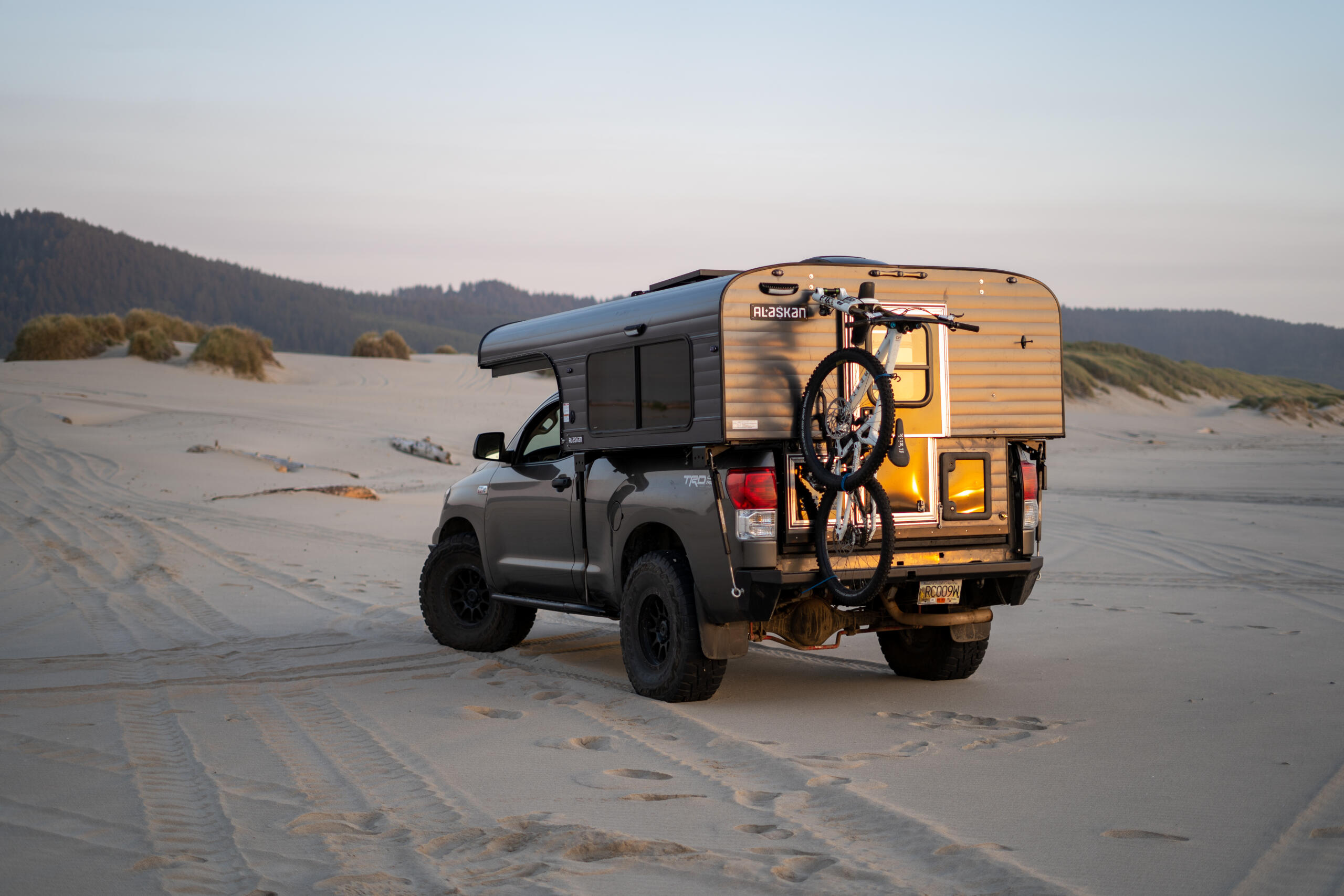
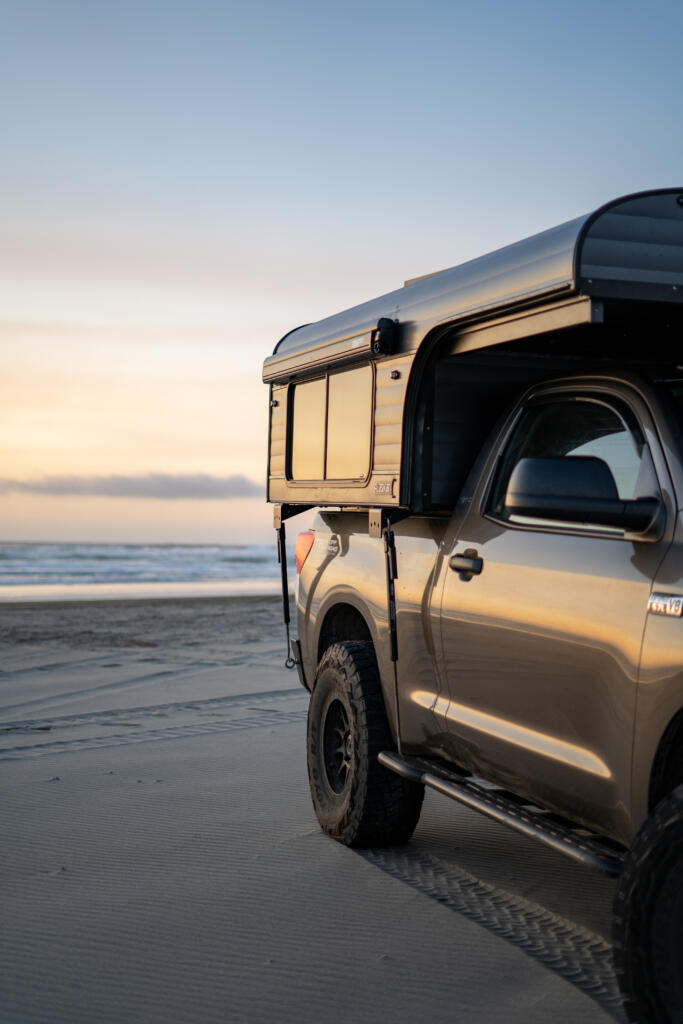
The low driving height solved the clearance issues immediately, but it was the hard-sided construction and finished interior that made it work long term. It felt solid, self-contained, and built to be used the same way he was already using his truck.
Current Setup
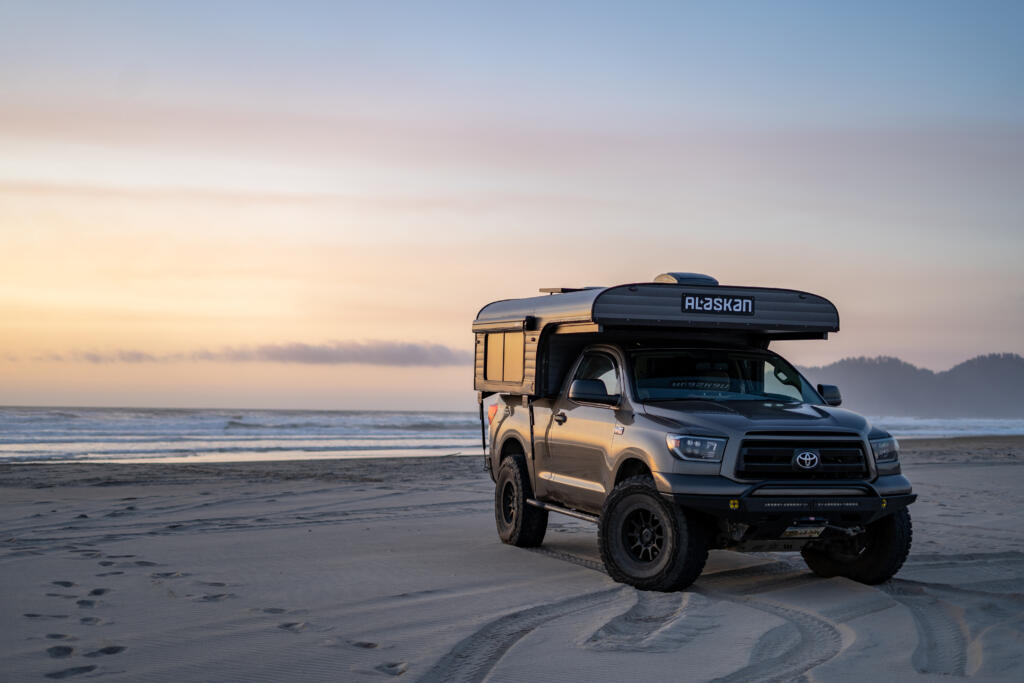
- Truck: Toyota Tundra (regular cab, short box)
- Camper: Alaskan 6.5
- Tires: 37” tires
- Suspension: Stock height (no lift)
- Drivetrain: ARB lockers front and rear, lower gearing
- Armor: Coastal Offroad bumpers, rock sliders, skid plates, winch
- Bike Setup: Axle-mounted bike rack mounted to rear wall of camper
- Use Case: Mountain bike-focused travel across BC, the Pacific Northwest, and lift-served bike parks
From Backroads to Bike Parks
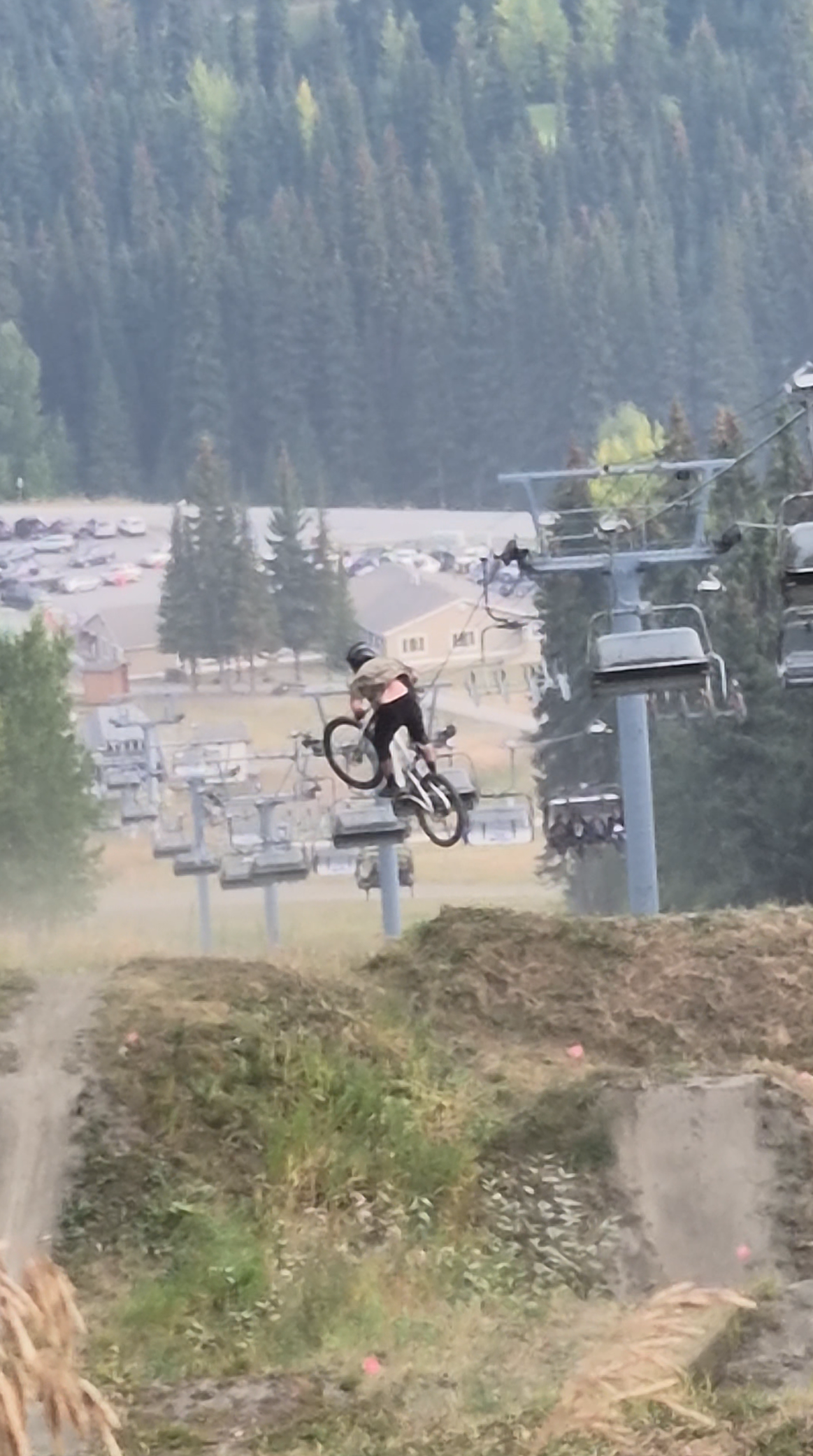
Sun Peaks Resort — British Columbia
Sun Peaks stands out for how balanced it is. You can show up and ride everything from progression trails to faster flow and more technical lines without needing to bounce between zones. It’s the kind of place where you can keep lapping without overthinking it, whether you’re easing into it or pushing harder lines.
At a glance:
- Location: Interior British Columbia
- Ride style: Steep natural terrain + machine-built flow
- Access: Lift-served bike park
- Notable: 9,510’ chairlift (9th longest in North America)
- Why it works: True mix of terrain without having to leave the resort
Bend & Mount Bachelor — Oregon
Bend works because of how much riding is packed into one place. Bachelor gives you lift-served laps, but the real draw is everything around it. You can ride park one day, then head out into the Deschutes and get something completely different. It’s easy to build a trip there without repeating yourself.
At a glance:
- Location: Bend, Oregon
- Ride style: Lift-served park + extensive surrounding trail networks
- Access: Central Oregon riding hub
- Notable: High-desert terrain and elevation-driven variety
- Why it works: Multiple riding zones within easy reach
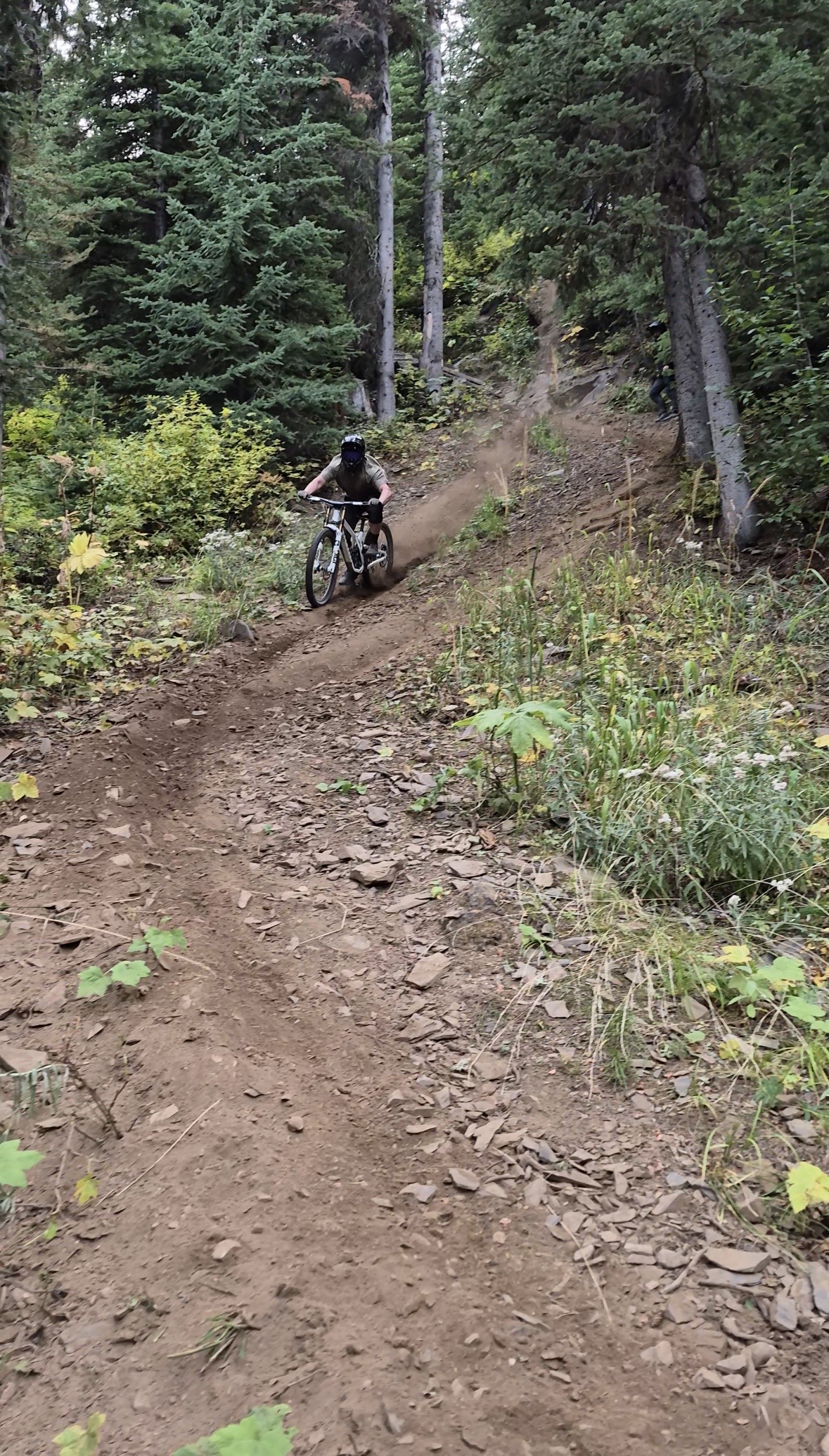
Coeur d’Alene & Silver Mountain — Idaho
Silver Mountain is just efficient. The gondola gets you up fast, the trails are straightforward, and you spend more time riding than waiting. It’s not as spread out as bigger parks, but that’s part of the appeal. You can show up, get into a rhythm, and stack laps without dealing with crowds.
At a glance:
- Location: Kellogg, Idaho (near Coeur d’Alene)
- Ride style: Lift-served downhill park
- Access: Gondola (one of the longest in North America)
- Notable: Lower traffic, more direct riding experience
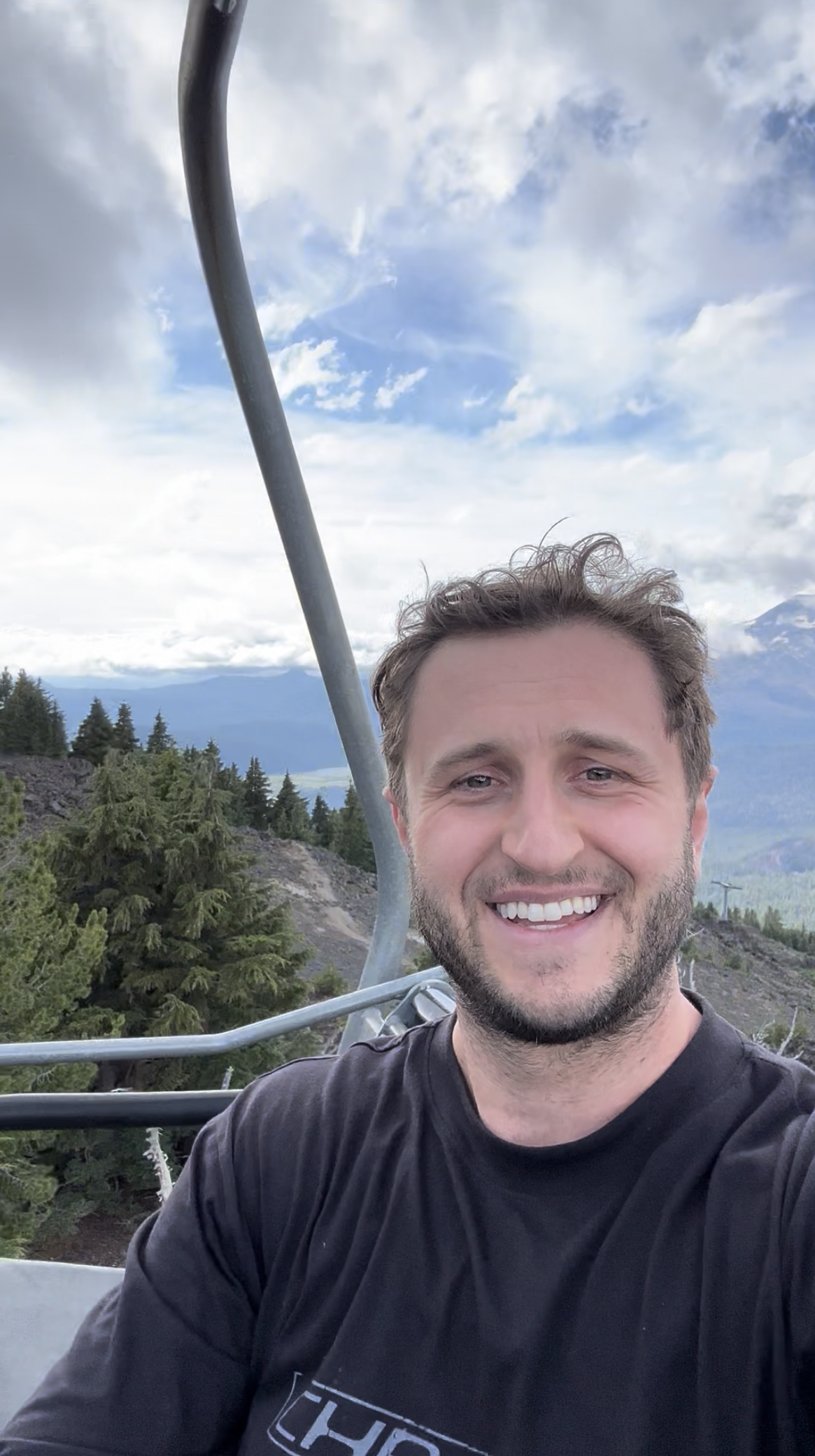
- Why it works: Best overall experience from his recent trips
Built to Hold Up When It Matters
Everything in this setup is held to the same standard: if it doesn’t work on the road, it doesn’t stay.
That’s how Coastal Offroad started. Brandon couldn’t find armor that made sense for the roads he was driving, so he built his own. What came out of that wasn’t more complexity, just better solutions—clean, functional parts that solve the problems those roads expose.
The same thinking carries through the truck and camper. Nothing is treated as separate or protected. It all has to operate in the same conditions, with the same level of reliability.
The low profile keeps clearance manageable. The hard-sided build holds up to repeated use. The interior is ready without needing to be worked around.
When it all lines up, the setup stays out of the way. Less time dealing with gear, fewer limits on where the truck can go, and more freedom to adjust plans as the trip unfolds.
That’s how these trips work across Vancouver Island and the Pacific Northwest. Plans stretch when the riding is good. They change when something better shows up down the road.
We’re always looking for Alaskan owners putting their campers to use like this. If you’ve got a story to share, reach out to [email protected].