Dispersed Camping: Utah
December 27, 2025
For People Willing to Drive Past the Obvious
Utah doesn’t hide its beauty. It’s right there along the highways, the overlooks, and the visitor centers, laid out clearly and explained in detail. Dispersed camping begins when you keep driving past all of that.
This is the version of the state that assumes you planned ahead, packed enough water, and know how to navigate without a signal. It isn’t curated or efficient, and it doesn’t go out of its way to accommodate you. That’s what makes it work.
The places below are where Utah still feels expansive, unscripted, and quietly indifferent to your presence. Exactly as it should.
1. Henry Mountains
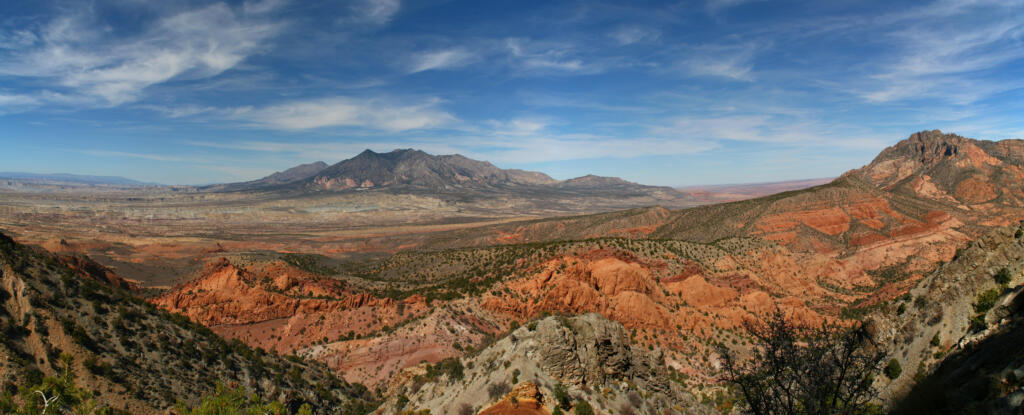 Photo courtesy of the Wikipedia Commons (public domain)
Tucked into south-central Utah, the Henry Mountains make no effort to be discovered. There’s no gateway town, no scenic loop road, and no sunset overlook packed with tripods. That deliberate anonymity is exactly why they still feel untouched. Rising abruptly from the surrounding desert, the range climbs into alpine terrain fast. You can be sweating in sagebrush at noon and digging for a jacket by dinner.
Where to look:
Access roads off Highway 276 and Burr Desert Road lead into BLM and Forest Service land. Look for established pull-outs on spur roads climbing toward Mount Ellen or Mount Pennell. The higher you go, the fewer tire tracks you’ll see.
What makes it special:
- Real elevation and weather shifts
- Free-roaming bison herds
- Long sightlines with zero development
Tips that matter:
- Afternoon storms are common. Choose sites with runoff in mind and avoid low ground.
- Nights cool off quickly, even in summer. Plan for real temperature swings.
- Water sources are scarce and unreliable. Carry more than you think you’ll need.
- Access roads favor high-clearance, short-wheelbase rigs. Pop-up truck campers work best here.
- Standard BLM rules apply: a 14-day stay limit, existing sites only, and frequent fire restrictions.
2. San Rafael Swell
 Photo courtesy of the Bureau of Land Management (public domain)
In central Utah, the San Rafael Swell spreads out in every direction and refuses to organize itself for your convenience. There’s no single landmark to chase and no clean narrative to follow. It’s a maze of reef lines, canyons, and badlands where distances stretch and time slows down. The Swell doesn’t reward quick stops. It rewards commitment.
Where to look:
Behind-the-Reef Road, Eagle Canyon, and secondary BLM roads north and south of I-70. Look for hardened sites tucked against slickrock benches or above shallow washes, well away from the highway corridor.
What makes it special:
- Slot canyons without crowds
- Massive scale and deep silence
- Endless terrain variation within short distances
Tips that matter:
- Clay roads become impassable when wet. If rain is forecast, plan exits early.
- Wind funnels through canyons. Camp with natural rock windbreaks when possible.
- Night skies are exceptionally dark. Headlamps off. Let your eyes adjust.
- Traction matters more than horsepower. Tires and patience go a long way here.
- Standard BLM rules apply: a 14-day stay limit, existing sites only, and seasonal fire restrictions
3. House Range
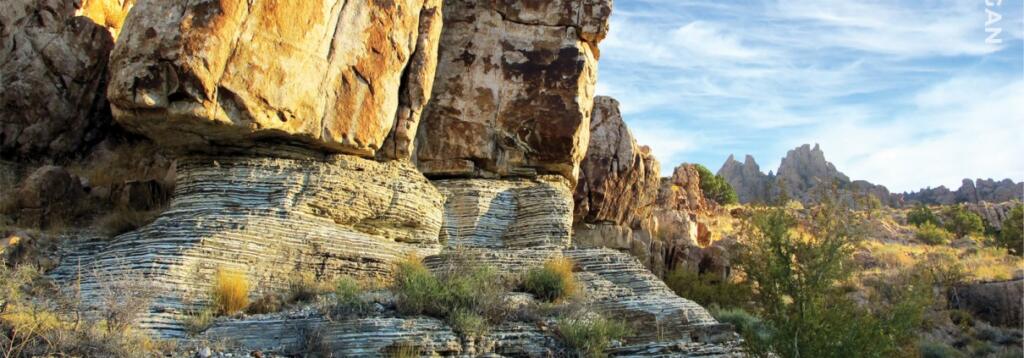 Photo courtesy of the Utah Geological Survey (public domain)
Out in western Utah, the House Range sits well outside the state’s usual travel patterns. There’s little signage, no developed recreation areas, and nothing pulling traffic off the highway unless someone already knows what they’re looking for. It’s a long, abrupt range rising out of open desert, defined more by space and wind than by landmarks.
Where to look:
Dirt access roads off US-6 near Delta head west toward old mining tracks and broad foothill flats. Dispersed sites are informal and scattered, usually appearing as you approach the base of the range along existing tracks with wide, open views.
What makes it special:
- Almost no traffic or ambient noise
- Wide-open desert solitude
- Long sunsets with uninterrupted horizons
Tips that matter:
- Wind exposure is constant. Park nose-into prevailing winds when possible.
- Dust is unavoidable. Vent intentionally and keep gear secured.
- There are no services nearby. Fuel, water, and food are entirely on you.
- Fast, simple setups matter more than comfort features out here.
- Standard BLM rules apply: a 14-day stay limit, existing sites only, and fire restrictions depending on conditions.
4. Bears Ears
 Photo courtesy of the Wikipedia Commons (public domain)
In southeastern Utah, beyond the signed overlooks and main access roads, Bears Ears opens into vast, quiet edges that most visitors never see. This isn’t the dramatic, drive-up version people recognize. It’s subtler, heavier with history, and far less forgiving of carelessness.
Where to look:
Secondary BLM roads south and west of the buttes, well away from main corridors. Established dispersed sites exist, often spaced miles apart, with little indication you’re anywhere notable at all.
What makes it special:
- Immense scale without crowds
- Deep cultural and historical significance
- A rare sense of being a guest, not a consumer
Tips that matter:
- Camp only in previously disturbed sites. No improvising new ones.
- Do not move, stack, or collect artifacts. Ever.
- Expect zero cell service. Navigation and communication should be handled offline.
- Stay light, low-impact, and respectful. This is not a testing ground.
- Monument rules apply alongside BLM guidance: existing sites only, 14-day limits, and strict fire regulations.
Rules of the (Still Very Empty) Road
Utah will let you be alone if you earn it:
- Leave No Trace is non-negotiable
- Fire restrictions change fast. Check before lighting anything
- Stay limits apply even when no one’s watching
- Gates stay how you found them
- Wildlife doesn’t need help
Final Thought
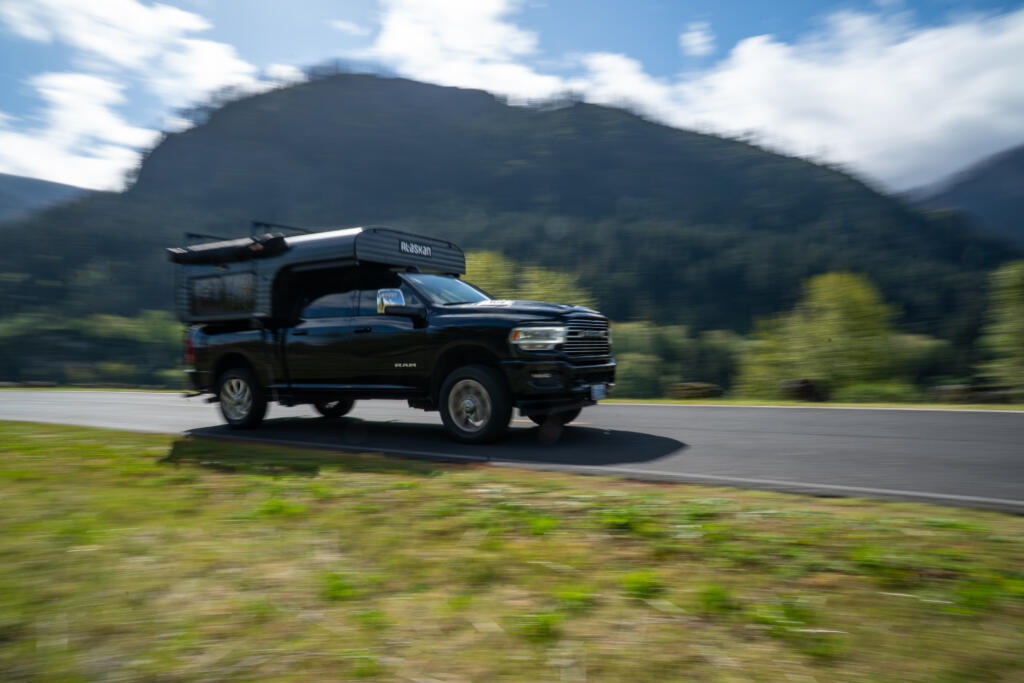
Utah doesn’t go out of its way to accommodate you. It offers space, scale, and quiet if you’re willing to meet it on its terms. An Alaskan Camper works here because it doesn’t rely on infrastructure or crowds to function. It handles rough access, simple camps, and long stretches without services. Choose a site that takes a little effort to reach. Park deliberately. Let the night settle in. That’s when these places start to feel like themselves.