Truck Camper vs. Custom Camper Van: What Each Platform Actually Costs
July 6, 2026
Purchase price, maintenance, off-road access, daily usability, and the costs most comparisons skip.
If your algorithm looks anything like ours, spend twenty minutes on Instagram and you’ll find someone living their best life in a beautifully built Sprinter conversion parked somewhere that looks suspiciously like a Patagonia catalog shoot. The coffee is good, the light is perfect, and the whole setup looks like it came together with a few hundred dollars and a can-do attitude.
It did not.
A professional camper van conversion can easily climb into six figures before the owner has driven a single mile in it. That does not make the van a bad choice. A serious custom camper van is a legitimate way to travel, especially for people who want one integrated vehicle, easy pass-through access, and a layout that is always ready to go.
A truck camper solves a different set of problems. It separates the truck from the living space, usually delivers more room per dollar, and keeps the vehicle useful when the camper is unloaded.
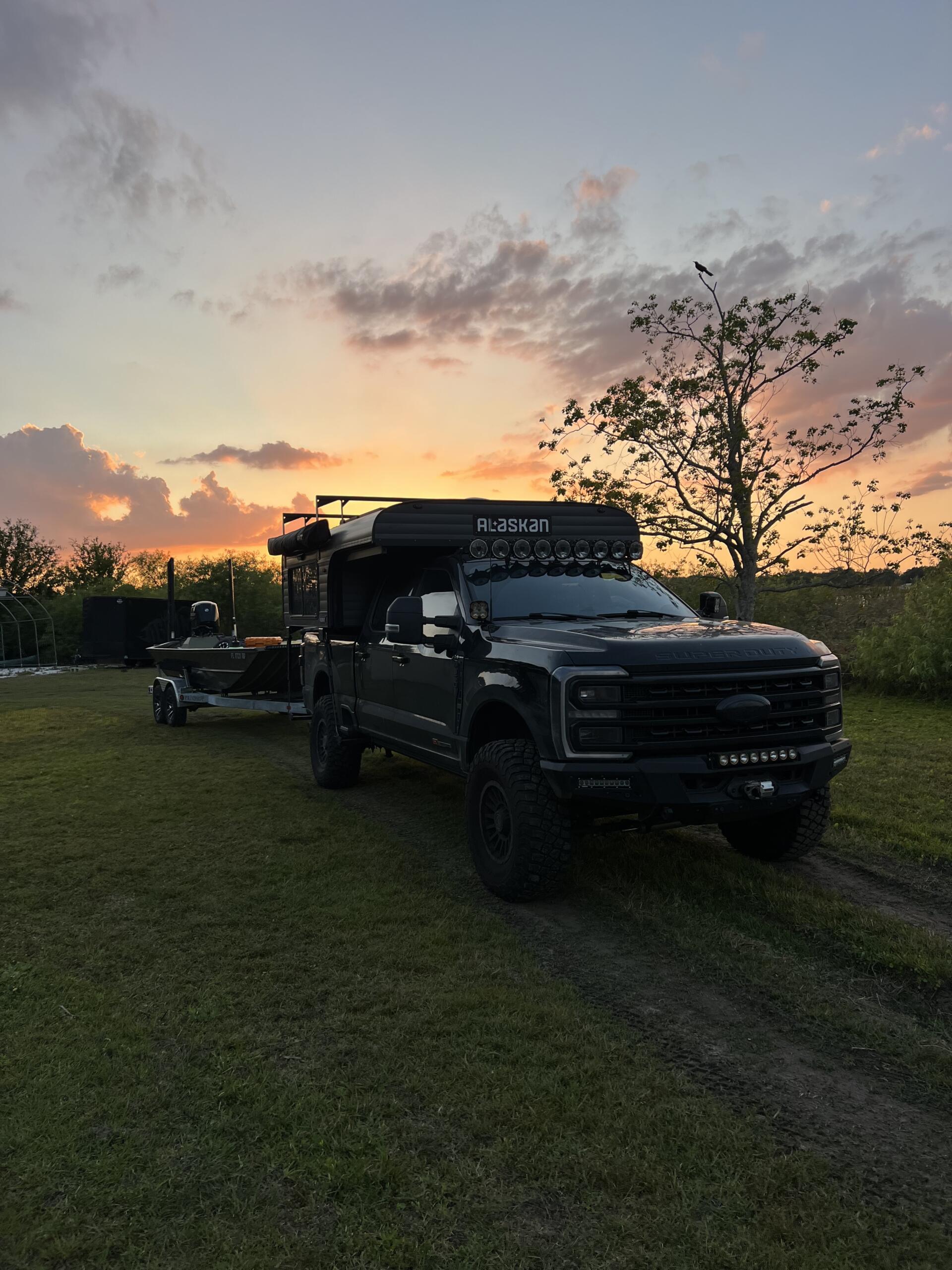
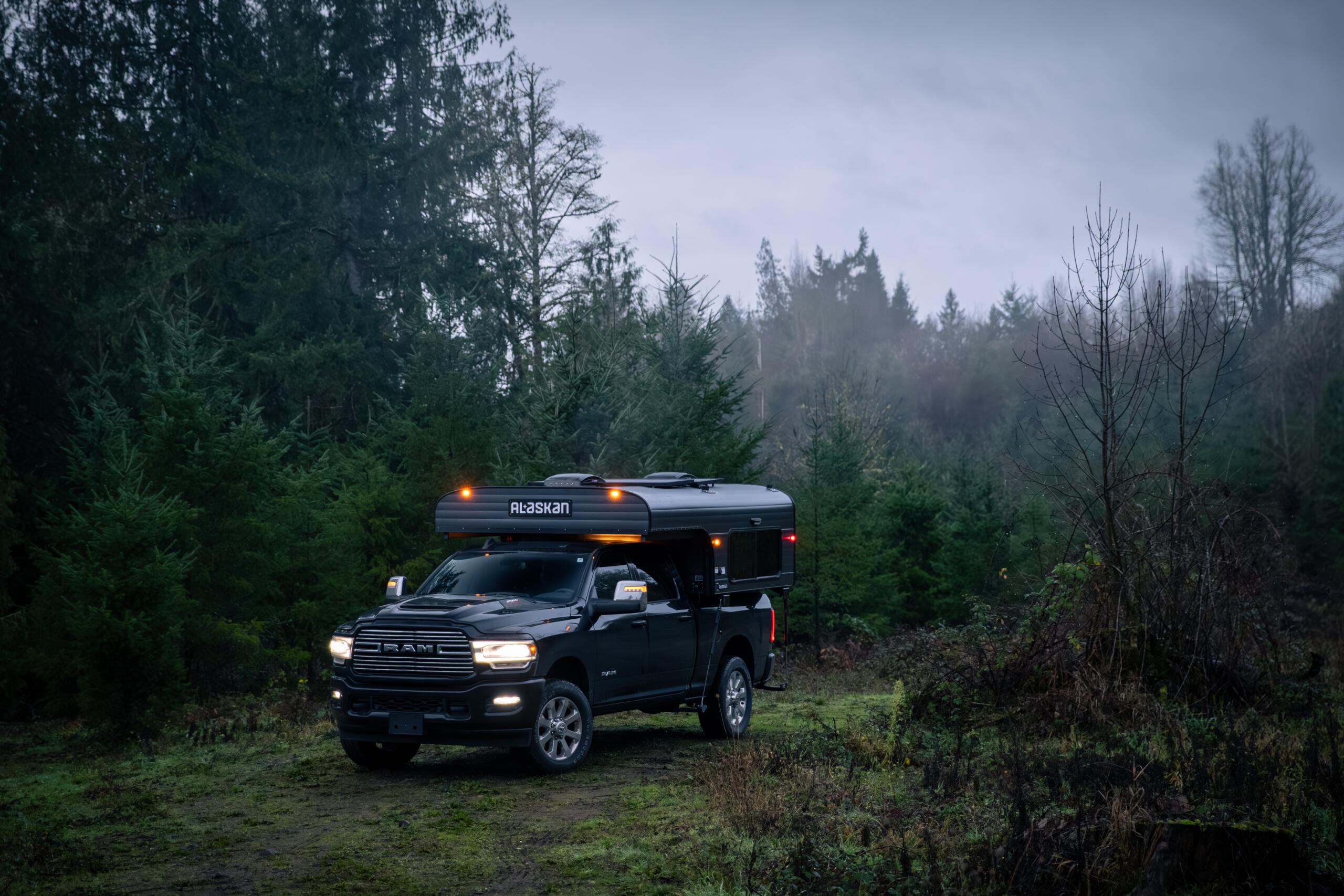
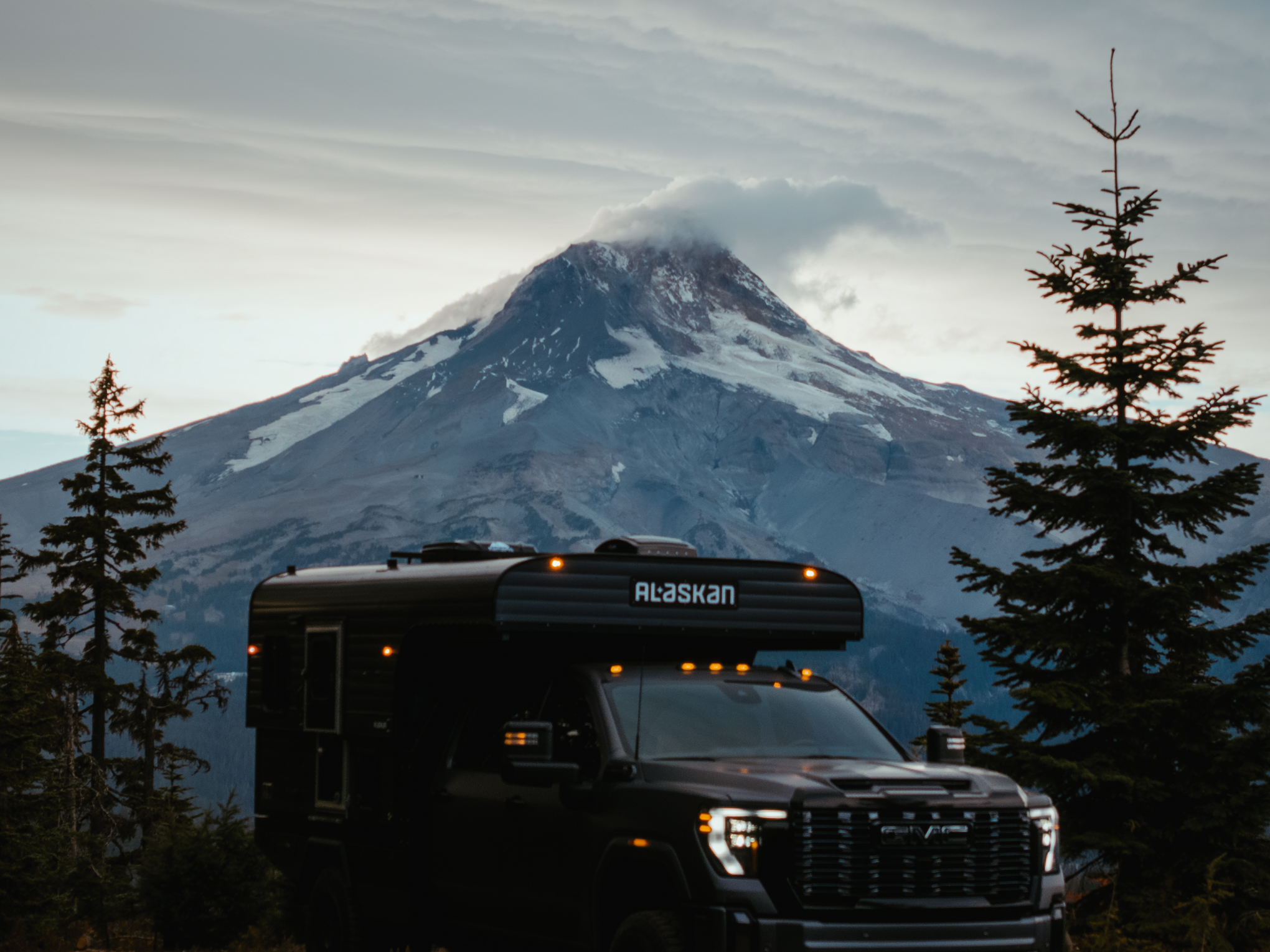
We’ll be upfront: Alaskan builds truck campers. That gives this comparison a point of view. It also means most of the images you’ll see here feature our campers—we don’t have the rights to showcase a bunch of third-party van conversions, so don’t expect a gallery of Instagram-famous builds. What it should not do is obscure where the van genuinely wins. Custom camper vans make sense for plenty of travelers. The better question is whether the platform fits how you actually travel, maintain your vehicle, park at home, and spend time off pavement.
Quick Answer: Is a Truck Camper Cheaper Than a Custom Camper Van?
Usually yes, especially if you already own a capable pickup. In that case, your main new cost is the camper — Alaskan’s lineup starts at $44,995, while a custom camper van starts with the van itself, often $45,000–$49,000 for a base Sprinter, Transit, or ProMaster before any conversion work begins.
Once you add a professional conversion, a serious full-time van build commonly lands between $130,000 and $200,000. For buyers starting from scratch without a truck, the comparison gets closer — but the truck camper still avoids one of the van’s biggest cost traps: combining the vehicle and living space into a single expensive asset.
What Each Platform Is
A custom camper van is a cargo van (most commonly a Mercedes-Benz Sprinter, Ford Transit, or Ram ProMaster) converted into a living and travel space by the buyer, a professional shop, or purchased pre-built. The vehicle and the camper are permanently tied together.
A truck camper is a self-contained unit that mounts in the bed of a pickup truck. It loads for travel, unloads at home or camp, and leaves the truck otherwise unchanged.
That basic difference — integrated versus separable — shapes the entire ownership experience and drives most of the practical trade-offs covered below.
Custom Camper Van: The Full Cost Picture
The van comes first. For 2026, the Mercedes-Benz Sprinter Cargo Van starts at $48,990, the Ford Transit Cargo Van starts at $48,400, and the Ram ProMaster starts at $45,325. High-roof, long-wheelbase, AWD, and option-heavy configurations push the real purchase price significantly higher before a single cabinet, battery, water tank, or bed platform is installed.
The conversion is a second budget entirely. Sportsmobile, one of the most established conversion builders in the country with more than 10,000 builds since 1961, puts it plainly: a partial conversion covering the essentials runs $40,000–$70,000, a full professional build runs $70,000–$160,000, and a fully built Sportsmobile on a Sprinter can exceed $200,000. DIY builds run $15,000–$40,000 in materials, but add hundreds of hours of labor, no warranty, and typically lower resale value than a professional build. At the far end of the market, Airstream’s van-based Atlas starts at $289,900 for the 25RT and reaches $335,900 for the flagship 25MS.
Maintenance compounds the cost over time. According to RepairPal, the Mercedes-Benz Sprinter 2500 averages $1,778 per year in repair and maintenance — nearly double the Ford Transit 250’s $947 average. Fleet data puts operating costs at $0.17 per mile for the Sprinter versus $0.09 for the Transit. At 100,000 miles, that’s an $8,000 difference before a single conversion component needs attention.
Truck Camper: The Full Cost Picture
Truck camper math starts with one question: do you already own a capable truck?
For buyers starting from scratch, the truck enters the budget. A new 2026 Ford F-250 Super Duty starts around $48,535 before options — 4WD, a 6.5-foot bed, and a diesel engine will push that into the $60,000–$70,000 range for a configuration that actually suits truck camping. A used F-250 diesel in solid condition typically runs $40,000–$55,000. Add a quality hard-sided camper and a realistic truck-plus-camper setup lands between $90,000–$135,000 depending on what you buy and how. That sits below the floor of most professionally converted Sprinter builds and delivers more off-road capability in the process.
Annual maintenance follows the truck’s normal service schedule, rather than a specialized camper van platform with conversion systems layered into the vehicle. The camper still needs routine inspections and basic system upkeep, but it does not add chassis-level complexity. Insurance is typically straightforward, too: the truck is insured as a truck, while the camper is covered separately as an RV unit.
Depreciation works differently for the same reason. The truck follows a standard vehicle curve, while the camper holds value based on its own condition, brand, and demand. If your needs change, you can sell or upgrade one without replacing the entire setup. That flexibility does not exist with an integrated van.
The Costs That Don’t Show Up on the Sticker
The two-vehicle problem. A camper van stays in camper mode. Driving a high-roof Sprinter conversion to work, school pickup, or the grocery store is impractical for most people with regular lives. Many part-time van owners end up buying a second daily driver — a cost that rarely appears in platform comparisons but substantially changes the financial equation. A truck with the camper unloaded is just a truck again.
Serviceability. A van breakdown takes your vehicle and your home offline simultaneously, leaving you in a hotel while the van sits at a shop that may or may not be equipped for a custom conversion build. Fleet data puts Transit downtime at 1.2 days per repair on average versus 3.8 days for the Sprinter, primarily because of limited service access in rural areas — 287 Mercedes-Benz Vans dealerships in the US compared to more than 2,800 Ford locations. When a truck breaks down, the camper unloads somewhere stable, the truck goes to the nearest dealer, and the camper stays habitable throughout.
Storage and parking. A high-roof van needs high-roof parking — which can mean RV storage fees, commercial vehicle restrictions, or HOA friction. A truck camper can usually be unloaded and stored separately from the truck, making home storage more flexible for most owners.
Depreciation and resale. A custom van combines the vehicle and the build into one resale package. The next buyer has to want the same layout, platform, and choices you made. With a truck camper, truck and camper depreciate and sell independently, and the truck’s value isn’t tied to how the camper was built.
Off-Road Access: Where the Gap Gets Specific
Both platforms handle maintained gravel roads, established campgrounds, and easy forest roads without issue. The gap opens on rougher terrain.
A stock 2026 F-250 Super Duty delivers 9.2–10.2 inches of ground clearance depending on configuration, electronic locking differentials, 4WD, and 33–35″ tires on capable trims. The Tremor Off-Road Package adds a 2-inch factory lift, 35″ Goodyear Duratrac tires, front and rear lockers, and skid plates — pushing ground clearance to 10.8 inches with a 31-degree approach angle, all from the factory. The camper sits in the bed with no added length, no trailer swing, and no departure angle penalty.
A stock Mercedes Sprinter RWD delivers approximately 7.5 inches of ground clearance, no locking differential, and 30″ tires. It handles maintained gravel and packed dirt well, but rocky two-tracks, steep off-camber approaches, and loose surface climbs expose its limits. Getting a Sprinter to comparable off-road capability requires suspension lifts, all-terrain tires, and skid plates — typically $8,000–$12,000 in upgrades to reach territory a stock work truck covers from the factory.
High-roof van conversions carry a center of gravity penalty that shows up on uneven terrain as side-to-side sway — manageable at low speed but fatiguing over distance. On USFS roads with rocky surfaces, steep grades, or tight clearances, platform choice determines whether you get there at all. For destinations that include BLM dispersed sites, remote trailheads, or backcountry approaches, the van’s terrain ceiling is a hard limit.
Where the Custom Van Holds Its Ground
Pass-through access is the van’s most underrated advantage, and it shows up constantly in daily use. Moving between the driver’s seat and the living space without going outside matters in rain, late-night stops, and any urban situation where getting out of the vehicle is inconvenient or unsafe. For dog owners and families with kids, it matters more — checking on animals, managing the back seat, handing food around without stopping. For full-time travelers covering serious miles daily, the ability to pull off a highway for ten minutes, make coffee from the galley, and get back on the road without opening a separate structure adds up in a way that’s hard to quantify but easy to feel after a few weeks.
Urban drivability and stealth give the van a category it owns outright. A well-finished conversion parks on residential streets, fits standard parking structures, and draws no particular attention in cities. For travelers who move frequently between urban stops and remote sites, or who need to sleep in their vehicle in environments where a truck camper would invite scrutiny, the van’s profile has real functional value.
One Traveler’s Experience on Both Platforms
Shannon Moore knew van life from the inside. She built and traveled in both a Ram Promaster and a Mercedes-Benz Sprinter — serious, designed builds from someone with an interior design background and years on the road — long before we sat down with her for an Alaskan Life feature.
Her switch to a Ford F-250 and an 8-foot Alaskan Camper wasn’t about the vans failing. It was about part-time travel making the always-on integration feel like overhead rather than convenience. She added rear suspension airbags for rough terrain, figured out the jacks after a blown fuse on her first night out, and found that the camper’s overhanging tailgate — initially a concern — became a favorite feature: a built-in porch she never had in either van. Her 75-pound Weimaraner, Greycie, settled the debate.
Her experience doesn’t close the argument. It illustrates it. The van was the right platform until her travel changed — which is the most useful thing either side of this comparison can tell you.
Side-by-Side Comparison
| Category | Custom Camper Van | Truck Camper |
| Typical serious all-in cost | $80,000–$250,000+ | $45,000–$150,000+ |
| Best-case cost | Lower with DIY or simple build | Lower if you already own the truck |
| Vehicle and living space | Permanently integrated | Separate truck and camper |
| Daily driving | Van stays in camper mode | Truck usable independently |
| Service access | Chassis and conversion may both be involved | Truck and camper serviced separately |
| Avg. annual repair/maintenance | Sprinter: $1,778 / Transit: $947 | Standard truck service + camper maintenance |
| Off-road ceiling | Good with the right build; limited by van geometry | Strong with properly matched 4WD truck |
| Pass-through access | Yes | No |
| Urban stealth | Strong | Limited |
| Living space per dollar | Good; chassis-constrained | Strong, especially with cab-over layouts |
| Storage flexibility | Must park and store entire van | Camper can be unloaded and stored separately |
| Resale flexibility | One integrated asset | Truck and camper can sell separately |
Which One Should You Choose?
A truck camper is the stronger fit if you already own a capable pickup, want to use your truck when you’re not camping, travel on forest roads, BLM land, rough access roads, or remote trailheads, and care about modularity, long-term serviceability, and living space per dollar.
A custom camper van is the stronger fit if you want one integrated vehicle, move often and need a fast park-and-sleep setup, spend meaningful time in cities, value pass-through access, and your travel stays primarily on paved roads, maintained dirt, ski lots, campgrounds, and urban stops.
Choosing based on what photographs well is how people end up with the wrong platform. The more useful questions are concrete: where will you park it at home, service it when something breaks, drive it on weekdays, and sleep in it when the weather turns bad? Answer those honestly and the platform usually picks itself.
FAQ: Truck Camper vs. Custom Camper Van
Is a truck camper cheaper than a custom camper van?
Often yes, especially if you already own a capable pickup. In that case, your main purchase is the camper. A custom camper van requires buying the van and paying for the conversion, which pushes serious professional builds well into six figures.
What is the biggest advantage of a truck camper?
Modularity. The truck and camper are separate, so the truck can be used normally when the camper is unloaded. That also gives owners more flexibility with service, storage, upgrades, and resale.
What is the biggest advantage of a custom camper van?
Integration. You can drive, park, and move into the living space without going outside — useful for full-time travel, bad weather, urban stops, and frequent one-night stays.
Which is better for off-road travel?
A properly matched 4WD truck and camper generally has a higher off-road ceiling. Vans can be upgraded with suspension lifts and all-terrain tires, but they’re still limited by body height, wheelbase, clearance, and the cost of aftermarket modifications to reach comparable capability.
Which is easier to maintain?
A truck camper setup is usually simpler to separate and service because the truck and camper are independent. Camper vans can be straightforward too, especially Ford Transit and Ram ProMaster builds, but custom conversions can complicate repairs when vehicle systems and camper systems overlap.
Is a Sprinter more expensive to maintain than a Ford Transit?
On average, yes. RepairPal lists average annual repair and maintenance costs at $1,778 for the Mercedes-Benz Sprinter 2500 and $947 for the Ford Transit 250. Actual costs depend on mileage, age, use, location, and maintenance history.
Can you live full-time in a truck camper?
Yes, though it depends on the camper, truck, climate, storage needs, and tolerance for compact living. A camper van may feel easier for constant daily movement, while a truck camper offers better off-road access and more living space for its footprint.
Which is better for part-time travel?
For many part-time travelers, a truck camper is more practical because it can be unloaded between trips and the truck returns to normal use. For people who want a single ready-to-go vehicle and don’t need the truck daily, a van may be easier.
Which has better resale value?
It depends on brand, condition, mileage, layout, and market demand. The truck camper has one structural advantage: truck and camper can be sold separately. A camper van sells as one integrated package, which helps if the build is desirable and hurts if the layout is too personal for the next buyer.
What should buyers compare before choosing?
Total purchase cost, maintenance costs, service access, storage requirements, insurance, daily usability, off-road needs, climate comfort, and resale flexibility. The right answer depends on your specific situation — the platform that fits your travel, your truck, and your life when you’re not camping.
Find Your Alaskan → Explore the HS 640 →