Towables, Drivables, and Toppers: How to Choose a Camper Setup
July 10, 2026
Most camper comparisons start with layout. The better question is how much freedom, setup, and compromise you want built into every trip.
Everybody can picture the easy parts: a bed, a stove, a place to sit. What’s harder to picture is how the setup changes the whole trip.
How fast can you get moving? How much work does camp take? Can you pull into a gas station without planning the turn like a military exercise, take the rougher road, and still land somewhere comfortable to cook, sleep, and wait out weather?
That is the real difference between camper setups. Towables, drivables, and truck campers do not just move differently. They camp differently. They change how much space you have, how quickly you can settle in, how easily you can relocate, and how much of the trip is spent managing the rig instead of enjoying the place you came to see.
Most shoppers probably have a gut feeling before they start researching. They know whether they picture themselves towing a trailer, driving a motorhome, or pulling into camp with the camper already on the truck. But the details matter, especially because “toppers,” “camper shells,” and “truck campers” often get lumped together online by search engines that apparently learned nuance from a leaf blower.
Just FYI: we’re using “toppers” in the title because that is what people search for, but a topper is really just a bed cap or shell. A truck camper is its own living space: walls, insulation, systems, and real camp comfort, built for the same truck bed a topper only covers.
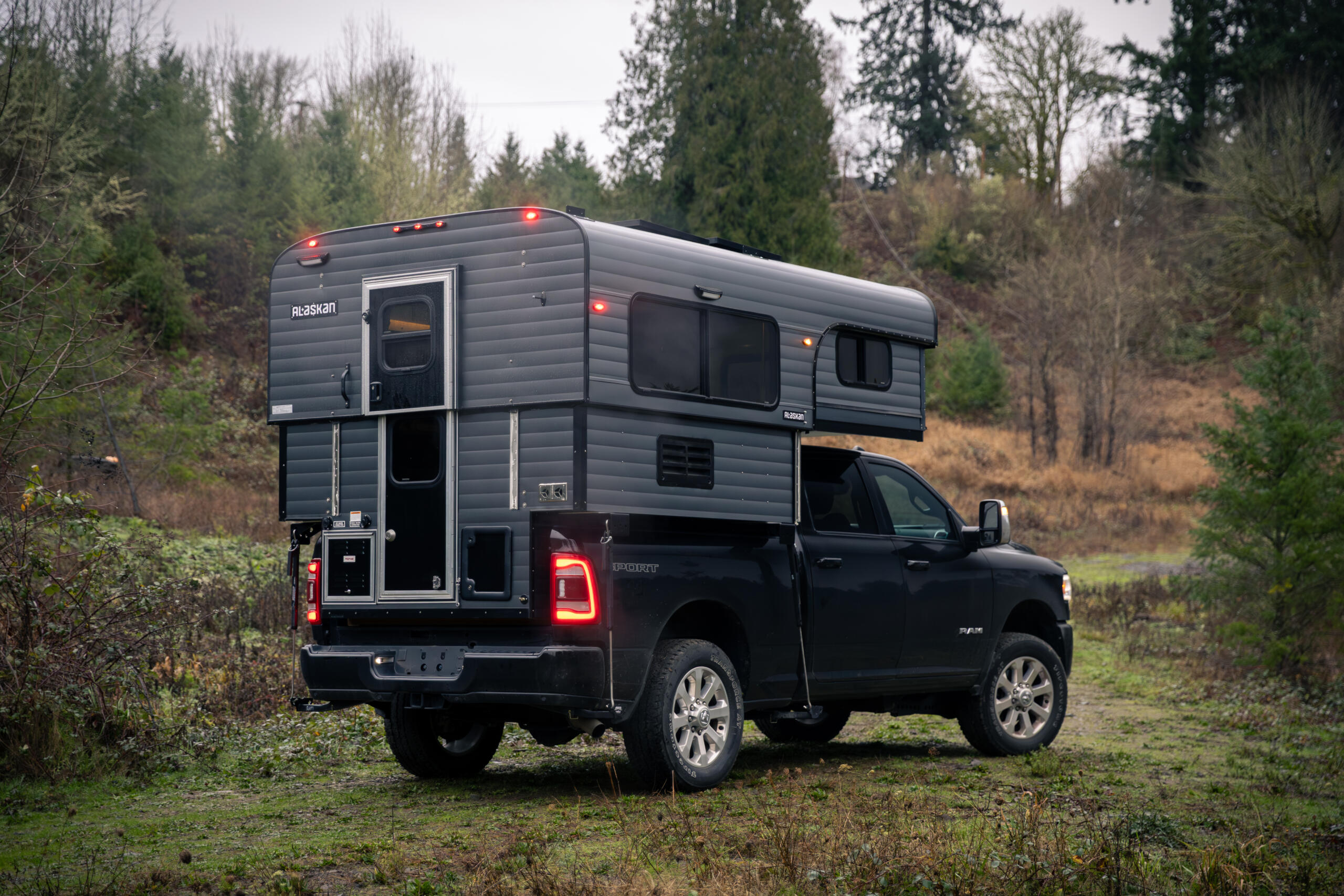
The Quick Version
| Setup | What You Get | What It Costs You |
| Towables (travel trailers, fifth wheels) | The most interior space per dollar, room for a family, comfortable long stays | Real towing skill, and every tight road or awkward site turns into a negotiation |
| Drivables (motorhomes, camper vans) | One vehicle, no hitch, fast arrival, and access to the living space while parked or traveling | Vehicle and home are the same object, so engine trouble grounds both, and leaving camp often means packing up |
| Toppers / camper shells | The cheapest, lightest option. Keeps gear and cargo dry, nothing more | Not built to be lived in. Minimal insulation, no real systems, comfort is whatever you build in yourself |
| Truck campers | A compact footprint, access to rougher roads, an open hitch, and a truck that’s still a truck when the camper’s off | Less interior room than a trailer, plus real payload math before you buy |
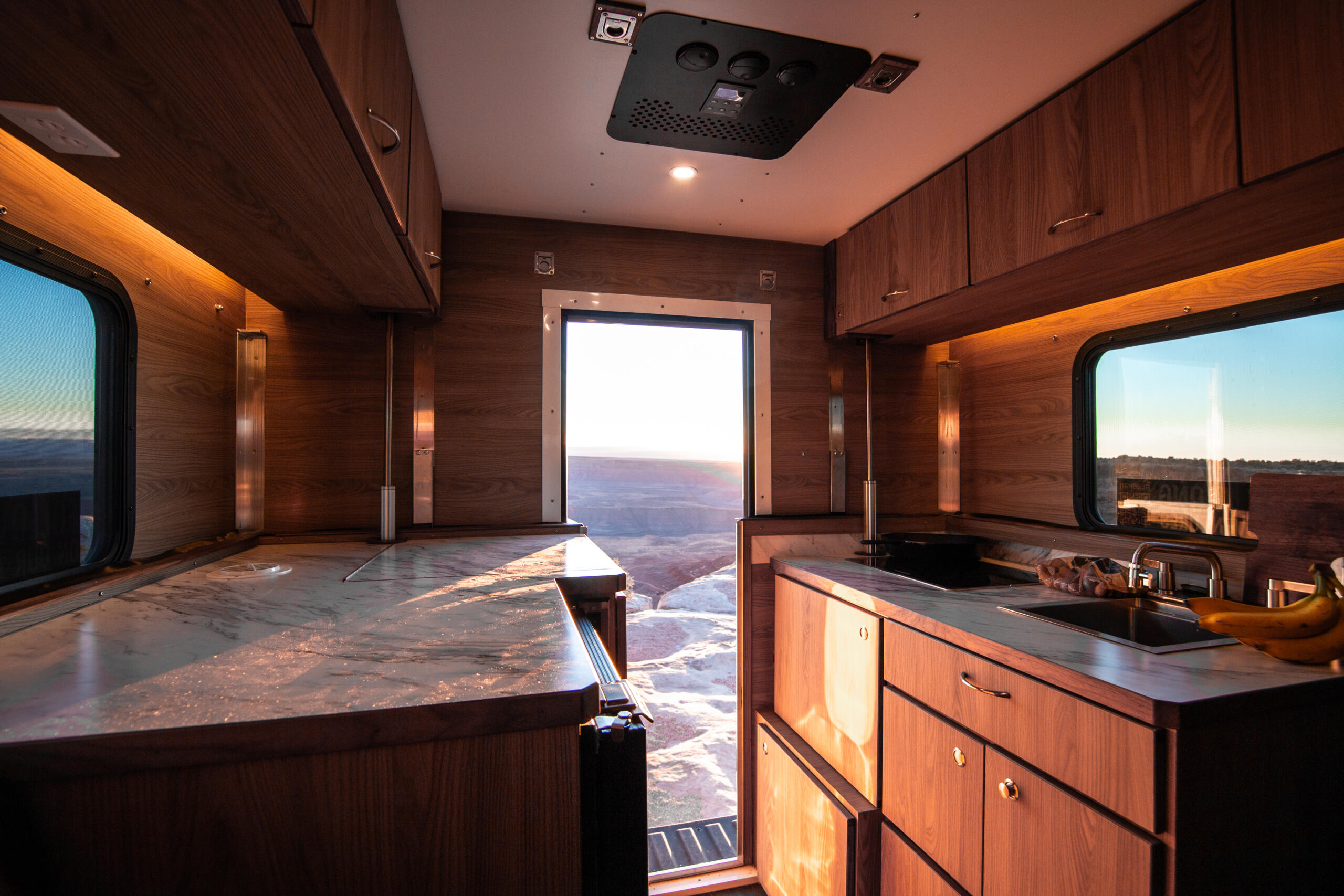
Towables: You’re Buying Space, Not Simplicity
Travel trailers and fifth wheels are the default RV choice because they solve the easiest problem to understand: space. They give buyers more interior room for the money than most other camper setups, and the market reflects that. RVIA’s 2025 year-end shipment report counted 306,191 towable RV shipments compared with 36,029 motorhomes, with conventional travel trailers alone making up more than 232,000 units. In other words, when most people buy an RV, they are buying something designed to be pulled behind another vehicle.
The case for a towable is straightforward. You get more square footage, larger kitchens and bathrooms, more sleeping capacity, and the option to unhitch at camp so the tow vehicle can be used on its own. For families, longer stays, or established campgrounds, that space can matter more than mobility.
The cost is everything that happens before and after you park. A towable asks you to hitch, tow, back up, level, stabilize, and choose roads and campsites with the trailer already in mind. That is the setup time people forget to count. It is not just the minutes between arrival and dinner. It is the mental load of moving two connected vehicles through fuel stops, campground loops, forest roads, and parking lots that suddenly feel much smaller with a trailer behind you.
Towing comes with its own safety math, too. NHTSA’s towing guidance emphasizes that trailer weight should be understood when fully loaded, not guessed from dry weight, and that tongue weight, axle ratings, braking, wiring, and hitch compatibility all matter. Too little tongue weight can invite sway; too much can unload the front axle and affect steering.
That is the towable bargain: more room when you stay put, more to think about every time you don’t.
Best if: You camp mostly in established campgrounds, stay put for several nights, need more room for family or gear, and are comfortable towing.
Watch out for: Fuel stops, backing into sites, sway, tongue weight, rough access roads, and the extra routine that comes with hitching, leveling, and stabilizing.
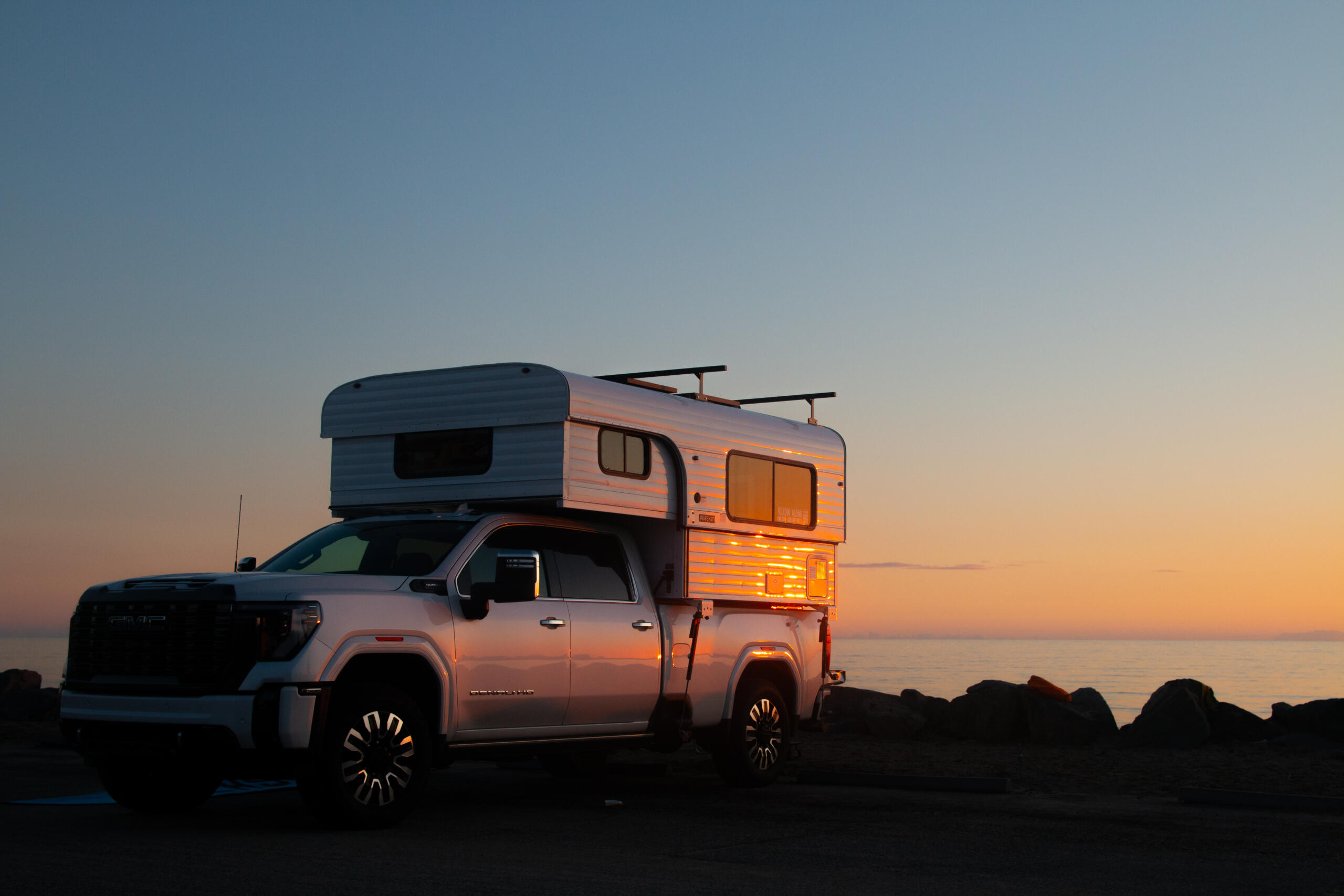
Drivables: Fast to Arrive, Harder to Separate
Drivables solve the trailer problem by removing the trailer. The broad category includes Class A motorhomes, Class C motorhomes, and Class B camper vans. Federal camping data standards describe Class A motorhomes as bus-like RVs roughly 30 to 40 feet long, Class C motorhomes as truck-chassis RVs roughly 21 to 41 feet, and Class B motorhomes as van-based RVs roughly 20 to 25 feet.
The appeal is makes sense. No hitch. No trailer sway. No backing a separate box into a campsite while everyone suddenly becomes a certified parking consultant. You still have to manage the size and handling of the motorhome itself, but you are no longer managing a second object behind you.
But a drivable solves one problem by creating another: your vehicle and your living space are now the same object. If the engine needs work, your camper needs work. If you want to leave camp for groceries, a trailhead, or a better site, you either take the whole rig or tow a second vehicle behind the first one. That is a strange way to avoid towing, but humans do love inventing loops.
Size splits this category in two, though. A Class B camper van has the cleanest arrival of any setup in this piece: pull in, open the door, start using the space. That makes vans hard to beat for quick overnights, paved road trips, and low-friction campground travel.
Class A and C motorhomes trade some of that ease for more living space. The larger the rig gets, the more narrow forest roads, older campground loops, low branches, tight parking lots, and small pullouts start to matter. So “drivable” does not mean one experience. A van is compact and quick. A larger motorhome is roomier, but less nimble once the road or campsite gets tight.
Best if: You want one integrated travel vehicle, the fastest arrival, easy overnights, and mostly paved-road or campground travel.
Watch out for: Engine trouble affecting your camper, packing up to leave camp, limited flexibility once parked, and reduced maneuverability in larger motorhomes.
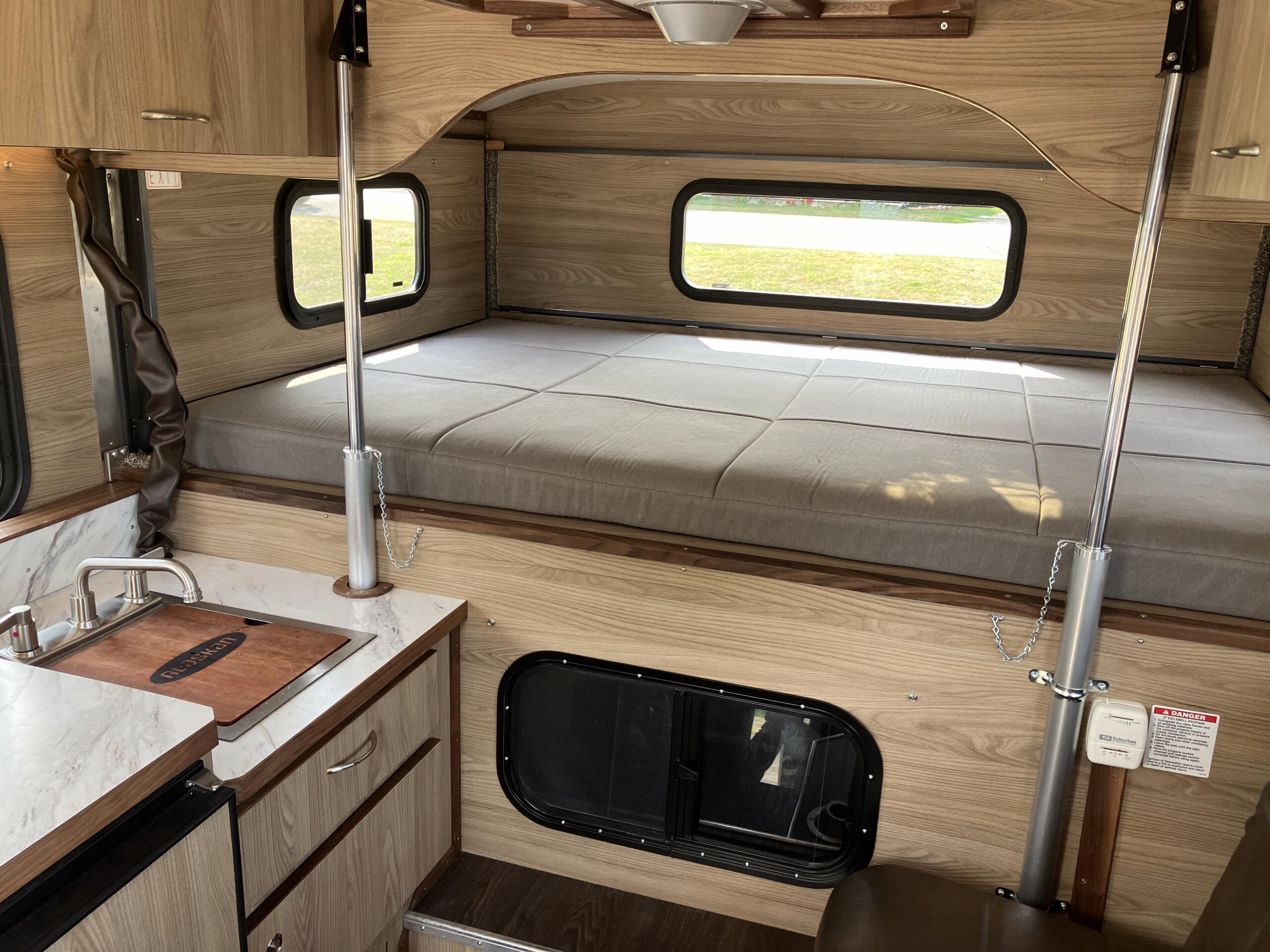
Truck Campers: Compact Camp, Flexible Truck
A truck camper sits in a different lane. It does not trail behind the truck or replace the truck. It rides in the bed, which changes the ownership equation before the trip even starts.
Here is the asymmetry most comparisons skip: towables and drivables both require you to own something whose whole job is being an RV. A trailer needs a properly rated tow vehicle. A motorhome is the vehicle. A truck camper uses the truck a lot of owners already need for work, hauling, towing, errands, and regular life. When the camper comes off, the truck goes back to being a truck — and it also leaves the hitch open, so the same rig can still tow a boat, a utility trailer, or the toys the camper doesn’t have room for.
That matters at camp too. Once the camper is loaded, the daily rhythm is compact: drive the truck, park the truck, camp from the truck. You are not managing a second axle behind you, and you are not taking your entire motorhome every time you want to move. You still need to level, raise the top if it is a pop-up, and manage camper systems, but the footprint stays close to the truck itself.
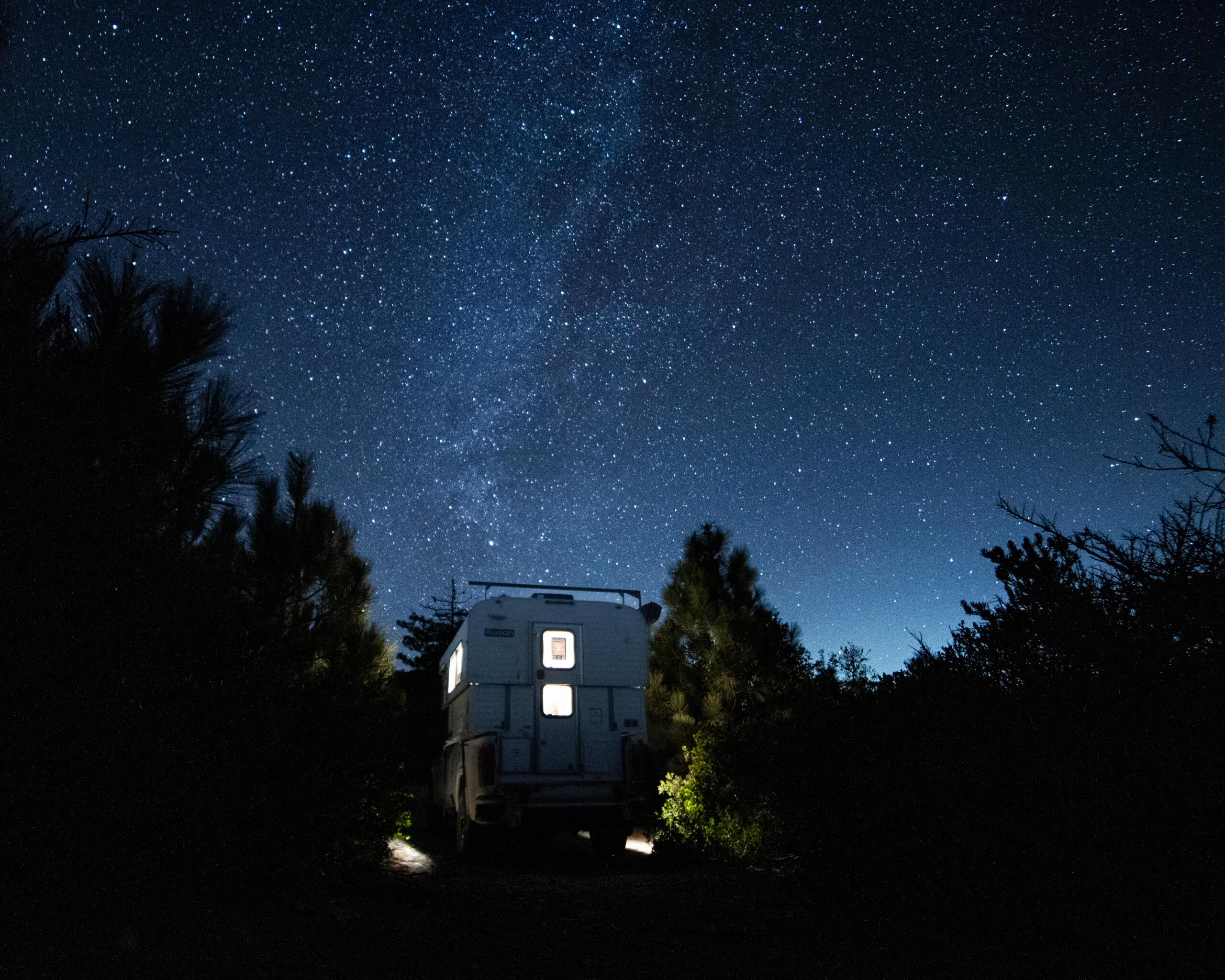
That smaller footprint pays off once you’re off pavement. BLM’s dispersed camping rules generally cap stays at 14 days within a 28-day period, depending on the field office, and the Forest Service expects dispersed campers to be self-contained and stick to roads the vehicle can actually handle. The smaller and more self-contained the rig is, the more realistic those sites become.
That is where truck campers earn their keep. A big trailer can technically be “off-grid.” Whether it can physically get to the site is a different question. Road width, turnaround space, grade, and pullout size decide the answer long before the brochure does.
The legal side is different in most states, too. Truck Camper Adventure’s state-by-state breakdown found that most states do not require truck camper registration at all: the camper is treated as cargo, not its own vehicle. Washington, where Alaskan is built, is one of the states that does require it, so registration still depends on where the camper lives.
The catch is payload. A truck camper is simple only if the truck and camper are properly matched. Passengers, water, batteries, food, gear, tools, and hitch weight all count against the truck’s payload, and that sticker on the driver’s door pillar matters more than any clean brochure number. NHTSA’s towing guidance makes the same point for trailers: loaded weight is what matters, not the empty number on a spec sheet. Same rule here: shop from what the truck will actually be carrying, then choose the camper that fits the truck and the way you travel.
Best if: You want a smaller footprint, rougher-road access, an open hitch, faster relocation, and a truck that can return to regular use when the camper is off.
Watch out for: Payload limits, loading and unloading, less interior room than a trailer, center of gravity, and making sure the truck and camper are actually matched before you buy.

Where Alaskan Fits
Every truck camper on the market makes the same choice between staying compact and staying protected. A soft-sided pop-up rides lower and lighter. A fixed hard-side gives you real walls at camp, at the cost of extra height on the road.
Alaskan’s whole reason for existing is refusing to pick one side of that. In the early 1950s, Don and Irene Hall were driving the old Alcan Highway when a washed-out shoulder nearly rolled their camper: tall, top-heavy, and unstable at exactly the wrong moment. The lesson was immediate. If they were going to build another camper, it needed to ride low and steady on the road, then open into somewhere actually worth living once they stopped. They built the first prototype in Don’s garage by early 1954, and by 1958 it was in production: a patented telescoping design that still rides low for travel and raises into a full-height, hard-sided cabin at camp.
An Alaskan is not trying to be the biggest camper in the category. It is trying to solve the problem that started the company in the first place: keep the camper lower and steadier on the road, then give people a real hard-sided space once they stop. Lower while traveling. Fully hard-sided at camp. That has been the lane since the first prototype proved the idea could work.
Frequently Asked Questions
What’s the difference between a truck camper and a topper? A topper, also called a camper shell or cap, is a cover that bolts onto the bed rails to keep cargo dry — it isn’t built to be lived in. A truck camper is a self-contained unit with its own walls, insulation, and systems, built specifically as a living space rather than a cover.
Do you need a special truck for a truck camper? Not a special truck, but one rated for the weight. Alaskan’s hard-sided campers run from roughly 1,500 to 2,500 pounds dry, and a 3/4-ton or larger truck is generally recommended once you add water, gear, and passengers. Your real capacity is on the payload sticker on the driver’s door pillar, not the brochure.
Is a truck camper cheaper than a travel trailer? Usually not, and it’s worth being honest about that instead of pretending otherwise. Truck campers are built from lighter, more specialized materials to stay under a truck’s payload limit, and that engineering shows up in the price — a truck camper often costs more than a travel trailer of similar size. What you’re paying for isn’t square footage. It’s a smaller, lighter footprint that can get to places a trailer can’t.
Do truck campers need to be registered like other RVs? In most states, no. Truck Camper Adventure’s state-by-state research found that most states classify truck campers as cargo rather than a separate vehicle, since they have no VIN or axle of their own. A handful of states, including Washington, still require it.
Can you tow something else while carrying a truck camper? Yes, within the truck’s rated capacity. Because the camper rides in the bed instead of behind the truck, the hitch stays open for a boat, a utility trailer, or gear that doesn’t fit inside the camper — something a towable can’t offer, since its hitch is already spoken for.
Is a truck camper or travel trailer better for full-time living? It depends on what “living” means to you. A travel trailer gives more room to spread out over long stays. A truck camper trades that space for the ability to actually reach, and stay compact at, the remote sites a bigger rig can’t get to. Neither answer is wrong. They’re solving different problems.
Related Reading