Alaskan Camper Shower and Toilet Options: How They Work
October 16, 2026
Irene Hall co-founded Alaskan Campers with her husband, Don, after a trip that nearly ended in a roadside marsh. A washed-out stretch of the Alcan Highway had almost tipped their tall camper, and Irene wasn’t interested in a repeat performance. Before their next hunting trip, she wanted something that traveled low and was comfortable once they arrived.
Don developed the telescoping, hard-sided design, while Irene helped shape the interiors and how the space worked day to day. Their partnership is at the heart of the Alaskan Campers story, and we think she’d appreciate how far those comforts have come, especially a hot shower inside and a toilet that doesn’t require finding your boots at 2 a.m.
Here’s how our indoor shower works, what the outside shower offers, and which toilet options fit your camping routine.
(Thetford cassette toilet and shower basin with a removable teak grate pan pictured below)
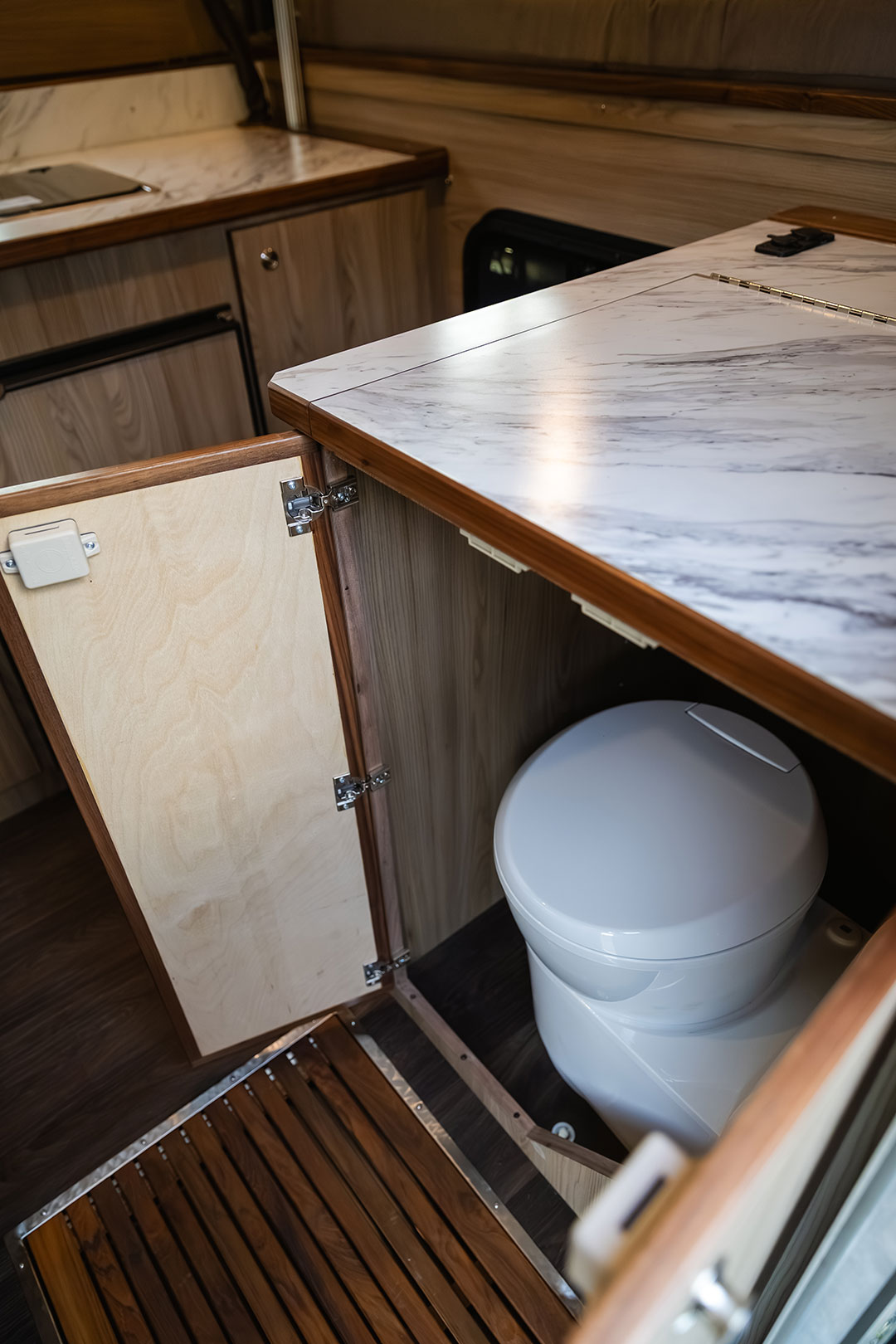
Key Takeaway: Alaskan Campers offers indoor and outside shower options, plus cassette and composting toilets. The indoor shower converts the entry area into a temporary shower using a recessed basin, fitted curtain, sink-connected hose, and drain pump. Your best setup depends on where you camp, your water supply, and how you prefer to handle waste.
Alaskan Camper Shower and Toilet Options at a Glance
The trips you take most often will help determine which options earn their place in your camper. Rinsing off after a summer ride calls for a different setup than showering through a week of cool, wet weather. Your toilet choice also affects how much water you use and where you’ll need to stop for waste disposal.
| Option | How it works | Water and waste |
| Inside shower | Entry-floor basin, teak grate, fitted curtain, sink-connected hose, and drain pump | Uses your freshwater supply; wastewater collects in an exterior portable container |
| Outside shower | Exterior shower connection for washing and rinsing | Uses your freshwater supply; requires appropriate wastewater collection and disposal |
| Thetford cassette toilet | Flush toilet with a removable waste-holding cassette | Requires flush water and an approved disposal facility |
| Trelino composting toilet | Waterless separating toilet with removable liquid and solid containers and a ventilation fan | Containers are emptied separately; uses liners and drying material |
These options fit into a larger set of choices for your build, covered in our guide to standard and optional Alaskan Camper features. Availability and installation vary by model, so our team can help you confirm how your preferred setup will work in your camper.

How Does the Alaskan Camper Indoor Shower Work?
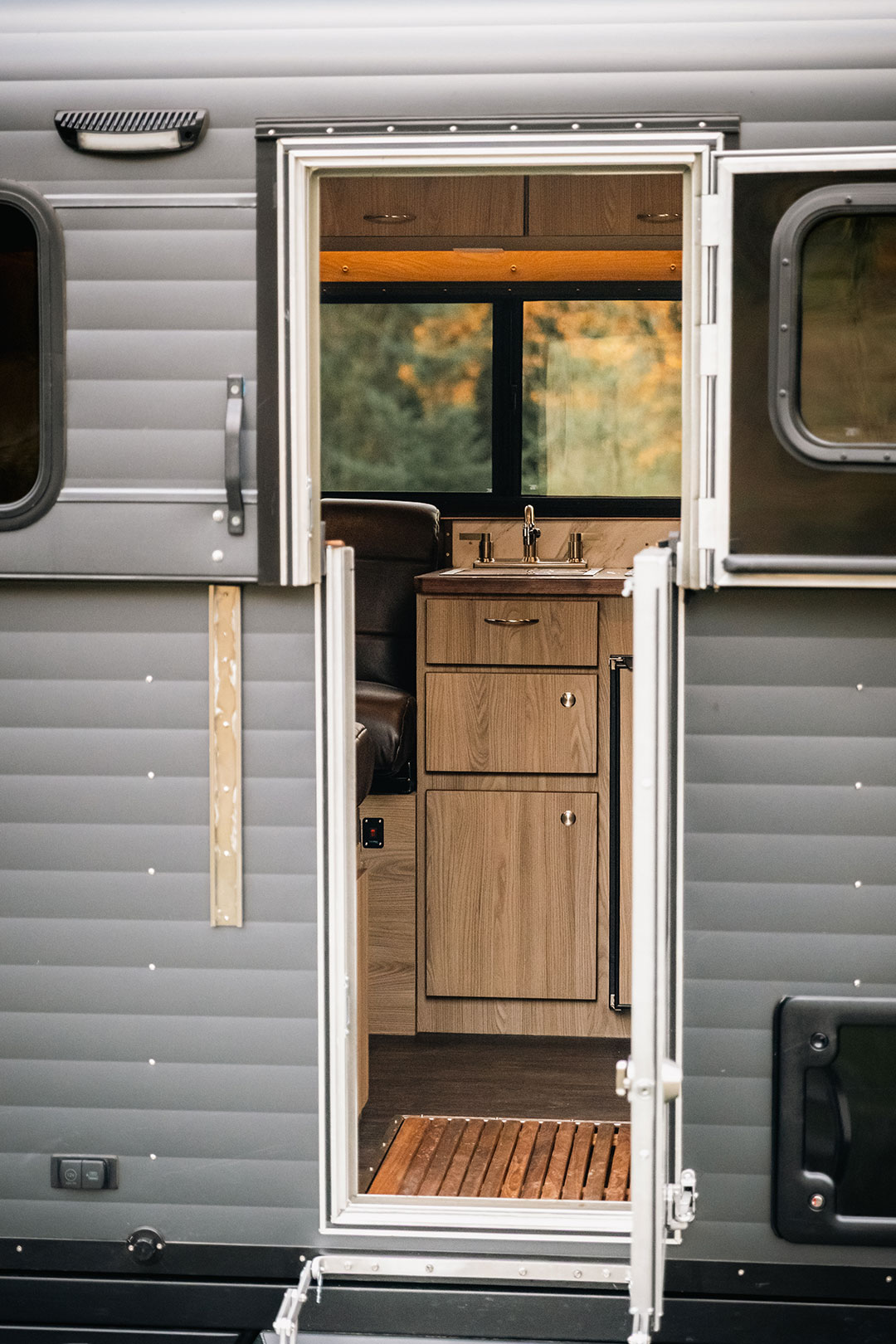
Our indoor shower uses the floor just inside the entry door as its shower area, avoiding the need to dedicate that space to a permanent stall. A recessed basin sits beneath a removable teak grate, a fitted curtain contains the spray, and a shower hose connects at the sink. During the shower, a separate drain pump removes water from the basin.
Thanks to Justin from our team for walking us through the setup in the video below, from fitting the curtain around the basin to connecting the shower hose.
The basin also serves as the entry mudroom
Between showers, the grate and basin help catch the dirt, grit, and pine needles that come inside on boots. Before washing, move footwear and loose gear out of the entry and clear any debris from the grate and basin. Put your towel, toiletries, and clean clothes within reach, preferably somewhere you can reach without giving the cabinets a rinse.
Using the entry for both purposes keeps the shower available without giving up that floor space for the rest of the day. Once you’re finished and everything has dried, it goes back to being the place you step inside.
The curtain fits around the shower basin
Inserts in the shower curtain allow it to fit around the basin and help direct water into the pan. Take a moment to arrange it as Justin shows before turning on the water, checking the fit at the bottom rather than assuming a hanging curtain has everything covered.
Afterward, leave the curtain open to dry before stowing it. Ventilating the camper also helps moisture escape, particularly when you’re washing up in weather that has already left you with wet jackets and boots to manage.
The shower hose connects to the sink
The hose screws into the sink connection and draws from the camper’s freshwater supply. With the optional four-gallon water heater, you have hot water for showering as well as washing at the sink.
Four gallons describes the heater’s storage capacity, so it doesn’t translate into a fixed shower length. Flow, temperature, mixing, and the time spent with the water running all affect how much you use. Check the temperature before stepping in, and confirm with our team which water-heating equipment your shower configuration requires.
A separate pump removes the shower water
The switch near the basin operates the drain pump, which you turn on during the shower to remove the water collecting in the pan. We’ll demonstrate the water supply and drain controls during your camper walkthrough so you know how both systems operate before your first trip.
Our campers use an exterior portable container, such as a bucket or wastewater tote, instead of a built-in grey water tank. Collect sink and shower water there, monitor the container’s capacity, and empty it at an approved disposal location according to campground or land manager requirements.
Should You Choose an Indoor or Outside Shower?
Consider where you’ll be parked when you want to wash, what the weather is likely to be doing, and whether you’ll have privacy. Those details tend to settle the question more effectively than imagining every shower on a warm afternoon beside an empty lake.
The indoor shower provides shelter and privacy
For cool-weather trips, shoulder-season travel, and stays far from campground facilities, being able to wash inside can make the evening considerably more pleasant. You’ll need to arrange the curtain, connect the hose, operate the pump, and dry the area afterward, but you can do it all within the camper.
The main coordination involves the doorway. Anyone who needs something from the truck should retrieve it before the shower starts, unless your traveling companion enjoys negotiating access while holding a bottle of shampoo.
The outside shower keeps some of the mess outdoors
An outside shower is useful for sandy feet, muddy legs, and rinsing off after hiking, riding, or spending the day near the water. Washing before you step inside can save a fair amount of sweeping later, especially when several people have spent the afternoon collecting the same trail.
For a full shower, account for wind, temperature, privacy, and wastewater requirements. Check campsite rules before setting up, and ask us to demonstrate the controls and hot-water arrangement for your chosen build. A spot that looks private when you arrive may become less so when the neighboring campsite fills.
Thetford Cassette or Trelino: What’s the Difference?
Both systems provide an onboard toilet, but their daily routines differ. The Thetford flushes into a removable cassette, while the Trelino uses no flushing water and collects liquids and solids separately. Consider which system you’ll be comfortable emptying and maintaining over several days at camp.
Thetford cassette toilet: flushing with a removable tank
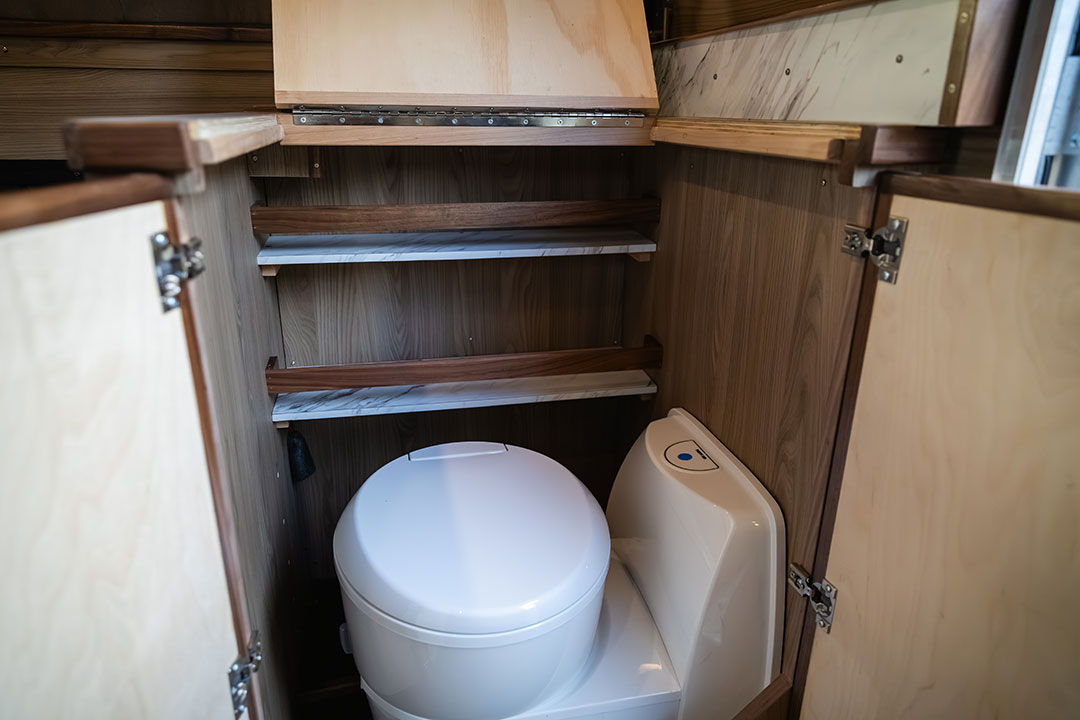
The Thetford uses water to flush waste into a holding cassette that you remove and carry to a designated facility accepting cassette toilet waste. Our fold-away installation keeps the toilet tucked into a cabinet between uses, with exterior access to the cassette so it can be removed without carrying it through the living area. Ask us to show you the installation available for your model.
Before choosing it, consider the full handling process. You’ll need to remove, lift, carry, empty, and reinstall the cassette, which becomes heavier as it fills. Seeing the access door and handling an empty cassette will give you a better sense of the task than looking at the toilet alone.
Use care products approved for your installed model and follow Thetford’s operating and maintenance guidance for tank preparation, emptying, and cleaning.
Trelino composting toilet: no flushing water
The Trelino directs liquids into a removable canister and solids into a separate, bag-lined container. After use, cover solids with drying material, such as coconut coir. There’s no mixing handle; our fan-equipped installation helps with drying and ventilation.
Although sold as a composting toilet, it does not produce finished compost onboard. Plan appropriate disposal for both containers and follow Trelino’s operating and care guidance for cleaning, supplies, and emptying.
Compare maintenance as well as use
| Consideration | Thetford cassette toilet | Trelino composting toilet |
| Flushing water | Required | Not required |
| Waste storage | Combined in a removable cassette | Liquids and solids collected separately |
| Emptying | Carry cassette to an approved disposal facility | Empty liquid bottle and solids chamber separately |
| Supplies | Approved toilet-care products | Container liners and drying material |
| Routine care | Clean and prepare the cassette and toilet | Cover solids, clean containers, and maintain ventilation |
Choose the system you’re comfortable maintaining throughout a trip, including the less interesting part that happens when a container fills. Knowing where you’ll empty it should be part of the route planning rather than a question you investigate when it becomes urgent.
Planning Water, Weight, and Everyday Use
The equipment is only part of the bathroom setup. Your freshwater capacity, loaded weight, storage, and access determine how conveniently it works over several days, especially when you’re away from facilities.
Budget water for everything you do at camp
Your shower and sink draw from the same freshwater supply, with capacity dependent on the model and configuration. Cooking, dishes, and other daily uses need a share of that water, so plan around your whole stay rather than the number of showers you hope to take.
Wetting down, stopping the water while washing, and turning it back on to rinse can stretch the supply. A short trip close to home will tell you more about your household’s consumption than a general estimate, particularly if someone’s definition of a quick shower leaves time for reflection.
Include water and bathroom equipment in your loaded weight
Water weighs about 8.3 pounds per gallon, which adds up before you pack food, clothing, and outdoor gear. Account for your tank capacity, bathroom equipment, wastewater container, and toilet contents when assessing the loaded camper, and check both the truck’s total and axle ratings.
Our slide-in camper buyer’s guide provides model information to help with planning. Use the specifications for your selected build when working out the final setup.
Try the space before deciding
When you visit our Washington State headquarters, ask to see the shower and toilet arrangements for your chosen model. Stand in the shower area, check curtain clearance, and work out where your towel and clean clothes will go. Look at toilet placement and privacy, and check how easily you can remove the waste containers for emptying.
We can also explain how everything is secured for travel and what requires attention in freezing conditions. These are easier questions to answer with the equipment in front of you than after you’ve arrived at camp.
Frequently Asked Questions
Can you shower inside an Alaskan Camper?
Yes, with an available indoor shower configuration. The system uses an entry-floor basin, removable teak grate, fitted curtain, sink-connected hose, and drain pump. Availability varies by model.
Does the indoor shower have hot water?
Hot water is available with the optional four-gallon water heater. Our team can confirm the water-heating equipment included in your selected build.
Where does shower water go?
The drain pump removes water from the indoor shower basin, and wastewater collects outside in a portable container. Empty it at an approved disposal location according to local requirements.
Can I get an Alaskan Camper with a toilet?
Yes. Our options include a Thetford cassette toilet and a Trelino composting toilet. The Thetford flushes into a removable cassette; the Trelino separates liquids and solids without flushing water.
How often does a camper toilet need emptying?
Frequency depends on capacity and use. Check container levels regularly and follow the installed model’s emptying and cleaning instructions.
Does the Trelino toilet need electricity?
The toilet operates without electricity, but the ventilation fan included with our Trelino option requires power. We’ll explain its operation during your camper walkthrough.
The introduction, key takeaway, shower sections, and conclusion can stay as written. Remove the old Nature’s Head link when replacing its subsection.
Can I use these systems in freezing weather?
Freezing conditions require preparation specific to your camper, plumbing, and toilet. Ask our team how to operate, protect, and winterize your selected configuration before planning cold-weather travel.
Make Yourself Comfortable When You Get There
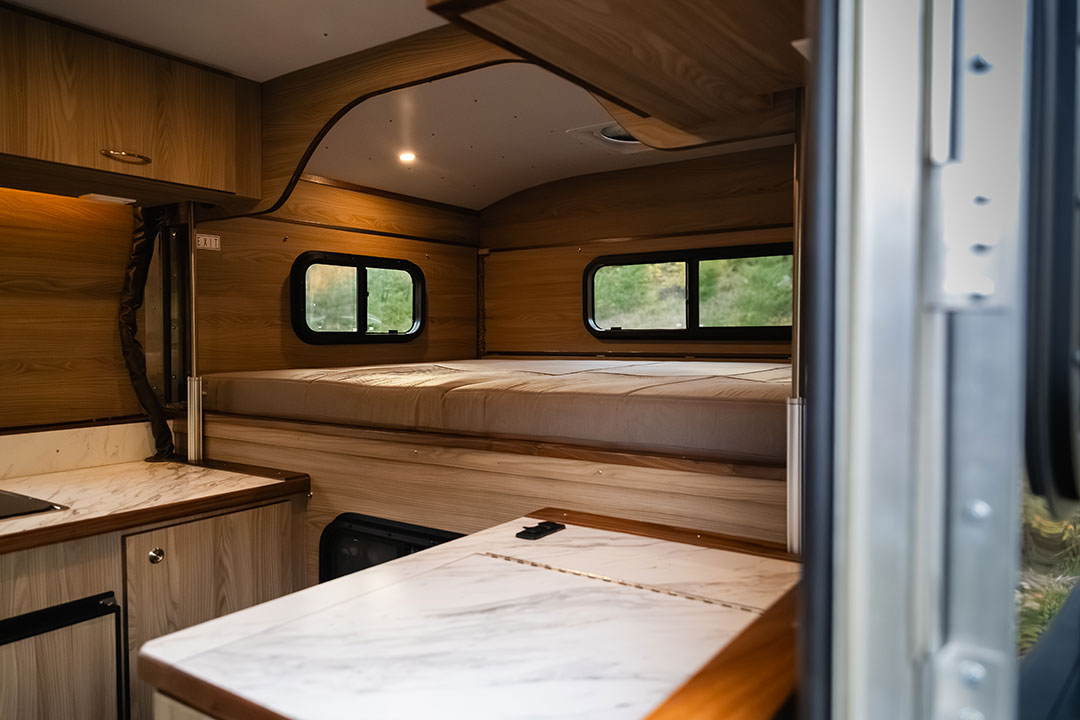
Irene’s concern was what happened after the driving: whether the camper worked as a place to spend time, get some rest, and prepare for another day outside. A shower and an onboard toilet serve that same purpose, particularly when the weather turns or the nearest facilities are a long way back down the road.
Tell our team about your model and the trips you take, and we’ll walk you through the arrangements available for your build. It’s easier to compare them here than to reconsider your choice at 2 a.m. while looking for your boots.