More Battery or More Solar? How to Choose a Truck Camper Power Upgrade
October 23, 2026
By Sunday morning, your battery monitor has become the most interesting screen in the camper. You have checked it before breakfast, after breakfast, and once while pretending to look for your sunglasses.
Another battery would settle this, you think. Or another solar panel. Possibly both, if the checkout page catches you before the coffee does.
Before ordering anything, look at what you use and how it gets replaced. A rainy week under fir trees asks something different of your camper than a sunny weekend or a road trip with several hours of driving each day. Those differences should guide what you buy.
Key Takeaway:
Should you add more battery or more solar to a truck camper? Add battery capacity when you need more stored energy between charging opportunities. Add solar when available sunlight could help replace a daily shortfall. If you drive regularly, DC-to-DC charging may already cover much of your consumption. Compare daily use, overnight demand, and charging across the trip before choosing either upgrade.

Know What Your Alaskan Already Has
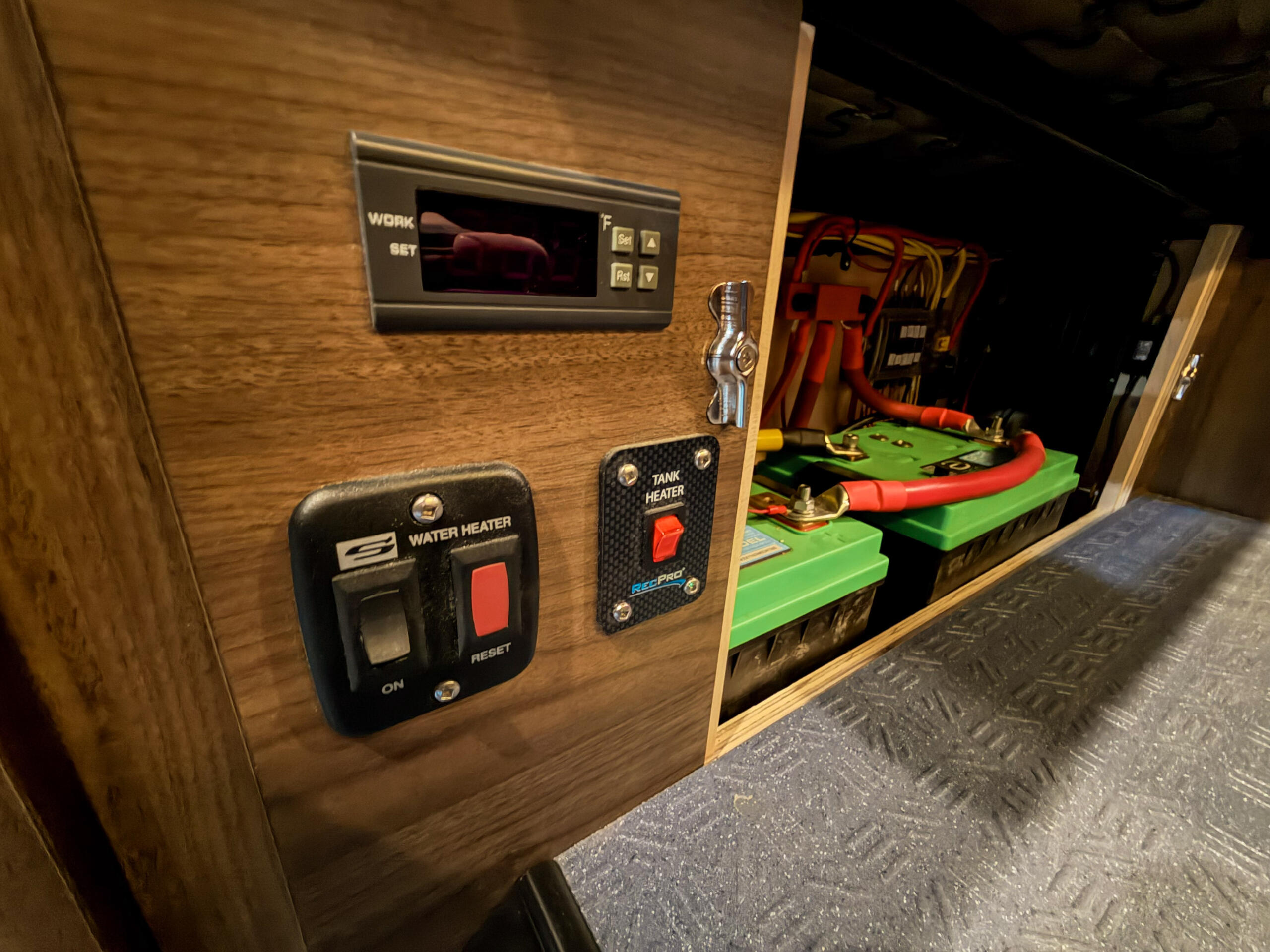
Before choosing an upgrade, check your build sheet for the equipment installed and consider how you recharge on a typical trip. Solar, driving, and shore power can all replenish the battery bank, so account for each source you use and the time available for charging.
The 2026 Slide-In Buyer’s Guide and Flatbed Buyer’s Guide outline the equipment and options below for Alaskan’s original telescoping campers. Older Alaskans, custom builds, and the HS 640 can have different systems.
| Equipment | Included in the base build | Listed power options |
| Battery storage | One Expion360 162Ah GC2 battery | Two- or three-battery packages |
| Rooftop solar | One Rich Solar 200W panel | Two- or three-panel packages |
| Charging while driving | REDARC DC-to-DC converter | Exact model and current rating unspecified |
| Charging from shore power | 30A converter/battery charger | Check your build sheet |
| AC power from batteries | Inverter not listed as standard | REDARC 2000W pure sine inverter; wiring preparation also listed |
| System control and display | Check your build sheet | REDARC Rogue RedVision |
Understand Watts, Watt-Hours, and Amp-Hours
You can work out an energy budget without becoming the person who brings a multimeter to dinner (shout out to my father-in-law). These three measurements get you started.
-
Watts: how much power an appliance draws
Watts measure the rate of energy use. A device’s labeled maximum may exceed its usual draw, so use a measured figure when available.
-
Watt-hours: how much energy it uses
Multiply power by operating time:
-
Watts × hours = watt-hours
A 60W device running for three hours uses 180Wh. A 1,200W appliance running for five minutes uses 100Wh before conversion losses. The second appliance requires much more power while running, despite using less energy in this comparison.
-
Amp-hours: battery capacity at a specified voltage
Convert amp-hours to watt-hours to compare storage with consumption:
-
Amp-hours × nominal battery voltage = nominal watt-hours
A 162Ah battery rated at 12.8V contains about 2,074Wh nominally. Identical batteries connected in parallel increase capacity while retaining the same nominal voltage.
How much you plan to use depends on the battery manufacturer’s guidance, temperature, condition, and the reserve you keep. Our examples allow use of 80% of rated capacity, leaving a 20% reserve. That is an illustrative planning choice, not a universal lithium-battery limit or an Alaskan runtime specification.
| Illustrative 12.8V battery bank | Rated energy | Energy available above our 20% reserve |
| One 162Ah battery | About 2,074Wh | About 1,659Wh |
| Two 162Ah batteries | About 4,147Wh | About 3,318Wh |
| Three 162Ah batteries | About 6,221Wh | About 4,977Wh |
These budgets assume a full starting bank. If a 162Ah battery starts at 70% and you want to stop at 20%, you have roughly 50% of its rated energy, or 1,037Wh, available.
All consumption and charging figures below are chosen to demonstrate the calculations. They are not measured Alaskan performance figures.

Measure a Day and Night in Camp
Use the camper normally and record what the refrigerator, furnace, fans, lights, water pump, device charging, and inverter use. In cold weather, measure on a cold night, when the furnace runs longest. Alaskan’s Suburban furnace burns propane, but its blower runs on the battery.
The refrigerator compressor and furnace blower cycle on and off, so multiplying their running current by 24 hours overstates the day.
For anything running through an inverter, include conversion losses and the inverter’s standby draw, as Victron’s guide to sizing an RV battery bank does. An inverter left on overnight keeps drawing power.
Give air conditioning and electric cooking their own lines. A 12V air conditioner can become the largest load, and “miscellaneous” can’t do that much heavy lifting.
The table below shows a hypothetical day at the battery, including conversion losses. Your equipment, weather, and habits will change the figures.
| Use | Assumed daily energy |
| Refrigerator | 450Wh |
| Furnace electrical use | 150Wh |
| Fans, lights, and water pump | 100Wh |
| Phones, laptop, and other charging | 200Wh |
| Standby and miscellaneous consumption | 100Wh |
| Total | 1,000Wh |
Watch what happens between sunset and morning
Record the battery’s charge level after sunset and again in the morning, with no driving or shore-power charging between readings. The difference shows how much stored energy you used overnight. Then check how much charge returns during the day, noting whether you drove or plugged in.
When reading your displays, distinguish between:
- Consumption: Energy used by appliances and other equipment.
- Charging: Energy delivered by solar, driving, or shore power.
- Net battery flow: The difference between charging and consumption at that moment.
For example, if your solar controller delivers 200W while the camper’s appliances use 80W, the remaining 120W flows into the battery. Your battery monitor may show that 120W coming in, while the solar controller shows the full 200W. Both readings are correct: they measure different parts of the system.
Check the monitor’s setup before relying on its charge percentage. Victron’s SmartShunt manual explains how synchronization establishes a full-battery reference. Incorrect settings or missed synchronization can make the percentage misleading.

When Another Battery Makes Sense
Another battery gives you more stored energy for nights, cloudy weather, and longer stays between charging. At the example’s 1,000Wh a day with no charging, one full 162Ah battery lasts about 1.7 days before reaching the 20% reserve. Two last about 3.3 days.
Extra storage can capture solar energy you’d otherwise miss. Once the battery is full, solar can still supply running appliances, but any surplus cannot be stored. A larger bank with room to charge can save some of that energy for the night.
A properly designed parallel battery bank shares current between batteries and may support higher loads. The wiring, connections, and circuit protection must also support those loads, so confirm compatibility before adding capacity.
More storage can’t fix an ongoing charging shortfall. If you use 1,000Wh a day and replace 600Wh, the bank loses about 400Wh daily. Another battery covers that gap longer, but eventually you need more charging or lower consumption.
When More Solar Makes Sense
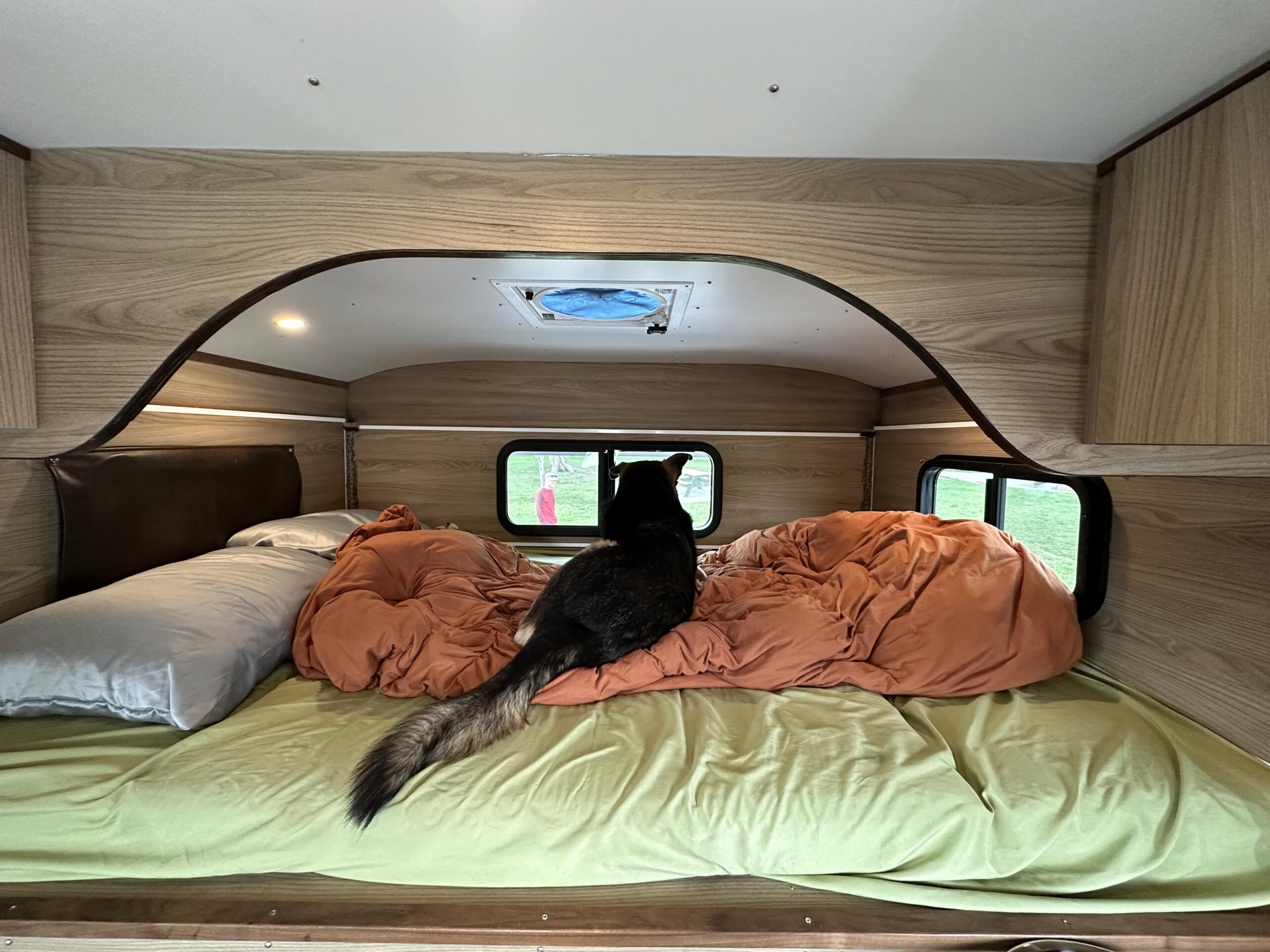
Additional solar helps when you have usable sunlight, room in the battery bank, and a charging system that can accept the increased production. It can reduce a daily deficit or help recover after a cloudy stretch.
A 200W panel does not produce 200W from breakfast through dinner. Victron’s solar-sizing guide explains peak sun hours: the day’s solar energy expressed as equivalent hours at a reference sunlight intensity of 1,000 watts per square meter. Four peak sun hours describes the amount of solar energy available across the day, rather than four hours of daylight.
For a rough comparison:
Array watts × peak sun hours × assumed system factor = estimated daily energy
The table below assumes four peak sun hours and a 75% factor for combined output and delivery losses. It estimates solar energy available to run appliances and charge the battery. These are illustrative assumptions, not measured Alaskan production figures. Weather, shade, panel angle, temperature, dirt, and equipment limits affect the result, so refine the estimate using readings from your trips.
| Array | Calculation | Estimated daily energy |
| 200W | 200 × 4 × 0.75 | 600Wh |
| 400W | 400 × 4 × 0.75 | 1,200Wh |
| 600W | 600 × 4 × 0.75 | 1,800Wh |
Plan for the campsite you want
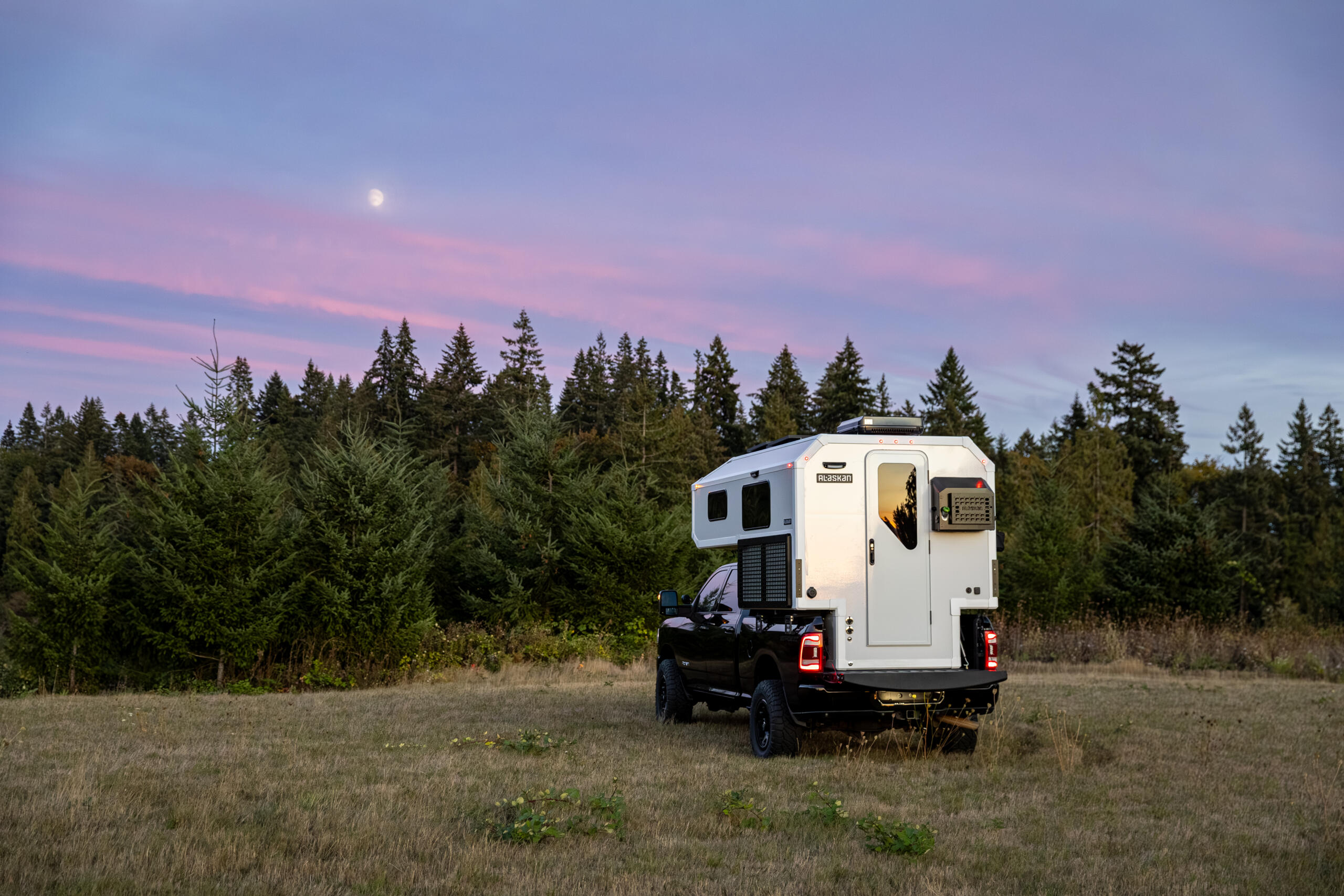
The shaded spot beside the creek might be excellent for lunch and poor for rooftop solar. More panels may help where some sunlight reaches them, but a dense canopy can leave you short of the energy you need.
A portable panel can sit in a sunny opening while the camper stays shaded. REDARC’s 200W folding panel is one example. It requires a compatible solar charge controller; an Anderson plug alone does not establish compatibility. Ask Alaskan how it would connect to your camper and which cable size and length suit the setup.
Rooftop panels need no daily setup and can collect energy while parked or driving when conditions permit. Portable panels offer more placement choices, provided you have a sunny spot within cable reach and don’t mind setting them out.
Compare Storage and Solar on the Same Trip
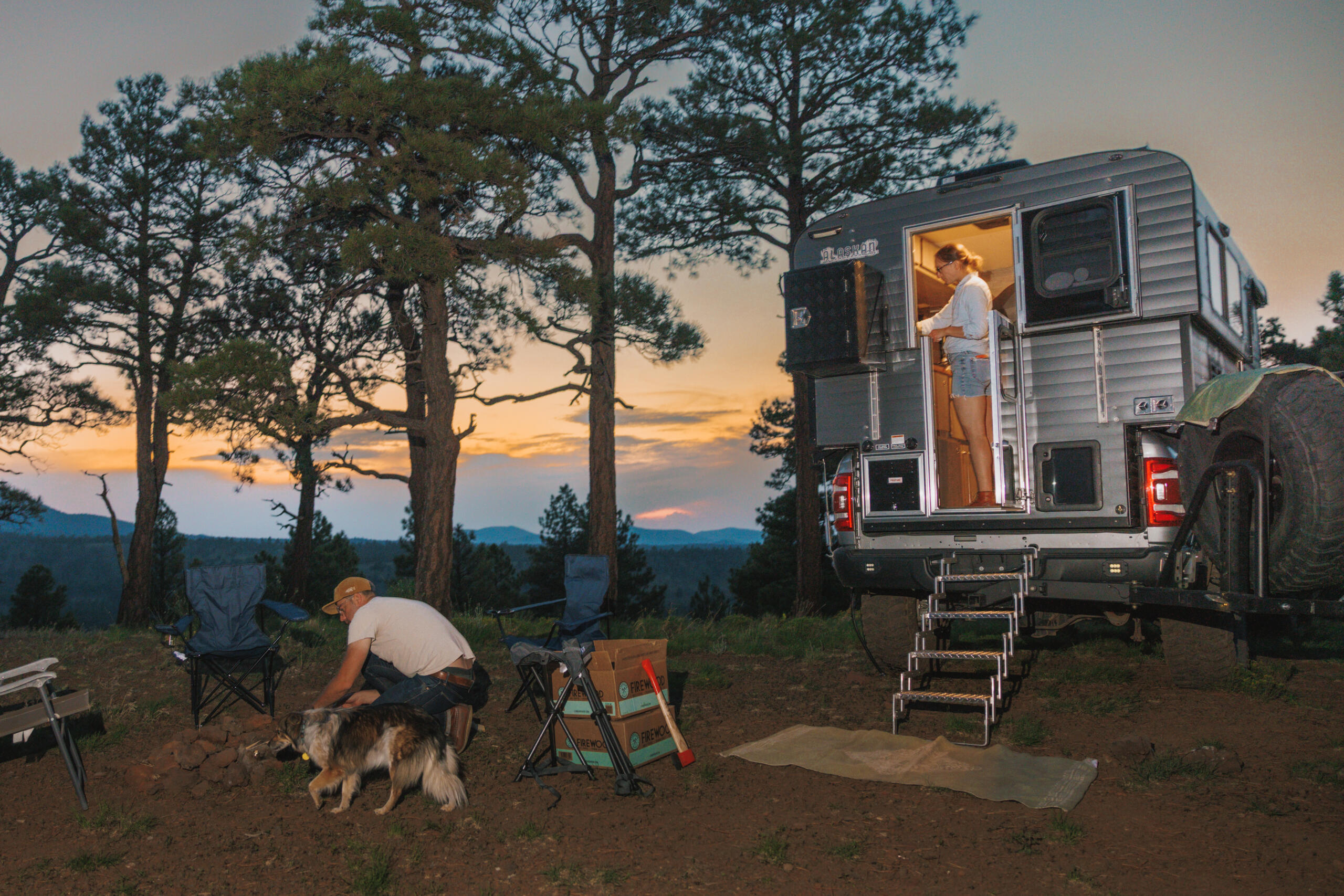
Keep consumption at 1,000Wh daily and use the solar assumptions above. There is no driving or shore charging during this example.
| Configuration | Storage available above reserve, starting full | Estimated daily solar | Estimated daily energy balance |
| One 162Ah battery, 200W solar | 1,659Wh | 600Wh | 400Wh deficit |
| Two 162Ah batteries, 200W solar | 3,318Wh | 600Wh | 400Wh deficit |
| One 162Ah battery, 400W solar | 1,659Wh | 1,200Wh | 200Wh potential surplus |
| Two 162Ah batteries, 400W solar | 3,318Wh | 1,200Wh | 200Wh potential surplus |
With 200W of solar, another battery increases stored energy while leaving the estimated 400Wh daily deficit unchanged. With 400W, estimated production exceeds daily use by 200Wh under the assumed conditions. Actual endurance still depends on when charging arrives and how much the battery can store.
Daily totals miss timing, though. A camper can show a positive balance for the day and still reach its reserve before sunrise, because the energy arrives in the afternoon and gets used overnight. Production also goes unused once the bank is full and loads can’t absorb it. Checking your charge at sunset and again at sunrise shows what your nights demand.
Recovery takes longer than it looks. Starting 1,000Wh below where you want to be, a 200Wh daily surplus needs about five sunny days to catch up.
That is why a fixed “watts of solar per battery” rule can mislead. You need enough storage for the gaps and enough charging to recover on the schedule your trip allows.

Include Driving and Shore Power in the Calculation
Solar is one way your battery recharges. Alaskan’s original telescoping campers also include a REDARC DC-to-DC charger, which charges the camper battery from the truck while you drive.
To estimate what it delivers:
Output amps × output volts × hours driving ≈ watt-hours delivered
A charger sustaining 25A at 14V for two hours delivers about 700Wh. Running appliances and charging losses reduce what gets stored. These are example figures; check your charger’s rating and settings. Wiring, vehicle supply, temperature, and battery acceptance also affect output.
Driving most days may replace much of your overnight consumption. Park for five nights, and storage, solar, or another charging source must cover the gap.
Shore power provides another chance to refill. The 30A rating on Alaskan’s converter/charger describes DC output. At a sustained 30A and 14V, that’s about 420W, enough to replace 1,000Wh in roughly 2.4 hours before running loads, losses, and reduced current near full extend the time.
Marine electrical specialist Matt Mortensen equipped his 1973 Alaskan with electric heat, induction cooking, a 7.2kWh battery, and a large solar array. On a month-long family trip with their F-150 Lightning, they alternated two or three nights of dry camping with campground hookups to recharge the truck and run cabin loads. His Where Vintage Meets Voltage story covers the setup, including his trailer-mounted hot tub. And you felt guilty packing the coffee grinder.

Check Appliance Power Before Buying Capacity
If the system shuts off when an appliance starts, check its power demand and the system’s limits before adding storage. An inverter converts battery DC into household AC. Its continuous and surge ratings help determine which appliances it can start and run, but they don’t tell you battery runtime.
Take a 1,500W appliance and an inverter running at an assumed 90% efficiency:
1,500W ÷ 0.90 ≈ 1,667W drawn from the battery
At 12.8V, that’s about 130A, and ten minutes of use consumes about 278Wh. As battery voltage drops, current rises to deliver the same power.
A 2,000W load requires roughly 174A from the battery bank. That exceeds the 150A maximum continuous rating in Expion360’s GC2 manual. The manual rates a parallel bank by multiplying that figure by the number of batteries, so two GC2s are rated for 300A. Confirm your installed battery model and approved bank arrangement with Alaskan before planning around that load.
The inverter, DC wiring, connections, and circuit protection also have to suit the intended load. Appliances with motors or compressors can briefly draw more power at startup.
Overload, low voltage, temperature, or an electrical fault can all trip protection. Buying batteries before identifying the cause can leave you with the same problem and a larger receipt.
Choose Around the Trips You Take
Once you’ve tracked a day and night of use and noted how the battery recharges, match what you see to where to look first:
| What you observe | What to investigate first |
| The bank recovers daily but approaches reserve overnight | Overnight consumption and usable storage |
| Charge declines over several stationary days | Charging shortfall, consumption, and recovery opportunities |
| Solar output falls under trees | Available sunlight and compatible portable-panel options |
| Driving adds little charge | DC-to-DC operation, settings, and installation |
| One appliance causes shutdowns | Appliance demand and electrical limits or faults |
| Normal trips end with a comfortable reserve | Whether you need an upgrade |
Check Compatibility Before Expanding
Before ordering, ask Alaskan or a qualified installer to review the equipment already aboard:
- Battery additions: Confirm the exact model, mounting, charger settings, cabling, and circuit protection. The Expion360 GC2 manual says not to mix batteries of different ages or sizes, to fully charge each battery before connecting it, and to use parallel cables of equal length and gauge. GC2 is a case size, so another GC2 battery isn’t automatically compatible.
- Solar additions: Check the controller’s maximum input voltage, input-current limit, and output rating against the panels’ specifications. With matched panels, series wiring adds voltage and parallel wiring adds current. Cold weather raises a panel’s open-circuit voltage, and Victron’s solar charger troubleshooting guide recommends leaving about a 10% margin below the controller’s limit.
- Cold-weather charging: The heated Expion360 GC2 datasheet lists charging down to 32°F with the heater off and -4°F with it on. The heater is turned on with the HEAT switch on each battery, so confirm your battery has one before counting on cold-weather charging.
Low charging output can also mean the bank is full, a low-temperature limit is active, or a connection or setting needs attention. The Victron guide walks through each cause, so rule those out before adding equipment.
For a new camper, tell our team how many nights you stay, how often you drive, the weather you expect, where you park, and which appliances matter. For an existing Alaskan, bring your build details and a few days of readings.

Truck Camper Battery and Solar FAQs
Is 200W of solar enough for a truck camper?
It depends on consumption, sunlight, storage, and other charging. Our assumed conditions produce 600Wh daily from 200W, but your campsite may deliver much less or more. Compare measured use with measured charging, including driving and shore power, before increasing the array.
Will another battery help on cloudy days?
Yes, if it contains additional charge when you need it. At 12.8V, a second 162Ah battery adds about 1,659Wh above our chosen reserve, or about 1.7 days at 1,000Wh daily with no charging. You still need a way to replenish that energy.
Can I run my camper refrigerator overnight on a battery?
Compare its overnight consumption with the energy available after other loads and your reserve. Compressor runtime varies with conditions and use, so a label’s running current alone will not establish overnight demand. A representative overnight measurement is more useful.
Will driving fully recharge my camper battery?
It can if the charging system delivers enough energy over the drive. Starting charge, actual output, duration, concurrent loads, and charging limits determine the result. Verify charging at the monitor rather than assuming the engine running means the bank is receiving the charger’s rated output.
Can I add batteries or panels to an older Alaskan?
Have the existing battery bank, chargers, controller, wiring, protection, and mounting assessed first. A compatible expansion may require changes elsewhere in the system. Current build options do not automatically establish compatibility with an older camper.